00:00
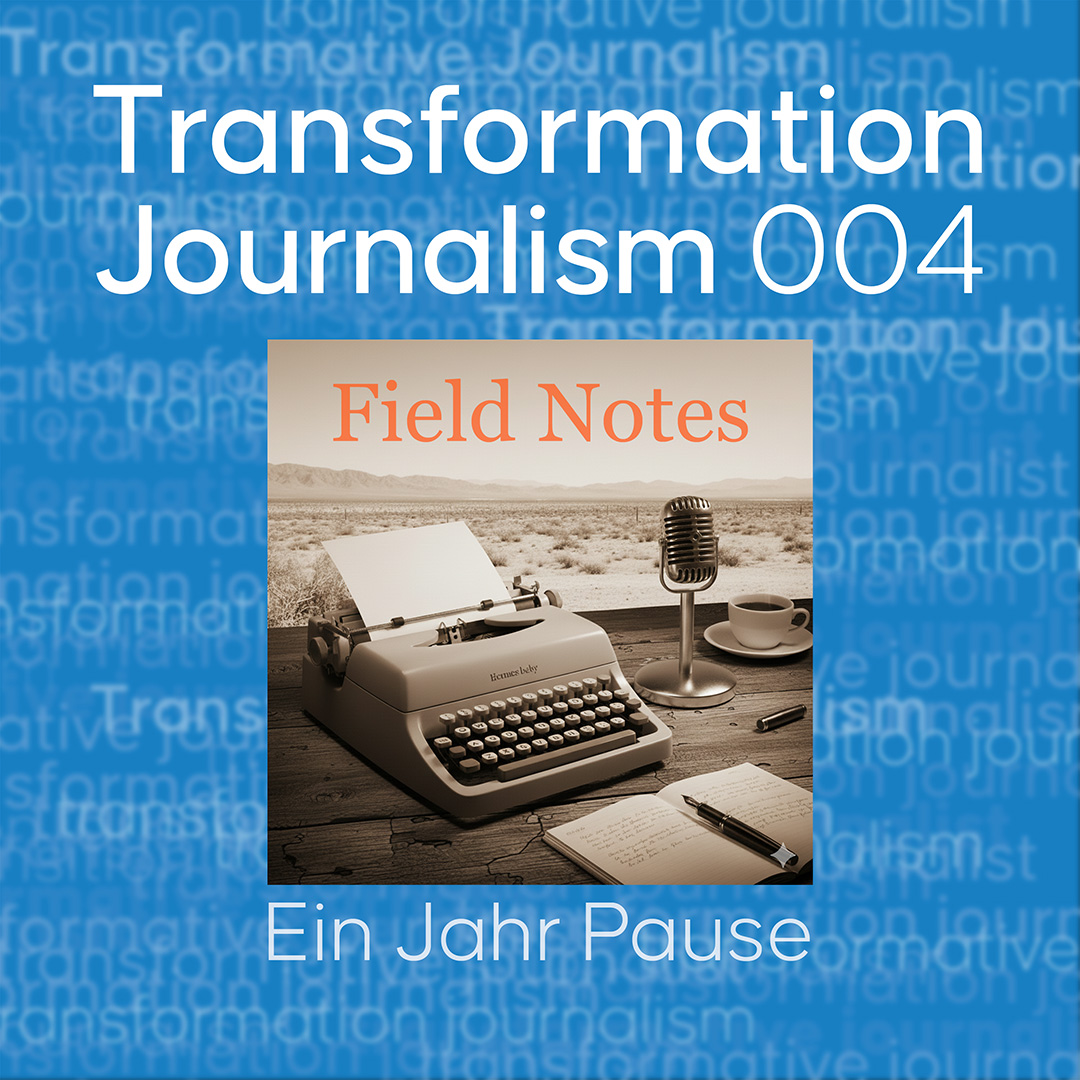
Ein Jahr Pause – warum Slow Journalism keinen Monatsrhythmus kennt
Darum gehts
Ein Jahr lang blieb es still hier. Nicht, weil keine neuen Folgen bereitlagen, sondern weil mir die Publikationsarbeit – Social Media, Texte schreiben und all das Drumherum – nicht liegt. Und weil anderes Vorrang hatte: Recherchen in Kenia, Unterricht, das Leben selbst.
In dieser Field Note erkläre ich, warum ich als Slow Journalist weder im Monatsrhythmus arbeiten will noch kann. Warum bei uns Arbeit und Leben untrennbar sind. Und warum die Pause kein Schlussstrich, sondern nur eine Unterbrechung war.
Ab jetzt gibt es zwei Formate: Interviews mit Journalist*innen, die Lösungen für die Herausforderungen unserer Zeit suchen, und Field Notes, in denen ich eigene Erlebnisse und Gedanken teile, die den Ansatz des Transformation Journalism prägen.
Die nächste Doppelfolge mit Ronja und Niklas von Wurmb-Seibel erscheint morgen – pünktlich zu Weihnachten.
Show summary
For a year, things were quiet here—not due to a lack of episodes, but because managing publication and promotion doesn’t suit me. During that time, research in Kenya, teaching, and life took priority.
As a Slow Journalist, I don’t work on a monthly schedule. For us, work and life are inseparable, and this pause was only a brief interruption.
From now on, there will be two formats: Interviews with journalists seeking solutions to the challenges of our time, and Field Notes, in which I share my own experiences and thoughts that shape the approach of Transformation Journalism.
The next double episode with Ronja and Niklas von Wurmb-Seibel will be released tomorrow – just in time for Christmas.
Transcripts
BITTE BEACHTEN: Dieses Transkript wurde automatisch generiert und nicht sorgfältig Korrektur gelesen. Wenn Ihr Fragen habt, schreibt mir bitte an uwe@transformationjournalism.com
PLEASE NOTE: This transcript has been auto-generated and not thoroughly proofread. If you have any questions, please reach out to me at uwe@transformationjournalism.com
Deutsch
[01:00:00:15 – 01:00:03:22]
Moin, herzlich willkommen zurück zu Transformation Journalism. Es ist lange still gewesen hier, ein Jahr um genau zu sein.
[01:00:11:15 – 01:00:29:13]
Und eigentlich war mein großartiger Plan, einmal im Monat eine neue Folge zu veröffentlichen. Weil das macht man ja so, sagen einem zumindest alle Strategen zum Thema Podcast. Einmal die Woche, spätestens einmal im Monat, muss was Neues kommen, sonst bleiben die Leute nicht dran.
[01:00:29:13 – 01:00:32:11]
Aber ganz ehrlich, bei mir wird das nicht funktionieren.
komplettes Transkript lesen
[01:00:33:20 – 01:00:44:15]
Warum nicht? Ich arbeite einfach nicht so. Ich bezeichne mich ja selbst als Slow Journalist. Ich arbeite jahrelang, oft jahrzehntelang an meinen Geschichten.
[01:00:45:16 – 01:00:51:10]
Dabei nie im Auftrag, sondern immer aus Neugier und eigenem Interesse.
[01:00:51:10 – 01:00:53:22]
Ich will wirklich verstehen, wie Systeme funktionieren, sich entwickeln.
[01:00:55:02 – 01:01:08:15]
Also zum Beispiel Landwirtschaft, Wasser, Klima, Energie oder auch Bildung. Das sind alles Themen, die brauchen unglaublich viel Zeit, um durchdrucken zu werden. Vor allem brauchen sie viel mehr Zeit, als der normale Medienbetrieb heute hergibt.
[01:01:10:06 – 01:01:16:01]
Dazu kommt, wir sind einfach nur ein winzig kleines Team. Es ist nur meine Partnerin Frauke Huber und ich.
[01:01:17:21 – 01:01:22:01]
Wir arbeiten seit Jahrzehnten zusammen an unserem Land Rush Projekt.
[01:01:22:01 – 01:01:28:03]
Und sind dafür auf der ganzen Welt und für Recherchen unterwegs. Daneben machen wir Kunstprojekte, Ausstellungen und unterrichten.
[01:01:29:20 – 01:01:31:07]
Und dann passiert einfach das Leben.
[01:01:32:12 – 01:01:34:20]
Die Eltern werden alt, die brauchen Pflege.
[01:01:36:14 – 01:01:40:03]
Und das führt zur Unterbrechung und gehört bei uns einfach auch dazu.
[01:01:41:11 – 01:01:51:22]
Denn so wie wir arbeiten, sind das Leben und der Job nicht groß getrennt. Da greift das eine ins andere. Das Arbeiten informiert das Leben, das Leben informiert das Arbeiten.
[01:01:53:07 – 01:01:59:19]
Und das macht wesentliche Teile der Qualität unserer Arbeit aus.
[01:02:01:23 – 01:02:06:12]
Aber auf der anderen Seite ist dadurch die Veröffentlichung dieses Podcasts einfach hinten runter gefallen.
[01:02:06:12 – 01:02:21:19]
Nicht, weil ich nicht Folgen fertig hatte, sondern einfach weil dieser ganze Tra-Ra mit veröffentlichen Artikel dafür schreiben, das Zeug auf Social Media publizieren und so weiter, nicht zu meinen Kernkompetenzen gehört und immer andere Dinge wichtiger waren.
[01:02:21:19 – 01:02:27:21]
Ich habe in den letzten Monaten aber immer wieder Leute getroffen, die gesagt haben, Mensch, was ist? Wo ist die neue Folge?
[01:02:28:22 – 01:02:36:16]
Und das hat mich bestärkt, jetzt wieder weiterzumachen und endlich die Folgen, die ich schon vor Monaten teilweise über einem Jahr aufgenommen habe,
[01:02:38:01 – 01:02:40:22]
jetzt endlich mal fertig zu machen und voranzutreiben.
[01:02:43:05 – 01:03:02:12]
Wenn ich sage, Transformation Journalism lag auf Eis, dann meine ich damit nur der Podcast. Nicht die Idee, denn die ist nach wie vor noch sehr lebendig. Im vergangenen Jahr habe ich unglaublich viel unterrichtet, Gespräche geführt, gelesen, nachgedacht und viele spannende Interviews aufgenommen,
[01:03:02:12 – 01:03:05:01]
die hier in den kommenden Monaten hören werdet.
[01:03:07:03 – 01:03:13:08]
Und ich war in Kenia, wo ich zwei großartige Projekte zur Regeneration von Wüsten dokumentiert habe.
[01:03:15:00 – 01:03:20:22]
Dort habe ich auch ein Sozialprojekt weiterentwickelt, von dem ich euch in einer der nächsten Folgen erzählen will.
[01:03:22:00 – 01:03:29:18]
Es geht dabei um den Fotografen Aggrey Mboyo Kharondo, den ich 2009 in Mombasa in einem Slum kennengelernt habe.
[01:03:31:00 – 01:03:32:02]
Aggrey hat meine Vorstellung von Journalismus und von dem was Journalismus leisten kann komplett verändert.
[01:03:32:02 – 01:04:02:07]
In Zukunft werde ich also neben den Interviews mit Journalistinnen und Journalisten die etwas zur Lösung der Herausforderung unserer Zeit beitragen, immer wieder auch sogenannte Field Notes veröffentlichen. Ich reflektiere dabei über eigene Erlebnisse und Gedanken, die wesentlich die Praxis und Idee von Transformation Journalism informieren.
[01:04:03:17 – 01:04:11:03]
Jetzt geht es aber erst mal um die nächste Doppelfolge. Die erscheint morgen, damit ihr über die Feiertage Zeit habt, in Ruhe reinzuhören.
[01:04:11:03 – 01:04:19:01]
Vor etwa einem Jahr habe ich mit Ronja und Niklas von Wurmb-Seibel über gesellschaftlichen Wandel gesprochen.
[01:04:19:01 – 01:04:21:09]
und warum sie ihre Dokumentarfilme nicht mehr im Fernsehen zeigen,
[01:04:21:09 – 01:04:26:05]
sondern gemeinsam mit ihren Protagonisten Veranstaltungen in
[01:04:26:05 – 01:04:43:00]
Polizeiakademien, in Ministerien, in Schulen organisieren und welchen gesellschaftlichen Wandel sie dadurch anstoßen. Also nochmal herzlich willkommen zurück beim Transformation-Journalism-Podcast.
[01:04:44:06 – 01:04:52:14]
Vielen Dank, dass ihr dabei seid. Ich hoffe, dass ihr mir gewogen bleibt und viel Spaß bei den nächsten Folgen.
English
[01:00:00:15 – 01:00:03:22]
Hello, welcome back to Transformation Journalism. It’s been quiet here for a long time, a year to be exact.
[01:00:11:15 – 01:00:29:13]
Actually, my grand plan was to publish a new episode once a month. Because that’s what you’re supposed to do, at least according to all the podcast strategists. Once a week, once a month at the latest, there has to be something new, otherwise people won’t stick with it.
[01:00:29:13 – 01:00:32:11]
But honestly, that’s not going to work for me.
read full transcript
[01:00:33:20 – 01:00:44:15]
Why not? I just don’t work that way. I describe myself as a slow journalist. I work on my stories for years, often decades.
[01:00:45:16 – 01:00:51:10]
Never on assignment, but always out of curiosity and personal interest.
[01:00:51:10 – 01:00:53:22]
I really want to understand how systems work and develop.
[01:00:55:02 – 01:01:08:15]
For example, agriculture, water, climate, energy, and education. These are all topics that take an incredible amount of time to get through. Above all, they need much more time than the normal media business allows today.
[01:01:10:06 – 01:01:16:01]
On top of that, we are just a tiny little team. It’s just my partner Frauke Huber and me.
[01:01:17:21 – 01:01:22:01]
We have been working together on our Land Rush project for decades.
[01:01:22:01 – 01:01:28:03]
And we travel all over the world doing research for it. We also do art projects, exhibitions, and teach.
[01:01:29:20 – 01:01:31:07]
And then life just happens.
[01:01:32:12 – 01:01:34:20]
Our parents are getting old and need care.
[01:01:36:14 – 01:01:40:03]
And that leads to interruptions, which are simply part of our lives.
[01:01:41:11 – 01:01:51:22]
Because the way we work, life and work are not greatly separated. One influences the other. Work informs life, life informs work.
[01:01:53:07 – 01:01:59:19]
And that’s a big part of the quality of our work.
[01:02:01:23 – 01:02:06:12]
But on the other hand, that meant the release of this podcast just fell by the wayside.
[01:02:06:12 – 01:02:21:19]
Not because I didn’t have any episodes ready, but simply because all the fuss of publishing articles, writing stuff for social media, and so on, is not one of my core competencies, and other things were always more important.
[01:02:21:19 – 01:02:27:21]
But over the last few months, I’ve met people who have said, “Hey, what’s up? Where’s the new episode?”
[01:02:28:22 – 01:02:36:16]
And that encouraged me to continue and finally finish the episodes that I recorded months ago, some of them over a year ago, and move forward with them.
[01:02:43:05 – 01:03:02:12]
When I say that Transformation Journalism was on hold, I only mean the podcast. Not the idea, because that is still very much alive. Over the past year, I have taught an incredible amount, held conversations, read, reflected, and recorded many exciting interviews,
[01:03:02:12 – 01:03:05:01]
which you will hear here in the coming months.
[01:03:07:03 – 01:03:13:08]
And I was in Kenya, where I documented two great projects for desert regeneration.
[01:03:15:00 – 01:03:20:22]
There, I also further developed a social project, which I will tell you about in one of the next episodes.
[01:03:22:00 – 01:03:29:18]
It’s about the photographer Aggrey Mboyo Kharondo, whom I met in a slum in Mombasa in 2009.
[01:03:31:00 – 01:03:32:02]
Aggrey completely changed my idea of journalism and what journalism can achieve.
[01:03:32:02 – 01:04:02:07]
In the future, in addition to interviews with journalists who are contributing to solving the challenges of our time, I will also be publishing so-called field notes. In these, I reflect on my own experiences and thoughts that significantly inform the practice and idea of transformation journalism.
[01:04:03:17 – 01:04:11:03]
But first, let’s talk about the next double episode. It will be released tomorrow, so you’ll have time to listen to it over the holidays.
[01:04:11:03 – 01:04:19:01]
About a year ago, I spoke with Ronja and Niklas von Wurmb-Seibel about social change.
[01:04:19:01 – 01:04:21:09]
and why they no longer show their documentaries on television,
but instead organize events together with their protagonists in
[01:04:26:05 – 01:04:43:00]
police academies, ministries, and schools, and what social change they are initiating as a result. So, once again welcome back to the Transformation Journalism Podcast.
[01:04:44:06 – 01:04:52:14]
Thank you very much for joining us. I hope you will continue to enjoy the podcast and have fun with the next episodes.
_Translated with [DeepL.com](https://www.deepl.com/?utm_campaign=product&utm_source=web_translator&utm_medium=web&utm_content=copy_free_translation)
Konzipiert und produziert von Uwe H. Martin
mit Unterstützung von Till Wollenweber
© Uwe H. Martin
Find my podcast here:
If you have questions, suggestions or want to invite me for talks, lectures, panels or workshops on Transformation Journalism send me a Mail.
The project is supported by the R&D Fellowship:

Subscribe to my newsletter: