00:00
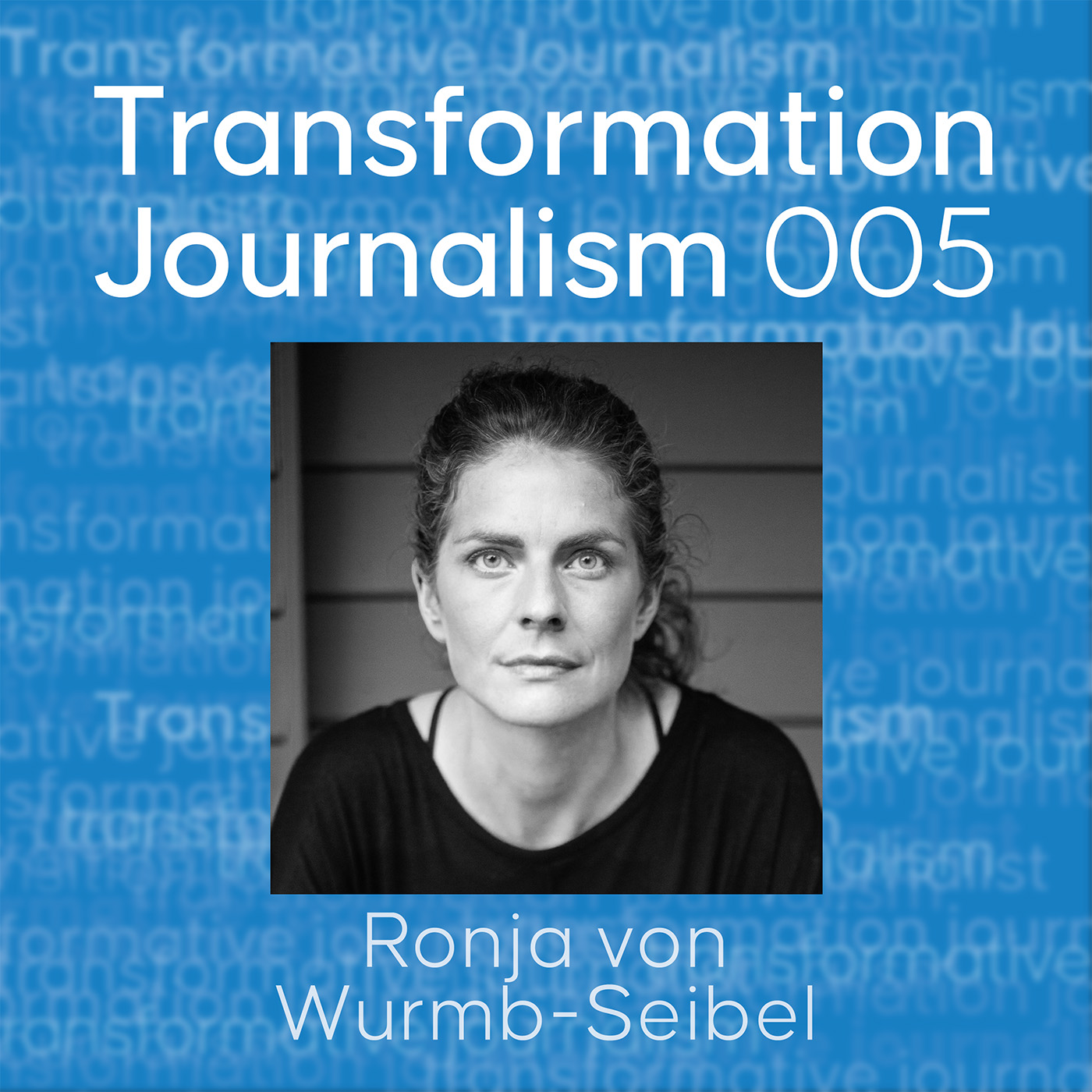
Ronja von Wurmb-Seibel: Räume für gesellschaftlichen Wandel gestalten
Darum gehts
Einen Tag nach der Bundestagswahl 2025 saß ich mit Ronja von Wurmb-Seibel in ihrem Wohnzimmer in Bayern. Ronja, SPIEGEL-Bestseller-Autorin und eine der profiliertesten Stimmen des konstruktiven Journalismus in Deutschland, spricht über widersprüchliche Gefühle: Hoffnung und Sorge, Aktivismus und Erschöpfung. Wenige Monate später kandidiert sie im konservativen Landkreis Fürstenfeldbruck für die Grünen als Landrätin – ein Schritt, der die Grenze zwischen Beobachten und Gestalten endgültig auflöst.
Fast zwei Jahre lebte sie als Reporterin in Kabul. Dort lernte sie, umgeben von Krieg und Katastrophen, dass Geschichten mehr können, als nur Probleme zu beschreiben. Sie können zeigen, wie Menschen trotz allem Kraft finden, aktiv werden und Veränderung gestalten. Diese Erkenntnis prägt ihre Arbeit bis heute.
Mit ihrem Partner Niklas von Wurmb-Seibel hat sie eine radikal andere Form des Journalismus entwickelt. Ihre Produktionsfirma BROT + ZWIEBEL bringt Filme nicht ins Fernsehen, sondern in Polizeiakademien, Jobcenter, Ministerien. Der Film ist Ausgangspunkt für moderierte Gespräche, die oft zu konkreten Veränderungsprozessen führen. Mit ihrem Film „Wir sind jetzt hier“ haben sie mittlerweile über 900 solcher Veranstaltungen durchgeführt – jede einzelne ein Raum, in dem Menschen zusammenkommen, die sonst nie miteinander sprechen würden.
In ihrem SPIEGEL-Bestseller „Zusammen“ (2024) beschreibt Ronja, wie Einsamkeit zu Radikalisierung führt und warum Verbundenheit demokratische Gesellschaften stabilisiert. Ihre Analyse ist keine akademische Übung. Sie ist gelebte Praxis: Im bayerischen Dünzelbach haben sie und Niklas ein Gästehaus für Künstler*innen gegründet, einen Ort, an dem Gemeinschaft konkret wird.
Wir sprechen über die Balance zwischen Hoffnung und Realismus, über Journalismus als Intervention, über die Macht des Zuhörens und darüber, wie man ein Leben gestaltet, in dem Arbeit und Werte nicht auseinanderfallen.
Show summary
One day after Germany’s federal election in February 2025, I sat down with Ronja von Wurmb-Seibel in her living room in Bavaria. Ronja, a SPIEGEL bestselling author and one of Germany’s most prominent voices in constructive journalism, spoke about contradictory feelings: hope and concern, activism and exhaustion. A few months later, she’s running for district administrator in the conservative district of Fürstenfeldbruck for the Green Party—a step that dissolves the boundary between observing and shaping.
For nearly two years, she lived as a reporter in Kabul. Surrounded by war and catastrophe, she learned that stories can do more than just describe problems. They can show how people find strength despite everything, take action, and create change. This insight shapes her work today.
Together with her partner Niklas von Wurmb-Seibel, she has developed a radically different form of journalism. Their production company, BROT + ZWIEBEL, doesn’t bring films to television, but to police academies, job centers, ministries. Their films serve as a starting point for facilitated conversations that often lead to concrete change processes. With their film „Wir sind jetzt hier“ (We Are Here Now), they have now conducted over 900 such events—each a space where people who would otherwise never speak with each other come together. These projects reflect the intention at the core of her SPIEGEL bestseller „Zusammen“ (Together, 2024), where Ronja shows how loneliness fuels radicalization and how connection stabilizes democratic societies. In Dünzelbach, she and Niklas founded a guesthouse for artists—a laboratory for lived community.
This conversation explores how journalism can be a tool for social change, the importance of balancing hope and realism, how deep listening builds connection, and how Ronja designs a life in which work and values remain aligned.
Transcripts
BITTE BEACHTEN: Dieses Transkript wurde automatisch generiert und nicht sorgfältig Korrektur gelesen. Wenn Ihr Fragen habt, schreibt mir bitte an uwe@transformationjournalism.com
PLEASE NOTE: This transcript has been auto-generated and not thoroughly proofread. If you have any questions, please reach out to me at uwe@transformationjournalism.com
Deutsch
Uwe Martin
Ronja, wir sind heute hier einen Tag nach der Wahl. Wie geht es dir?
Ronja von Wurmb-Seibel [00:00:39]:
Viele Gefühle. Wir haben in weiser Voraussicht gestern Abend ein paar enge Familienmitglieder eingeladen zur Wahl, damit wir nicht alleine schauen müssen. Das war sehr gut. Ja, und noch so am Verdauen, finde ich. Also manches finde ich toll, dass die Wahlbeteiligung so hoch war, zum Beispiel, hat mich sehr berührt, tatsächlich auch bei uns. Ich wohne in einem sehr kleinen Dorf mit 470 Leuten und wir gehören zu einem größeren Verband mit so 4000 Leuten ungefähr. Und da war die Wahlbeteiligung auch bei 90 Prozent. Und wir sind im konservativen Bayern, wo wir gerade sprechen, und da ist es gar nicht selbstverständlich. Und das hat mich sehr gefreut. Es gibt so Lichtblicke, aber insgesamt finde ich es einfach total schockierend oder schockiert nicht, weil es schon zu erwarten war, aber bedrückend und auch ein sehr bedrückendes Gefühl zu merken, dass sich so viele Menschen für eine in Teilen rechtsextreme Partei entscheiden bei der Wahl. Und bei mir geht das Gefühl dann aber meistens auch einher mit sehr viel Aktivismus innerlich im Sinne von was kann ich jetzt machen, mit wem kann ich mich vielleicht zusammenschließen, wie können wir dazu beitragen, dass es so kleine Inseln gibt, wo sich vielleicht alles ein bisschen wieder annähert.
komplettes Transkript lesen
Uwe Martin [00:01:55]:
Du bist ja bekannt dafür, dass du hast mehrere Bücher geschrieben, dein zweites war es, glaube ich, da ging es um konstruktiven Journalismus. Das heißt, du suchst immer auch in Geschichten sozusagen das, was einem auch Halt gibt, das Positive und was da sein könnte. Und über dieses Buch will ich mit dir reden, will aber vor allem auch über dein neues Buch mit dir reden und über eure Arbeit, wie ihr so zusammenkommt. In dem Zusammenhang jetzt so Wahl ist ja schon irgendwie eine ziemlich düstere Situation. Wie gehst du selbst damit um? Also wie findest du das Positive in diesen Situationen oder das Hoffnungsvolle?
Ronja von Wurmb-Seibel [00:02:39]:
Ich glaube, es ist mehr das Hoffnungsvolle als das Positive. Ich glaube, ich suche eigentlich immer nach so einer Art Kompass oder das ist gar nicht so ein aktives Suchen, aber das ist so eine Art von mir, glaube ich, mit so allen möglichen Krisenphasen oder Momenten in meinem Leben umzugehen, dann zu schauen, okay, wie kann ich mich da positionieren, wie kann ich damit umgehen? Und das ist selten, glaube ich, jetzt so was rein Positives, sondern so ein okay, wo kann ich ansetzen? Und bei mir war das oder war und ist es jetzt bei dieser Wahl, glaube ich, schon so dieses Gefühl, okay, viele Leute sind sehr betroffen davon. Ich merke es in meinem Umfeld, dass andere Leute demonstrieren, die sonst nicht demonstrieren gehen, dass Leute in Parteien eintreten, muss man ja gar nicht unbedingt oder sich ehrenamtlich engagieren oder solche Sachen. Und darauf schaue ich dann nicht, um das Gefühl zu Macht ja nichts. Das stellt sich dadurch gar nicht ein. Stimmt ja auch nicht. Es ist, finde ich, eine sehr bedrückende Situation, auch beängstigende Situation, teilweise auch über Deutschland hinaus. Aber um eben zu schauen, okay, wo ist denn der Weg, wo ich mich wieder einbringen kann und wo ich merken kann, ich kann was verändern? Weil meine Erfahrung ist meine persönliche, aber auch in Recherchen und sowas, dass Ohnmacht eben so ein Gefühl ist, was wir als Menschen sehr schlecht aushalten können und kriegen. Krisen ist eigentlich was, was wir gut können, was wir nicht unbedingt immer schön und es ist nicht bequem, aber das konnten wir immer schon als Menschen. Es gibt Krisen, seit es Menschen gibt, aber dieses Gefühl der Ohnmacht, das ist so schwierig und das merke ich bei mir auch. Ich fühle mich nicht gerne ohnmächtig. Deswegen versuche ich schnell an einen Punkt zu kommen, wo ich wieder merke ah, und hier ist dein Einfluss. Und ich hab vor ein paar Wochen oder Monaten, glaube ich mal von einer von einer Frau, die Comedy macht, den Satz gehört, ich bringe ihn jetzt nicht wortgenau hin, aber die gesagt hat, empfohlen hat zu okay, also überleg, was deine Currency ist, deine Währung. Also schau, was du geben kannst, ohne dass es dir schwerfällt, weil dann kannst du viel davon geben. Und da habe ich eben so über die Jahre gemerkt, dass eines, was ich geben kann, Worte sind, das Leuten Mut mach, dass Leute dadurch wieder neue Kraft schöpfen. Und das versuche ich zum einen meinen Büchern, aber ich habe auch so einen Newsletter und da hat es sich jetzt öfter so ergeben, dass ich nach, keine Ahnung, als Trump gewählt wurde oder jetzt als März dann eben diese Abstimmung mit der AfD gesucht hat, dass ich dann eben gemerkt habe, okay, jetzt kommt jetzt schreib mal ein paar Worte und war auch schon während Corona, aber so während dem Lockdown und so. Und da einfach dann oft das Feedback bekommen OK, cool, jetzt habe ich wieder neue Kraft. Und das war für mich so ein wertvoller Tipp zu Was ist deine Währung? Weil wir alle haben unterschiedliche Dinge, die wir geben können. Und dann eben zu schauen, was fällt mir denn leicht zu geben? Weil in so Momenten, wo wir selber, sag ich mal, ein bisschen gebeutelt sind, da können wir nicht einen riesen Kraftaufwand leisten meistens, sondern können vielleicht Komm, diese kleine Sache. Und das ist bei mir so ein ganz deutliches Bild momentan vor Augen, immer zu überlegen, was kann ich gerade geben, was mir leicht fällt. Und genau so mache ich das dann.
Uwe Martin [00:05:35]:
Und das sind dann Worte bei dir.
Ronja von Wurmb-Seibel [00:05:37]:
Es gibt auch andere Dinge, die ich mache, aber in meinem Fall sind es halt häufig Worte, weil ich gemerkt habe, es fällt mir tatsächlich leicht. Und es ist auch für mich eine Art, meine eigenen Gedanken und Gefühle und alles Mögliche zu verarbeiten oder eben auf zu orten, vielleicht eher nicht zu verarbeiten, zu ordnen, zu sortieren. Und da habe ich eben oft das Feedback schon bekommen, dass es Leuten noch mal geholfen hat, auch motiviert hat oder in eine bestimmte Richtung geholfen hat. Und ganz pragmatisch gesprochen, wir haben ein eineinhalb Jahre altes Kind, das nachts sehr häufig wach liegt. Also Worte kann ich auch nachts gut schreiben. Also ich muss ja auch einen Platz in meinem Leben dafür finden. Ganz pragmatisch gesprochen. Deswegen ist es auch eine Währung, die ich aus dem Gesichtspunkt der Was ist überhaupt machbar, gerade in unserem Alltag, was ich aber einfach gut geben kann?
Uwe Martin [00:06:24]:
War das schon immer so, dass Worte so ganz wichtig für dich waren oder schreiben so eine Währung für dich war oder ein Ausdruck?
Ronja von Wurmb-Seibel [00:06:31]:
Also ich glaube, dieses konkrete Verknüpfen mit das ist was was ich geben kann, habe ich tatsächlich erst seit ich weiß nicht mehr genau, wie ich das geschaut habe. Das war so ein Video, das war vor zwei Monaten, glaube ich, so eine so eine kleine Masterclass oder nicht zwei Monate, halben Jahr oder sowas. Aber Worte waren für mich schon immer wichtig. Ich habe einfach immer schon super gern gelesen, auch ganz, ganz viel als Kind. Und das ist für mich so ein Happy Place auf jeden Fall, wo ich selber auch ganz viel Halt finde und wo ich selber auch in vielen Momenten, glaube ich, so zufällig in so Bücher, so Bücher vor der Nase hatte, wo ich plötzlich dachte, ach ja Gott, genau das brauche ich jetzt. Oder einen Satz gelesen habe, wo ich dachte, ach ja, jetzt habe ich wieder Kraft. Und ich selber fühle mich immer sehr verbunden mit Menschen, wenn ich lese, weil das haben ja Menschen geschrieben. Und genau, also für mich selber ist das, glaube ich, so ein Ort, wo ich sehr viel Halt suche. Und jetzt hat sich das so ergeben in meinem Leben, dass ich auch schreibe, aber ich suche das auch immer noch. Ich lese auch immer noch gerne viel und finde, dass da auch immer wieder sehr viel halt. Oder auch beim gesprochenen Wort. Also auch wenn ich Podcast höre oder so, gibt es ganz oft so einen Satz, wo ich merke, okay, der ist es jetzt für die Phase gerade oder den ich dann ganz oft denke. Oder auch Menschen, die ich im Persönlichen erlebe oder getroffen habe, gibt es beide bei Nick und mir Sätze, die uns seit Jahren begleiten, die Menschen so bei einem Treffen gesagt haben und die dann wie so ein Kompass sind für uns.
Uwe Martin [00:07:58]:
Gibst du mir da mal ein Beispiel zu? Also was ist so ein Satz?
Ronja von Wurmb-Seibel [00:08:04]:
Also ein Bekannter von uns hat mal gesagt, er versucht immer die Menschen glücklicher zurückzulassen, als er sie angetroffen hat, ganz konkret. Das ist uns nicht als machen wir auch, aber als Anspruch vielleicht oder als Kompass so in Erinnerung. Und was das kreative Arbeiten angeht, hat ein relativ bekannter Musiker, den ich mal zufällig getroffen hab, erzählt, dass er das immer so sieht, dass in seinem Fall jetzt jedes Album, in unserem Fall wäre es Buch oder Film oder sowas, wie so ein Schnappschuss ist eigentlich von der Phase. Also dass er gesagt hat, er findet gar nicht, es gibt so ein gutes Album oder ein schlechtes Album oder das perfekte sowieso nicht, sondern es gehört halt alles irgendwie so zusammen für ihn. Und und ich fand dieses Bild so schön, dass es ein Schnappschuss ist von dem Moment in der Phase in deinem Leben, aber auch politisch oder je nachdem, um was es halt geht. Und das war für mich jetzt für das kreative Arbeiten oder auch journalistische Arbeiten sehr befreiend. Nicht so den Anspruch zu haben, es muss perfekt werden, sondern es ist wie so ein Schnappschuss deiner Möglichkeiten, deiner Fähigkeiten, deines Wissens, aber auch der Lebensphase, in der ich mich gerade befinde. Genau, da gibt es ganz viele so Sätze, müsste ich mal fallen mir bestimmt jetzt im Gespräch noch ganz viele ein, aber da gibt es viele Sätze, die jemand einfach nur so gesagt hat und die dann so bei mir ganz viel verändern, so nachklingen. Genau. Oder eben dieses mit der Währung. Das war wirklich nur so, was ich vorhin gesagt Es war so pay on your own currency. Und das ist bei mir so richtig hängen geblieben und hat ganz viel losgestossen. Und dann eben bei mir zu merken, okay, zum Beispiel sind es Worte oder was anderes wäre vielleicht irgendwie zu Ich bin gern Gastgeberin. Also Leute einzuladen und zusammenzubringen, verschiedene Leute aus verschiedenen Kontexten, dass die sich kennenlernen. Das ist was, was mir auch leicht fällt, was ich ger mach. So dann eben zu schauen, was macht das? Anstatt zu okay, ich muss jetzt aber als gute Demokratin muss ich aber XY machen, obwohl mir das halt mega schwerfällt. Vielleicht finde ich das so sinnvoll zu schauen, was ist das, was mir leicht fällt und was ich leicht und gerne geben kann.
Uwe Martin [00:10:00]:
Jetzt haben wir schon ganz viele Bereiche, über die ich gerne mit dir reden will. Dieses Zusammenbringen ist so eins, dieses Demokratin, Was kann ich denn eigentlich machen? Ist eins, das andere ist dieses Nick und du. Ihr arbeitet ja journalistisch, dokumentarisch mit unterschiedlichen Formaten. Ihr habt Bücher gemacht, Filme, Artikel. Hat sich da sowas entwickelt? Also ist es wie so eine Entwicklung, das eine erst und dann das andere? Oder wie entscheidet ihr das bei den einzelnen Geschichten, was es ist?
Ronja von Wurmb-Seibel [00:10:35]:
Also es ist eine Entwicklung insofern, dass wir immer mal Unterschiedliches machen. Ich würde aber nicht sagen, wir haben da gestartet und sind da gelandet. Ich habe vor allem beim Print gestartet. Ich war Politikredakteurin bei der Zeit am Start von meinem Berufsleben und habe mich dann selbstständig gemacht und bin als Reporterin nach Kabul gezogen. Und in der Zeit habe ich vorrangig Print gearbeitet, habe auch mal andere Sachen gemacht, aber vor allem Print. Und Nick hat in der Zeit ganz viel für den NDR gearbeitet, bei Panorama. Das heißt, er hat vorrangig Film gemacht, hat aber auch in der Zeit auch schon auch Print gemacht, aber so das war unser Start. Und als wir dann zusammen in Afghanistan gelebt haben, haben wir auch angefangen zusammenzuarbeiten. Und seither ist es sehr gemixt eigentlich, was wir machen und hängt, glaube ich, wirklich immer sehr von der Geschichte ab. Also noch mal einen Podcast gemacht und immer wieder Dokumentarfilme, aber eben auch oft so das Gefü Jetzt müsste man es eigentlich als Text haben oder als Buch. Es hängt, glaube ich, sehr von dem Thema ab, was uns gerade fesselt oder was was uns so beschäftigt.
Uwe Martin [00:11:40]:
Also das heißt, das Thema selbst zieht dann eine Form nach sich.
Ronja von Wurmb-Seibel [00:11:45]:
Ja, würde ich schon sagen, glaube ich. Es ist so ein Mix, aber es ist eigentlich selten so, dass wir Aber wir wollen mal wieder einen Film machen oder jetzt muss ich mal wieder ein Buch schreiben, sondern es ist mehr irgendwas beschäftigt mich. Was wäre da eine. Also so beides irgendwie so ein Mix? Ich kann es gar nicht genau sagen, aber es ist nicht so, dass wir von einem wegkommen und dahin, sondern ich finde beides hat so, also rein pragmatisch, ein Buch schreibt man eher alleine, einen Film kann man alleine kaum machen oder wir arbeiten nicht so. Wir machen Filme zusammen, auch in Zusammenarbeit mit anderen Menschen. Wir interviewen ganz viele Menschen für unsere Filme immer. Das heißt, das ist für uns eine Arbeit, die sehr viel aus dem Kontakt mit anderen Menschen besteht. Die Bücher, die ich jetzt geschrieben habe, bestehen, da treffe ich auch andere Menschen, aber bestehen ganz viel aus Recherche, ganz viel Lesen, eigenen Gedanken so ein bisschen drauf rumkauen, eigenen Erfahrungen. Also das ist eher eine Arbeit, wo ich dann eher zurückgezogen arbeite quasi. Da gibt es Unterschiede und eben auch in der Art, wie es dann konsumiert wird. Also ein Buch lesen wir meistens alleine, würde ich sagen. Es gibt natürlich Leseclubs und so was und Lesungen, aber die meisten Menschen, glaube ich, lesen ein Buch eher so alleine oder vielleicht noch zu zweit, wenn man sich vorliest. Und einen Film oder unsere Filme zumindest organisieren wir meistens so, dass wir die in so einem Setting präsentieren, also dass wir den Film haben. Und der Film ist aber eigentlich immer nur ein Teil von dem Paket. Der ist dann immer im Angebot zusammen mit einem Gespräch mit uns und oder Protagonist innen aus dem Film. Oder Expertinnen zu dem Thema, weil wir einfach die Erfahrung gemacht haben. Das ist so wertvoll, wenn Menschen zusammenkommen und über ein politisches Thema wirklich in den Austausch kommen, wirklich miteinander sprechen, auch mit unterschiedlichen Meinungen, Erfahrungen, sich austauschen und deswegen ist es auch in der Art, wie das jeweils konsumiert wird, dann ganz anders sozusagen. Also das ist auch unsere Filme schaut eigentlich nie jemand alleine, sondern die werden immer zusammengeschaut, weil wir die eben häufig in so Veranstaltungssettings zeigen.
Uwe Martin [00:13:49]:
Wieso? Also normalerweise macht man ja so einen Film, dann kauft irgendein Sender den und dann hört man nie wieder was, kriegt einen Leserbrief, Was macht ihr anders und warum?
Ronja von Wurmb-Seibel [00:13:58]:
Ja, das war dann vielleicht schon so eine oder war mit Sicherheit schon so eine Entwicklung. Wir haben eben, habe ich vorhin schon gesagt, kurz angefangen mit Panorama die Reporter und mit Panorama zu arbeiten. Also für die, die es nicht kennen, eine doch eher investigative Sendung, würde ich sagen, von NDR und ARD. Und das war auch toll, aber die haben halt ganz bestimmte Formatvorgaben. Damals war das noch, dass eine Reporterin oder Reporter im Bild sein musste. Das war dann ich dem Fall, was wir gemacht haben, was aber eigentlich gar nicht meinem Interesse so entspricht. Und thematisch gab es halt auch immer einen bestimmten Rahmen, sage ich mal, gar nicht thematisch, aber von der Länge und von dem Fokus und so. Und wir haben dann irgendwann gemerkt, dass wir einfach gern alleine arbeiten in dem Sinn oder selbstständig arbeiten. Da sind wir vielleicht beide zu stur, ich weiß es nicht. Und haben eben dann angefangen, unsere Filme selber zu produzieren, haben als erstes einen Kinofilm gemacht, 90 Minuten lang und haben den, der wurde eben in sehr vielen Kinos gezeigt. Und da hat sich das eigentlich so zufällig ergeben, dass da zufällig, wirklich ganz zufällig Protagonisten aus dem Film, die eigentlich in Afghanistan gelebt haben, in Deutschland waren. Und aus diesem Zufall haben wir dann eben Komm, dann machen wir eine Veranstaltung, das ist doch toll, dann können die noch dazu erzählen. Und haben halt das war bei der Premiere dann so und bei den weiß es nicht mehr genau, ist schon ein paar Jahre her, aber ich würde mal sagen eine Handvoll weiteren Veranstaltungen und haben innerhalb kürzester Zeit Wow, das ist noch mal so was anderes, als einfach nur in Anführungszeichen einen Film zu zeigen, wenn dann wirklich die Menschen dahinter stehen und Leute Fragen stellen können und die auch aus aktuellen Entwicklungen in ihrem Leben berichten können, man gemeinsam über menschliche Themen auch reden kann sich gemeinsam. Da wurde ganz viel geweint in den Gesprächen, ganz viel Leute sind verstummt sozusagen auf eine gute Art. Es wurde ganz viel gefühlt und das in einem öffentlichen Raum in dem Fall zu machen, haben wir schnell gemerkt hat, noch mal so eine ganz andere Kraft. Und da haben wir dann eigentlich gemerkt, das wollen wir jetzt eigentlich nur noch so machen, weil das war schön und das war für uns auch schön und sehr bereichernd. Und wir haben ganz, ganz, ganz viel Feedback bekommen. Und das ist natürlich nicht der Weg. Also bei unseren ersten Filmen, bei Panorama haben wir zahlenmäßig natürlich viel mehr Menschen erreicht. Es sind ja teilweise über eine Million Zuschauende, die da, die da reinschauen. Aber die Wirkung ist jetzt unsere Erfahrung. Die Wirkung ist halt eine viel nachhaltigere, wenn man in so einem Gespräch sitzt und den Film sieht, dann die Menschen trifft, dann noch was hängen bleibt. Da haben wir wirklich ganz, ganz viel berührendes Feedback bekommen, was das bei Leuten ausgelöst hat und in ihrem Leben dann auch verändert hat. Und genau deswegen ist das irgendwie so unser Weg geworden, ohne dass wir das jetzt groß geplant hätten oder als Karriereweg gesehen hätten, sondern das ist für uns irgendwie so geblieben. Und was auch toll ist, dass man das eben, dass wir das eben versuchen oder was wir sehr mögen, dass wir das in sehr viele verschiedene Kontexte tragen können. Also Schule oder Universitäten oder sowas, klar. Aber wir gehen eben auch versuchen immer in Ministerien zu gehen, die mit dem Thema zu tun haben oder andere Institutionen. Wir sind zum Beispiel an Polizeiakademien mit einem Film über Rassismus. Also so Sachen, dass wir wirklich immer schauen, wo sind Orte, wo wo genau diese Geschichte und dieses Gespräch vielleicht wirklich was verändern kann. Und das ist dann einfach auch toll zu merken, wie so eine Geschichte in ganz verschiedenen Kontexten ganz verschiedene Gespräche auch auslöst.
Uwe Martin [00:17:20]:
Jetzt sagst du, ihr bringt die gezielt in Kontexte, wo ihr was verändern könnt. Also das ist schon der Anspruch, Wirkung zu haben.
Ronja von Wurmb-Seibel [00:17:29]:
Also nicht unbedingt, das Verändern haben wir ja nicht in der Hand, würde ich mal sagen. Aber unser Anspruch ist auch Leute zu erreichen, die noch nicht genau unserer Meinung sind. Also wir haben am Anfang gemerkt, es gibt eigentlich so oder mit der Zeit gemerkt, es gibt eigentlich so zwei Gruppen, die wir gerne erreichen würden. Grundsätzlich freuen wir uns bei allen Menschen, die unseren Film schauen. Aber da hatten wir so gemerkt, die einen sind die, die eh schon aktiv sind, die eh schon voll dabei sind, die aber entweder so ein tatsächliches Aktivismus Burnout haben oder so auf dem Weg dazu sind oder gerade da wieder rauskommen oder irgendwie entmutigt sind und den Leuten zu signalisieren, hey, hier kriegst du noch mal Mut. So es lohnt sich. Dafür machst du das. Zum Beispiel auch Abgeordnete, mit denen wir den Film schauen und die dann okay, das habe ich jetzt gebraucht, um wieder zu verstehen, warum muss ich mich zum Beispiel bei der Migrationsdebatte dagegen lehnen, wenn die nach rechts geht. Und das andere ist aber schon der Wunsch, auch Leute zu erreichen, die das nicht so sehen, die es vielleicht sogar komplett anders sehen, die aus einer ganz anderen Lebensrealität heraus das Thema betrachten, die andere Erfahrungen haben, mit anderen Perspektiven aufgewachsen sind und da den Austausch zu suchen. Das ist schon so unser Bemühen, sage ich mal. Ob das dann was verändert, also ich bin sicher, es verändert was, wie groß diese Veränderung ist, ob man die politisch irgendwann merkt, keine Ahnung. Also da bin ich auch, glaube ich, es ist halt ein Film am Ende. Es ist jetzt nicht irgendwie die große Revolution, aber das ist, finde ich, menschlich, berührt mich menschlich und es ist für mich auch selber eine Herausforderung, der ich mich gerne stelle, so quasi mich zu überwinden, mit Leuten in Austausch zu kommen, die nicht schon genau meiner Meinung kommen. Das ist ja nicht immer leicht, aber es gehört halt auch zur Demokratie dazu. Und das ist eine schöne Herausforderung, finde ich.
Uwe Martin [00:19:23]:
Dein nicht erstes Buch, dein zweites Buch, glaube ich, das erste war über Afghanistan. Was hast du in Afghanistan gemacht?
Ronja von Wurmb-Seibel [00:19:32]:
Ich habe es vorhin schon kurz gesagt, ich habe mich selbstständig gemacht, war erst bei der Zeit eben da im Politikressort und habe, was ein toller Job war und so der symbolisch gesprochen, der Sechser im Lotto eigentlich so direkt nach dem Studium und habe auch ganz viel da gelernt und habe dann aber relativ bald gemerkt, dass das eben doch nicht so der Job ist, der mich so erfüllt, weil das ein sehr bürolastiger Job war, Sehr viele Konferenzen, sehr viel Debatte diskutieren, was alles irgendwie spannend ist. Aber mir hat so, ich war da auch noch sehr jung, ich war da 26, mir hat da gefehlt, rauszugehen und Menschen zu treffen und ich wollte halt die Welt auch irgendwie kennenlernen oder nicht die Welt, aber andere Menschen kennenlernen. Ich war neugierig und wollte raus und Geschichten erzählen und bin dann über einen thematischen Zufall, ich habe mich damals viel mit der Bundeswehr beschäftigt und bin dann darüber in Afghanistan gelandet für eine Geschichte und habe da halt schnell gemerkt, okay, hier will ich sein, hier will ich berichten. Und es hatte so mehrere Gründe. Also zum einen müssen wir ein bisschen gedankliche Zeitreise machen. Das war 2012, 13 und der Abzug, der jetzt 2021 passiert ist, war ursprünglich für 2014 geplant. Damals gab es auch die ersten mehr oder weniger freien demokratischen Wahlen in Afghanistan. Das war politisch einfach eine super spannende Zeit. Gleichzeitig war kein deutscher Journalist und Journalistin vor Ort. Also die haben, wenn überhaupt, über Afghanistan berichtet, aus Pakistan und aus Indien und sind dann eben eingeflogen oder aus dem Iran für wenige Zeit. Und als ich dann das erste Mal in Kabul selber war, habe ich eben ganz viele junge Menschen in meinem Alter damals Anfang, Mitte 20 kennengelernt. Afghanistan, eine sehr junge Bevölkerung, kriegsbedingt, also drei Viertel der Bevölkerung sind unter 25 und die waren wie ich more or less. Und das hat mich so überrascht, weil alles, was ich über Afghanistan gelesen und gehört hatte von Deutschland, es war gar nicht so wenig, hatte irgendwie mit alten Männern mit langen Bart zu tun oder Burka oder Bundeswehr Dingen, die für mich sich sehr weit weg angefühlt haben. Mich haben diese Menschen so berührt und auch, dass sie eben einen ganz krassen Sinn für Gemeinsinn hatten, ganz viele ehrenamtlich tätig waren, während in meinem Umfeld und auch in meinem eigenen Leben eigentlich eher so in der Zeit im Fokus, wie kann ich selber ins Leben starten, Karriere oder wo will ich wohnen oder so. Sehr oft in selber fokussiert war wir in Deutschland in meiner Bubble und das hat mich einfach sehr berührt da und habe dann irgendwie so gemerkt, ich will da wieder hin und dann kam so eins zum anderen. Im Nachhinein sieht es sehr stringent aus, aber damals war es eigentlich eher so eine chaotische Phase, wo ich mehr nach so einem Bauchgefühl gegangen bin und wirklich ich will jetzt hier sein, ich will das hier machen und bin sehr, sehr froh, dass ich da auf dieses Bauchgefühl gehört habe.
Uwe Martin [00:22:13]:
Das hat dich dann sehr geprägt.
Ronja von Wurmb-Seibel [00:22:15]:
Absolut, klar. Also vieles daran. Ich glaube, allein die Erfahrung noch mal in einem Land zu leben in dem Alter, das ja einfach sehr anders ist als Deutschland in eigentlich vielerlei Hinsicht natürlich auch ein Land, das von Krieg stark betroffen ist, von Armut, eines der ärmsten Länder der Welt. Das waren Lebensrealitäten, die ich so davor nicht kannte und das hat mich auf jeden Fall geprägt und aber auch, oder vielleicht sogar noch mehr wirklich die krasse, krasse, krasse Gastfreundschaft, die ich und später dann auch Nick dort erlebt haben und Menschen, die uns so warm aufgenommen haben, obwohl es teilweise für sie riskant war, weil wir Ausländer waren, weil es sie auch zu einem Ziel gemacht hat, zu einem potenziellen Ziel. Und diese Menschlichkeit wirklich zu merken und diesen Fokus auf Gemeinschaft, auf Familie, auf Zusammenhalt, das hat mich sehr, sehr geprägt. Also in der Art, wie ich Geschichten erzähle, aber noch mehr, noch stärker als Mensch, was mir wichtig ist, wofür ich meine Zeit verwende, wie ich selber versuche zumindest zu sein. Und ja, es hat mich sehr geprägt.
Uwe Martin [00:23:27]:
Wodurch glaubst du, ist dieses, das, was du dort gefunden hast, diese Gemeinschaft? Hast du was von Gemeinschaft oder Zusammenleben oder dass die Leute, die jungen Leute nicht gucken auf sich selbst, sondern eher, was kann ich für die Gesellschaft tun? Womit glaubst du, hat das zu tun und was hat sich dadurch dann für dich entwickelt?
Ronja von Wurmb-Seibel [00:23:49]:
Also ich glaube, es gibt schon so eine kulturelle Komponente. Das kennen ja auch, denke ich, alle, die da muss man jetzt nicht in Afghanistan gewohnt haben, die mal im Urlaub waren, dass Deutschland eines der eher kälteren Länder ist auf den ersten Blick. Also geht es ja, glaube ich, vielen von uns so, wenn wir reisen, dass wir ach, da sind alle so freundlich und lächeln und so. Das ist jetzt auf den ersten Blick nicht unsere Stärke in Deutschland, glaube ich, bestimmt auch historisch irgendwie bedingt. Ist noch nicht so lange her, dass wir in der Diktatur gelebt haben, aber so, da kenne ich mich gar nicht genau aus. Das ist jetzt einfach mein persönliches Erleben. Also ich glaube, diesen Faktor gibt es schon und ich will es aber auch gar nicht romantisieren. Es hat schon noch was damit zu tun, dass es da halt keine Sozialsysteme gibt. Es gibt keine Rente, keine Krankenversicherung. Du brauchst andere Menschen, um durchs Leben zu kommen und wir brauchen das hier auch. Wir wissen inzwischen auch, was Zusammenhalt mit uns, mit unserer Gesundheit macht. Das ist der Nummer 1 Faktor. Wie alt wir werden, wie gesund wir werden, ist, wie verbunden wir uns mit anderen Menschen fühlen. Aber es ist halt nicht ganz so offensichtlich, weil wir eben erstmal unsere staatlichen Systeme haben, die uns auffangen. Und wenn die wegfallen und noch dazu das Leben sehr existenziell sich nicht nur anfühlt, sondern ist, weil es eben jeden Tag oder fast jeden Tag in unserer Stadt Menschen durch den Krieg sterben, dann ist das einfach präsenter, glaube ich, wie wichtig andere Menschen für uns sind. Ich glaube gar nicht, dass es hier weniger wichtig ist, aber ich glaube, es ist hier einfacher, es zu vergessen oder auszublenden. Und habe ich dort erlebt es dort eben anders. Und da habe ich für mich eben ganz viel mitgenommen. Also ich habe mich dort sehr schnell, ich habe eineinhalb Jahre ungefähr dort gelebt, habe mich dort sehr schnell zu Hause gefühlt, habe dort mehr und tiefere Freundschaften geschlossen als überall sonst, wo ich sonst gewohnt habe in meinem Leben bis heute. Viele davon halten auch noch bis heute. Und ja, also das hat mich sehr, sehr geprägt.
Uwe Martin [00:25:39]:
Gibt es da so Momente, an denen man das so fest machen kann?
Ronja von Wurmb-Seibel [00:25:44]:
Also ich glaube, dort vor Ort gibt es nicht so richtig einzelne Momente, weil es wirklich was sehr Alltägliches war. Also eine Sache, bei der ich das noch am besten vielleicht so beschreiben kann, wenn man selber nicht dort gelebt hat, ist, dass so wie ich das kennengelernt habe, die Menschen, die ich dort kennengelernt habe, sich wirklich jedes Mal ganz bewusst verabschieden, so als würde man sich vielleicht nie wiedersehen. Also wirklich jedes Mal. Und Nick und ich haben beide gemerkt, dass wir das auch irgendwann angefangen haben und zwar wirklich selbst wenn du zum Einkaufen gehst oder kurz auf die Straße was holen, dass du einfach nicht einfach rausgehst, sondern man verabschiedet sich quasi. Und das ist gar nicht so dramatisch, wie es jetzt klingt. Also es ist einfach eine sehr bewusste, eine bewusste Art zu leben eigentlich. Und ja, und das ist glaube ich, was, was ich so als Bild vielleicht noch vor Augen habe, so dieses, okay, sei dir bewusst, das Leben ist kostbar und sei damit präsent und behandle es auch entsprechend. Ja, das glaube ich. Und ich glaube, für mich habe es dann eigentlich eher beim Zurückkommen nach Deutschland gemerkt, weil für mich damals in meinem Kopf quasi Deutschland so, also in Afghanistan, in der Zeit, in der ich dort gelebt habe, wurde Deutschland zu so einem Ort, wo alles so mehr oder wenig eigentlich schon wunderbar ist, einfach durch den Kontrast. Und ich bin dann zurück nach Deutschland gekommen in der Zeit, als sich Pegida gerade gegründet hat und dachte wirklich ernsthaft drei Wochen lang, das ist so ein Witz von der Heute Show oder so, Also ich konnte mir das überhaupt nicht vorstellen, dass es wirklich Pegida gibt, dass es Leute gibt, die das ernsthaft denken und verteidigen und fühlen und politisieren. Und bin dann eben in dieser Phase nach Deutschland zurückgekommen und hatte wirklich Schwierigkeiten, hier wieder anzukommen, weil weil ich es politisch nicht nachfühlen konnte, weil ich nicht verstehen konnte, wie wir in so einem so reichen Land so viel Abschottung anfangen, verteidigen, uns so bedroht fühlen können. Mit uns meine ich jetzt natürlich nicht alle, aber so als gesellschaftliche Debatte. Und das ist mir ganz schwer gefallen, also da wieder so reinzukommen in so ein Leben oder in so eine gesellschaftliche Stimmung, die eben fast so das Gegenteil war von dem, was ich in Afghanistan erlebt hatte. Und dann hat es aber wieder dazu geführt, dass Nick und mich beide und auch als Paar, als Familie dann, wir haben auch einen Pflegesohn bei uns aufgenommen aus Afghanistan oder wir wurden eine Familie eher so, dass wir eben gemerkt haben, okay, wir wollen das aber anders machen, Das ist unser Leben und das ist unser Umfeld und egal wo wir leben, wir können ja beeinflussen, wie es in unserem Leben ist und haben dann eben ganz viel Zeit und Energie darauf verwendet, zu okay, wir haben jetzt gemerkt, uns ist Gemeinschaft wichtig und uns ist Familie wichtig, uns ist Mitmenschlichkeit wichtig und wie können wir das in unserem Leben, wie können wir da Platz schaffen? Und das ist, glaube ich, so das, was uns am stärksten geblieben ist aus der Zeit, so diese wilde Entschlossenheit, das auch wirklich zu machen.
Uwe Martin [00:28:49]:
Wie äußert sich das? Also wie macht ihr das konkret?
Ronja von Wurmb-Seibel [00:28:52]:
Das ist gar nicht so überlegt. Deswegen kann ich das, glaube ich, nur so rückwärts erzählen. Wir haben jetzt nicht gedacht, das ist unsere Strategie, sondern mehr so, okay, wenn uns das wichtig ist, dann müssen wir das selber halt auch leben und verkörpern, weil wir wollen uns nicht zehn Jahre beschweren, dass es hier nicht so ist, wie wir es gern hätten. Also wir haben dann versucht und auch geschafft. Wir haben damals in Hamburg eben gewohnt, mitten in Hamburg unsere Nachbarinnen erstmal kennenzulernen oder mit denen Kontakt aufzunehmen, einzuladen. Zum Beispiel als Trump gewählt wurde das erste Mal und alle mega niedergeschlagen waren, haben wir einfach das ganze Haus, damals haben wir es, glaube ich, frustsoffen einfach genannt, eingeladen und es war total schön, weil fast alle gekommen sind und wir in der viel zu überfüllten Wohnung dann einfach unseren Frust geteilt haben und gelacht haben und uns aber kennengelernt haben. Und später während der Pandemie haben wir dann, hat sich das noch deutlich verschärft, nicht verschärft, verstärkt haben wir dann so uns jeden Abend an den Fenstern von einem Innenhof getroffen, haben sich ganz, ganz enge Freundschaften entwickelt. Später, als wir dann nach Bayern gezogen sind, jetzt leben wir in einem Haus, wo wir Gästezimmer eingerichtet haben, damit eben Menschen bei uns auch wohnen können für einen bestimmten Zeitraum und wir mit ihnen wohnen können und zusammenleben können. Es gibt ganz viele Faktoren. Wir haben mehr Zeit frei gemacht für unsere Großfamilien. Wir haben sehr viele Neffen, fahren einmal im Jahr mit denen allen in Urlaub. Das ist unser Geschenk, Neffennichten, Cousins, Cousinen, so alle im Kinder Teenager Alter. Also es gibt ganz viele Beispiele, wo wir halt immer wieder überlegen, OK, wo können wir unser Leben noch mehr so machen, wie wir es uns wünschen. Genau, es ist jetzt nicht so ein Plan, sondern eigentlich immer wieder so, okay, was jetzt, manche Sachen ergeben sich dann auch einfach.
Uwe Martin [00:30:32]:
Und jetzt hast du ein Buch geschrieben, das heißt zusammen, genau, kommt das daher oder wie kommt das Buch?
Ronja von Wurmb-Seibel [00:30:42]:
Ich kann gar nicht so den einen Moment sagen. Also es kommt schon daher aus dieser, ursprünglich würde ich sagen, aus dieser Erfahrung in Afghanistan, dann zu merken, das fehlt uns hier irgendwie in unserem Leben in Deutschland bisher dem Bemühen, es anders zu machen. Das hat mich dann über mehrere Jahre begleitet und beschäftigt. Und der Auslöser, warum ich dann irgendwann gesagt habe, damit möchte ich mich jetzt auch beruflich auseinandersetzen, war dann eigentlich, als ich mehr und mehr Studien darüber gelesen habe oder Überstudien gelesen habe, die eben beschreiben, es gibt einen Zusammenhang zwischen Menschen, die sich stark einsam fühlen und Menschen, die sich politisch nach rechts radikalisieren. Und da habe ich dann gemerkt, okay, das ist echt gesellschaftlich relevant für uns gerade. Und das war, glaube ich, so der Moment, das interessiert mich immer, glaube ich, so Schnittstellen zwischen Dinge, die uns vielleicht als Individuen belasten und beschäftigen und gesellschaftlichen Problemen. Und wenn ich dann merke, es ist auch nicht so was Strategisches, sondern das merke ich jetzt so aus der Selbstbeobachtung und Reflexion der letzten Jahre, dass das oft so Themen sind, wo ich dann denke, ach, da will ich jetzt mehr dazu wissen und die dann auch häufig oder häufig, aber jetzt zweimal in einem Buch geendet sind und so war es bei dem Buch, glaube ich auch.
Uwe Martin [00:31:56]:
Also hattest du das Gefühl, hey, wir machen das hier schon oder wir versuchen das und gleichzeitig fällt was auseinander in der Gesellschaft oder wie?
Ronja von Wurmb-Seibel [00:32:05]:
Also ich hatte das Gefühl, wir versuchen es auf jeden Fall und gar nicht so sehr im Sinne von uns gelingt es perfekt, so gar nicht. Aber ich merke, es tut mir jedes Mal so krass gut, wenn es klappt und es ist so schön und so bereichernd und es entstehen so ganz viele Dinge, die ich davor gar nicht hätte planen können und die mir auch alleine nie gelungen wären. Also das ist, glaube ich, mehr so ein Gefühl von sehr viel Bereicherung und Halt, das ich in meinem Leben persönlich dadurch bekomme und in unserer Gesellschaft. Ich bin gar nicht so sicher, ob das Ich tue mir schwer damit zu sagen, dass es kaputt gegangen ist, weil ich also jetzt in meinem Leben, ich bin jetzt knapp 40, ich gar nicht weiß, ob es so woanders war früher. Aber es wird sichtbar auf jeden Fall, so würde ich glaube ich mal sagen. Also man muss da auch ein bisschen differenzieren. Das heißt nicht, dass alle Menschen, die sich einsam fühlen, automatisch sich radikalisieren oder so. Null. Aber es gibt Es ist halt ein Risikofaktor, sag ich mal. Also Menschen, die sich unverbunden oder ausgegrenzt fühlen. Es ist ein Risikofaktor für Radikalisierung nach rechts explizit und klar. Radikalisierung nach rechts ist schon was, was uns, also was einfach gerade stattfindet, offensichtlich auch schon seit mehreren Jahren. Und ich glaube, was mich an dem Thema so berührt, ist diese Vorstellung, dass Verbundenheit was ist, was uns als Mensch wirklich ausmacht. Also wir kommen auf die Welt, wir brauchen immer einen anderen Menschen, wir können alleine nicht existieren. Es gibt ja diese furchtbaren Experimente aus den er Jahren, glaube ich, wo eben rausgekommen Babys können nicht überleben, wenn sie keine soziale Zuneigung haben. Also selbst wenn sie gefüttert und alles haben, körperlich können sie nicht überleben, weil sie das brauchen oder nur mit schweren psychischen Schäden. Und eben zu merken, das ist was, was uns ausmacht als Mensch. Wir lernen mit wenigen Monaten schon Kontakt aufzunehmen, zu lächeln, diese ganzen sozialen Interaktionen und zu merken, bis jetzt, also in unserem Erwachsenenalter sind das die Momente, wo wir Endorphine ausschütten, stressabbauende Hormone, wo wir Schmerzmittelähnliche Stoffe unser Körper selber produzieren kann, weil uns jemand anlächelt oder wir uns berühren oder wir einfach uns wohlfühlen mit anderen Menschen. Also das finde ich fast schon wie so ein Magic, so eine Superkraft irgendwie. Wir können durch die Stadt gehen und einfach nur, weil wir Leute anlächeln, passiert in deren Körper was. Wow, wenn man sich das mal, also mich berührt das und begeistert das förmlich. Und das eben uns klarzumachen, dass dieses, also das finde ich fast schon auf so eine philosophische Ebene so schön, dass das, was uns als Mensch so ausmacht, gleichzeitig mit eine Lösung sein könnte für eines oder mehrere der drängenden Probleme gerade wirklich wieder an den Punkt zu kommen, wo wir empathischer werden, wo wir uns berühren emotional, wo uns auch die Geschichten von anderen Menschen wieder berühren. Und dass das noch dazu so für Klimakrise, aber auch für Radikalisierung eben, dass das lösen könnte, finde ich einfach wow. Also das finde ich einfach total schön. Ich verbinde damit schon auch sehr viel Hoffnung, weil es eben nachweislich dazu führen kann, dass Menschen wie so eine Art Schutz haben gegen Radikalisierungstendenzen.
Uwe Martin [00:35:14]:
Wenn sie besser?
Ronja von Wurmb-Seibel [00:35:16]:
Eingebunden sind, wenn sie sich verbunden fühlen. Also man kann jetzt nicht sagen, so und so viele Kontakte braucht es dazu. Es ist wirklich ein sehr individuelles Erleben. Also Einsamkeit in dem Zusammenhang würde man so definieren, dass man sagt, wer sich weniger sozial verbunden fühlt, als er es gern hätte, er oder sie, das ist quasi eine dauerhafte Einsamkeit. Und diese Menschen sind eben anfälliger für rechte Propaganda und in einem Level, dass auch rechte Gruppierungen das sehr wohl wissen und auch benutzen. Also sowohl Trump als auch in Österreich die Rechten als auch in Deutschland arbeiten ja ganz viel mit so Begriffen wie Familie oder also mit so einem Wir ich mache gerade Anführungszeichen mit einem Wir Gefühl, weil dieses Wir Gefühl natürlich macht deshalb in Anführungszeichen, weil es natürlich auf Hass und Abgrenzung basiert und deswegen überhaupt nicht diese echte Verbundenheit jemals sein kann, weil Menschen das sehr wohl mitbekommen irgendwo in ihrem Bewusstsein und wissen, ich könnte auch ausgegrenzt werden. Also es ist immer mit so einer leichten Gefahr noch mit dabei. Aber auch Leute, die bei der AfD wieder in Anführungszeichen ausgestiegen sind, berichten ja, dass es schon auch so eine Motivierung gibt quasi oder auch bei anderen rechtsextremen Gruppierungen jetzt nicht so viel Kontakt zu halten mit den anderen und dass da schon so eine Abschottung eigentlich gibt oder den Versuch. Und auf der anderen Seite aber auch, weil das kennen wir, glaube ich, alle bei Leuten in unserem eigenen Umfeld, wenn wir Leute kennen, die sich nach rechts stark radikalisiert haben, da haben wir auch nicht mehr so viel Lust, vielleicht noch mit denen viel Kontakt zu haben. Und wenn dann die Kontakte noch abbrechen, dann gibt es eigentlich wie so eine Spirale, dass die halt immer mehr in diese radikalen Tendenzen kommen. Und das ist so der Gedanke dahinter, gleiches oder nicht gleiches, aber vergleichbar auch bei islamistischer Radikalisierung zum Beispiel. Da ist es ja auch, wissen wir ja auch, dass eben die Tatsache, dass sich verständlicherweise viele junge Männer ausgegrenzt fühlen, eben auch ein Risikofaktor ist für Radikalisierung. Wie gesagt, Risikofaktor. Also es gibt keinen Automatismus, auch ganz wichtig, Aber sich eben klar zu machen, mangelnde Verbundenheit löst in unseren Körpern einfach schnell aus und zwar auf eine Art, die sich für uns existenziell bedrohlich anfühlt, weil wir das immer schon gebraucht haben und früher natürlich noch viel mehr. Wir konnten nicht ohne andere Menschen, also auch physisch nicht ohne andere Menschen überleben und unsere Körper wissen das noch. Das heißt, wenn wir uns ausgegrenzt fühlen, haben wir massiven Stressausstoss, ganz andere Hormone, die in unserem Körper aktiviert werden. Und was dann eigentlich passiert ist, dass wir so eine Art Schutzschild aufbauen. Das heißt, dass wir nicht mehr so mit anderen Menschen mitfühlen und auf Verteidigung ausgerichtet sind. Wir misstrauen anderen Menschen, wir fangen aber auch an, politischen Institutionen zu misstrauen. Wir sind anfälliger für Verschwörungstheorien. Also all diese Sachen, weil es uns eben im Kern als Mensch bedroht, wenn wir uns alleine fühlen. Und das ist, finde ich, eine Erkenntnis, die, glaube ich, einfach wichtig ist für unsere Zeit heute.
Uwe Martin [00:38:12]:
Jetzt beobachtest du das auf der einen Seite, also klassisch journalistische Arbeit eigentlich, aber ihr werdet ja auch aktiv. Bei mir im Podcast geht es so ein bisschen darum, genau diese Balance zu gucken, weil ich glaube, dass Journalistinnen und Journalisten viele Fähigkeiten haben, die eigentlich heute in unserer Gesellschaft sehr stark gebraucht werden, dass wir sie aber aufgrund der Art, wie sich unsere Medien entwickeln, dort vielleicht nicht mehr so sehr einsetzen, sondern sie vielleicht anders kanalisieren können, um wirklich gesellschaftliche Transformationsprozesse anzustoßen, zu begleiten und so weiter. Und ich habe das Gefühl, bei euch ist es ganz stark drin. Wie ist das bei euch konkret?
Ronja von Wurmb-Seibel [00:39:04]:
Also ich glaube, meine persönliche Einstellung zu auch Journalismus als Beruf war noch nie so, dass ich eine neutrale Beobachterin war. Ich habe noch nie so gedacht, gelebt, gefühlt, gearbeitet. Und ich finde es kein realistischer. Wir sind Menschen, wie soll das funktionieren? Und gleichzeitig finde ich sogar aktiv ist es der Auftrag von Medien, in Anführungszeichen, aber dann konkret eben den Menschen, die dort arbeiten, sich auf die Seite derer zu schlagen, die nicht schon an der Macht sind. Whoever that is. Und das war immer schon mein Verständnis von Journalismus. Ich kann auch gar nicht genau nachvollziehen, warum sich das so. Ich finde, das hat sich ja stark verändert in den letzten. Ich arbeite seit 10, 15 Jahren journalistisch in der Zeit 15 Jahren eher. Also das ist, da gibt es ja auch viele Debatten darüber, aber ich bin eindeutig und klar und dafür lasse ich mich auch gerne angreifen, aber ich bin eindeutig und ganz klar der Position, dass Journalismus per se politisch ist. Nicht im Sinne von für eine Partei oder sowas gar nicht, sondern eben, dass Journalismus die Menschen zu vertreten hat, die nicht schon an der Macht sind, die nicht schon Privilegien haben. Also das ist vielleicht wichtig zu wissen, dass ich diesen Standpunkt habe. Und da hat sich auch wirklich nichts verändert über die Jahre. Das war immer schon so. Und dieses Veränderungen anstoßen wollen. Also ich glaube tatsächlich daran, dass Geschichten das einfach tun. Ich glaube gar nicht, dass wir darüber hinaus noch 25 andere Sachen machen. Ich glaube daran und der Glaube ist auch ungebrochen, dass Geschichten Veränderungen anstoßen und bewirken. Insofern kann ich mir fast gar nicht vorstellen, Journalismus zu machen, der nicht transformiert, in welche Richtung auch immer. Können ja verschiedene Richtungen sein. Aber weil das für mich so eng verbunden ist und ich glaube, was jetzt, sage ich mal, unseren Aktivismus, wenn man es vielleicht so nennen will, in anderen oder in zusammenhängenden Bereichen damit betrifft, hat sich eigentlich, glaube ich, für mich jetzt nie direkt aus der Arbeit ergeben, also aus der konkreten journalistischen Arbeit, sondern eigentlich eher daraus, dass ich über die Arbeit ganz viele Menschen kennengelernt habe, die sehr viel weniger Privilegien haben als ich und dass ich dann eigentlich durch deren Schilderung oder dadurch, dass ich deren Leben auch mitbekommen habe. Das war gar nicht unbedingt immer jetzt für die konkrete Recherche, sondern einfach nur dadurch, dass ich sie kennengelernt habe, dass sie Teil von meinem Leben geworden sind. Ich gemerkt habe, oh krass, das gibt es ja auch. Also angefangen bei Rassismus. Wir haben, habe ich vorhin schon gesagt, ein afghanischer Jugendlicher, Hasib, Der ist mit 16 bei uns eingezogen, inzwischen ist er 25, wir sind Familie, Punkt. So, da gibt es bis heute. Und mir war davor einfach nicht klar, wie viel Rassismus so eine Person erlebt. Und auch wenn ich mit ihm zusammen war, habe ich das nicht erlebt, weil dann wurde er nicht angegriffen, sondern wenn er alleine war, ohne weiße Begleitung, dann wurde er angegriffen, teils körperlich, teils sehr häufig mit Worten in Hamburg, einer wirklich weltoffenen Stadt. Und das zu merken, also wie unsichtbar das für mich ist, weil ich nicht betroffen bin, hat bei mir ausgelöst, dass ich gemerkt habe, so I can’t unknow it, so ich weiß es jetzt und das beeinflusst mich dann als Mensch. Und dann wird es Punkte in meinem Leben geben, wo ich sage, da stehe ich auf, da mache ich den Mund auf, da streite ich, da werde ich vielleicht aktiv, da was auch immer gehe ich demonstrieren. Das ist nicht aus einer konkreten Geschichte entstanden, sondern aus meinem Lebensstil, der sich vielleicht, der durch meine Arbeit so ist, dass ich viele Menschen kennenlernen, die anders leben als ich. Deswegen ist es für mich gar nicht so eine, also es hängt irgendwie zusammen, aber es ist für mich nichts, was sich ausschließt und auch nichts, was ich problematisch finde, weil es eben nicht mit der konkreten Geschichte ist. Und was ich vorhin gesagt habe, zum Beispiel bei unseren Filmgesprächen, dass wir dann schauen, wo wollen wir die Menschen erreichen. Ja klar, wenn ich daran glaube, dass Geschichten was was bewegen, dann heißt es ja, ich will was bewegen, so bei mir jedenfalls. Und es gibt dann die Möglichkeit zu sagen, okay, sollen es halt so viele schauen wie möglich. Das heißt, ich versuche in Anführungszeichen die Karriereleiter hochzuklettern oder bei möglichst prominenten Medien zu landen. Das war ja auch Teil meines Wegs. Also ich will jetzt nicht sagen, soll man nicht machen oder so, habe ich auch gemacht und habe dann eben für mich gemerkt, das ist nicht das wo ich mich wohlfühle oder wo ich das Gefühl habe, dass das bringt für mich jetzt. Ich will da gar nicht judgen, aber für mich jetzt, das erfüllt mich nicht. Es bringt meine Geschichten auch nicht dahin, wo ich sie gerne hätte. Und habe dann eben gemerkt, nee, es ist mir schon wichtig, auch Menschen zu erreichen, den ich vielleicht auch so was Neues geben kann, weil ich diese Erfahrung selber so wertvoll finde, neue Leben in meinem Leben zu haben sozusagen. Und diese Erfahrung will ich dann vielleicht teilen. Vielleicht ist es das. Also zu sagen wie so eine Art Übersetzerin quasi oder Vermittlerin zu Hey, hier gibt es Lebenskontexte, die kennt ihr einfach nicht und diese Geschichte kann euch die zeigen. Genau.
Uwe Martin [00:44:14]:
Du hast ja gesagt, Geschichten verändern und transformieren, aber eigentlich, oder ist nicht der Kontext oder dieser Kontext, den ihr dadurch schafft für eure Geschichten, Ist der nicht mindestens genauso entscheidend wie die Geschichte selbst?
Ronja von Wurmb-Seibel [00:44:32]:
Das kann ich natürlich ganz schwer trennen, weil ich ja schon überlege, wenn ich sage, wie können wir die Geschichte gut erzählen, baue ich ja den Kontext. Also für mich würde das zum Geschichte erzählen dazugehören auf eine Art. Aber ich kenne es von mir, wenn wir jetzt mal ganz weggehen von Journalismus, Ich treffe eine Person, wir reden zwei Stunden. Das, was mich am Ende berührt, sind nicht irgendwelche Fakten, die mir diese Person mitgeteilt hat, sondern Anekdoten, Geschichten, Emotionen. Das ist das, was mich berührt und was ich teilweise 5, 10, 20 Jahre in meinem Leben immer präsent habe, was für immer Teil von mir sein wird. Und das meine ich mit Geschichten berühren und verändern. Und ja, also klar, der Kontext spielt eine Rolle. Die Art, wie wir Geschichten erzählen, welche Geschichten wir erzählen, da gibt es mit Sicherheit immer Geschichten, die mehr oder weniger verändern. Wenn wir eine Geschichte erzählen, die genau so schon hundertmal erzählt worden ist, wird sie vielleicht weniger transformieren. Vielleicht erreichen wir dann noch andere Leute, für die sie auch neu ist. Aber wenn das eine Geschichte ist, die schon wirklich jeder kennt und wir erzählen sie noch mal, dann klar, dann gibt es da wenig Spielraum, glaube ich, für Veränderungen. Ein bisschen vielleicht immer noch, aber wenig. Und so versuchen wir eben dann zu sagen, okay, was ist denn die Geschichte, die gerade Das ist gar nicht so aktiv. Es ergibt sich halt häufig zu sagen, okay, was ist die Geschichte, die eigentlich gerade fehlt in der Debatte? Und das ist aber nicht, dass wir uns hinsetzen und dann intellektuell analysieren und sagen so, das ist die Migrationsdebatte, was fehlt denn da jetzt? Sondern wir kennen Leute, die davon betroffen sind. Wir lieben Leute, die davon betroffen sind. Und dadurch merken wir, ihr redet die ganze Zeit am Thema vorbei aus unserer Sicht. Und ihr lasst die Leute nicht zu Wort kommen, die es wirklich betrifft. Und dann ist eben unser Impuls zu okay, dann lass doch mal die Leute reden. Und dann, klar, dann verändert es wieder was, weil die Geschichte plötzlich eine ganz andere ist. Aber deswegen kann ich den Kontext schlecht davon loslösen, weil es Teil unseres Storytellings ist quasi.
Uwe Martin [00:46:25]:
Genau. Aber ihr sucht ja schon sehr gezielt dann nicht nur die Leute erzählen, was die euch die Geschichte erzählen, ist das eine, ihr bringt diese Geschichte und transformiert sie oder nutzt diese Übersetzerfunktion, aber ihr sagt ja auch ganz gezielt, ihr bringt sie an Polizeiakademien, ihr bringt sie in Universitäten, ihr bringt sie also woanders hin gezielt. Also das ist schon Teil der Transformation, oder?
Ronja von Wurmb-Seibel [00:46:49]:
Genau, also ich glaube, dieses, was ich versucht habe zu beschreiben, dieses Bedürfnis, es ist natürlich irgendwie ein politischer Drang, jetzt nicht im Sinne von irgendwelchen Parteien oder so, sondern menschlich politischer Drang, also politisch im Sinne von sich für Menschenrechte einsetzen, was übrigens Teil unserer Verfassung ist. Also eigentlich eine sehr konservative Einstellung, wenn wir es mal so betrachten, die ich auf jeden Fall habe. Das ist schon Teil davon. Aber ich glaube, noch mehr ist eigentlich wirklich dieses Bedürfnis. Also ich kann das gar nicht so gut in Worte fassen, aber was ich selber eben immer wieder erlebe, wenn ich in ein anderes Leben kurz eintauchen darf durch meinen Job, verändert sich mein Blick auf die Gesellschaft, auf mein Leben, auf die Welt. Und dieses Gefühl eigentlich oder diesen Aha Moment vielleicht, der oft ja vielleicht sogar fast so ein körperlicher, emotionaler Aha Moment ist, wenn ich glaube, mein Drang ist eigentlich oder mein Wunsch ist eigentlich, das anderen Leuten zu ermöglichen, die halt nicht den Job haben, den ich habe, sondern die einen Job haben, wo sie jeden Tag sehr ähnlich Menschen treffen, die eben in ganz anderen Umständen wiederum leben. Und ich glaube, dieser Aha Effekt ist halt je größer, desto mehr wir Menschen erreichen, die das noch nicht kennen. Also und was ich genau, also das ist glaube ich ein Anreiz und der andere Anreiz, und da sind wir dann, glaube ich, wieder tatsächlich bei diesem transformativen Effekt, der auch über die Geschichte hinausgeht, ist tatsächlich dieses Gespräch. Also zu sagen, was können Gespräche eigentlich bewirken und verändern. Ein vielleicht etwas plakatives Beispiel, aber ich glaube, da versteht man es am schnellsten. Wir haben unseren Film bei DHL gezeigt und da haben eben dann Zusteller innen, die selber Fluchtgeschichte, haben mit dem Teil vom Vorstand gesprochen nach dem Film und die haben ganz konkret über Arbeitsbedingungen gesprochen, die für sie schwierig sind oder richtig schwierig sind, weil sie zum Beispiel dadurch ihren Aufenthaltstitel gefährden und so weiter. Also ganz konkrete, ganz kleinteilige Vertragsform und so was. Und so ein Gespräch kann unheimlich viel verändern. Und da sind wir dann bei der Transformation. Also da ist unsere Geschichte eigentlich mehr so der Anstoß. Und das wirklich Transformative ist dann aber das Gespräch. Und wir sind manchmal Teil von diesem Gespräch, häufig Teil von diesem Gespräch, aber ganz häufig organisieren wir es auch nur. Also wir sind dann dabei und reden auch. Aber das, was drauf ankommt, ist eben, dass diese verschiedenen Menschen, Gruppierungen, die von diesem Thema betroffen sind, sich austauschen. Und das ist, glaube ich, das Transformative, was ich vielleicht sozusagen tatsächlich losgelöst vom Storytelling noch dazunehmen kann und möchte zu sagen. Und daran glaube ich auch in unserer Gesellschaft heute, die ja über Social Media und so weiter sehr vernetzt ist, wo wir wenig Austausch haben, von Gesicht zu Gesicht das zu ermöglichen, wo ich das kann, das tatsächlich glaube ich, was, wo ich sehr dahinter stehe.
Uwe Martin [00:49:40]:
Also richtige Interaktionen, richtige Kommunikationsräume schaffen eigentlich, oder?
Ronja von Wurmb-Seibel [00:49:45]:
Genau, Kommunikation und Kommunikationsräume und Räume, wo Menschen, die sich so geschützt anfühlen, dass Menschen sich trauen, wieder mitzufühlen oder sich auch intellektuell hineinzuversetzen in die Situation der jeweils anderen Person. Also wo wir es schaffen, wieder uns zu begegnen, ist vielleicht so ein bisschen oldschool dafür, aber was diese Faktoren vielleicht so mit einberechnet. Also wirklich versuchen, uns von Mensch zu Mensch zu begegnen. Und das ist, glaube ich, was, was sich durch alle Themen so durchzieht, auch schon in Afghanistan damals eben zu sagen, okay, das sind nicht irgendwie die Leute, die ganz weit weg komplett anders leben wie wir, sondern genau wie wir sind es Menschen, die, also was offensichtlich ist eigentlich, wir haben die gleichen Gefühle, wir wollen die mehr oder weniger gleichen Dinge im Leben und immer wieder zu diesem ganz Menschlichen durchzudringen. Und da ist Gespräch, finde ich, oder haben wir jetzt so gemerkt in den letzten Jahren, einfach ein ganz besonderer, ein besonderer Rahmen einfach, wo Menschen sich noch mal ganz sehr politisch, aber häufig ohne Streit und ohne dieses Gezanke oder auch ohne Hetze und ohne Hass begegnen können durchaus übrigens Menschen, die sehr polarisiert sich gegenüberstehen.
Uwe Martin [00:50:54]:
Moderiert ihr das auf eine bestimmte Art und Weise? Also habt ihr so Ideen, wie ihr das schafft, damit es nicht politisch, also damit es politisch ist, aber nicht so parteipolitisch und so polarisiert?
Ronja von Wurmb-Seibel [00:51:09]:
Bestimmt. Also ich glaube, das machen wir bestimmt. Wir haben jetzt keine konkrete Strategie. Also ich glaube eigentlich, was wir mit der Zeit gemerkt haben, ist, was uns am meisten interessiert, ist eigentlich, was geht in den Leuten vor, wenn sie den Film sehen. Und damit steigen wir immer ins Gespräch ein. Wir laden die Leute ein, zu teilen, wie sie sich gerade fühlen, was der Film in ihnen berührt hat, was sie für Gedanken hatten, ob sie an eigene Erfahrungen erinnert wurden, sei es im privaten oder im beruflichen Kontext. Das heißt, die Leute, die zuschauen, in dem Fall, wer auch immer das dann ist im konkreten Kontext, können genauso Politiker innen sein wie jetzt Schulkinder oder so. Also da machen wir gar keinen Unterschied. Die erzählen erst mal, was das bei ihnen ausgelöst hat. Und dadurch sind wir eigentlich schon mitten in diesem Begegnen, weil die Menschen sich öffnen, weil sie sich auch trauen, das in einem öffentlichen Raum zu sagen, was ja mutig ist, finde ich auch. Und daran knüpfen wir dann eigentlich immer an. Und dann kommt es schon auch immer meistens an den Punkt, wo es dann auch um ganz konkrete politische Fragen geht oder bestimmte Maßnahmen, was wir davon halten oder so. Und dann verstecken wir uns auch nicht. Es ist aber eigentlich selten so ein ganz zugespitztes Gespräch, also zugespitzt im Sinne von, wie wir jetzt so Talkshows kennen oder so politische Talkshows, sondern es ist wirklich eigentlich mehr ein Austausch. Und das ist, glaube ich, die eine Sache, die wir tatsächlich sehr beharrlich machen, dass wir erstmal fragen, was hat bei euch denn ausgelöst und dann versuchen, da wiederum anzuknüpfen.
Uwe Martin [00:52:42]:
Das treibt eigentlich diesen konstruktiven Ansatz, den du in deinem Buch, Wie wir die Welt sehen, beschreibst, noch mal ein Stück mehr auf die Spitze weil du nicht einfach schon eine Lösung sagst, also da gibt es irgendwie Problem, da gibt es eine Lösung oder es gibt mehr Lösungsansätze oder so, sondern die Lösungsansätze oder die Diskussion aus dem Publikum oder den Menschen, die ihr dort einladet, heraus sich vielleicht entwickelt, wo will ich damit hin gerade, das fühlt sich für mich an, als wäre das ein viel weiterer Schritt als das, was gemeinhin unter diesem konstruktiven Journalismus Begriff im Moment in den Medien oder in dieser Bubble diskutiert wird, sondern er geht da ja echt einen Schritt weiter.
Ronja von Wurmb-Seibel [00:53:35]:
Oder habe ich ehrlich gesagt noch nie so drüber nachgedacht jetzt so. Also ich verstehe, was du meinst, auch kurz nachdenken, was ich darüber denke und fühle. Ich glaube, also ich glaube, wenn ich jetzt so, man muss ja dazu sagen, ich bin jetzt nicht mehr so im tagesaktuellen Journalismus, habe ich auch gemacht früher, sondern eigentlich mehr im dokumentarischen, so Langzeiterzählen oder eben Bücher, wo ich mich sehr viel mit den Ideen und Gedanken auch anderer Menschen auseinandersetze, auch mein eigener, aber auch der andere Menschen. Und in beiden Formen schaue ich schon auch selber nach. Also da gibt es schon diesen Aspekt von konkreter Recherche zu konkreten Lösungen. Ich glaube aber tatsächlich, ein großer Teil meiner Arbeit ist eigentlich eher bei anderen Menschen. Diese konstruktiven sind ja auch oft gar nicht Lösungen, sondern eher Erfahrungen oder Anekdoten oder Wissensfetzen, Emotionen, sowas, das rauszukitzeln im Gespräch oder rauszustellen und das dann wiederum mit anderen Leuten zu teilen und eigentlich darauf zu vertrauen, dass gar nicht ich sagen muss, so und so, das ist die Lösung, was ich auch sehe ich jetzt tatsächlich nicht so als meine Rolle, auch weder als Mensch noch als Journalistin momentan, sondern eigentlich eher zu sagen, das gehört ja dann in die Debatte. Also das ist dann was, wo die Öffentlichkeit zusammenkommen kann. Wie auch, muss ja nicht immer die ganz große Öffentlichkeit sein, können auch 30 Leute sein, aber wer auch immer diese Öffentlichkeit dann ist an dem Tag, dass die das so, also darauf zu vertrauen, dass die das auch können. Ich habe immer ein ganz großes Unbehagen gehabt und immer noch, und ich habe in Redaktionen gearbeitet, wo ich das gehört habe, das überfordert den Leser, es war auch nicht Leserin, sondern den Leser oder das interessiert den nicht oder so, das alles so unterkomplex zu behandeln, weil das ist überhaupt nicht meine Erfahrung. Ich habe echt viele, also wir haben in den letzten Jahren, glaube ich, mindestens 900 Veranstaltungen gemacht. Ich begegne Leuten, die Medien konsumieren, sehr regelmäßig von Angesicht zu Angesicht. Und ich habe noch nie gehört, dass jemand gesagt hat, es ist mir zu komplex. Noch nie, noch nie, kein einziges Mal. Es ist auch mir noch nie vorgeworfen worden, noch kein Leserbrief, der das gesagt hat. Noch nie. Und ich behandle komplexe Themen. Das ist was, womit ich ein großes Unbehagen habe. Dieses Gefühl, man muss immer alles so unterkomplex zu machen. Ich meine jetzt nicht so was wie leichte Sprache oder so ist was anderes, aber das ist ja eher eine Frage der Zugänglichkeit. Aber eben zu sagen, Themen sind komplex und wir haben nicht die eine Lösung, die passt. Wir können nur einen Raum gestalten und bieten, der Menschen Sicherheit gibt, sich zu zeigen und ehrlich ihre Standpunkte und Erfahrungen zu teilen und nicht zu hetzen, nicht Populismus nachzuplappern. Und das finde ich, ist im Idealfall die Aufgabe der Medien, zu sagen, hier ist ein Anstoß, damit ihr, damit wir, da sind wir dann Teil davon. Aber es sind eben nicht nur wir Medien, sondern wir als Gesellschaft uns über dieses Thema austauschen können. Und ja, das ist glaube ich, so was, was wir nach und nach so für uns gefunden haben, von dem ich mir aber jetzt wiederum rückblickend, wenn ich mir vorstelle, es gäbe so eine Talkshow, ja wow, die dann Millionen Menschen sehen, das wäre natürlich toll. Also einfach, weil ich ja erlebe ganz regelmäßig, wie viel Kraft von solchen Gesprächen ausgeht. Und ich denke, dass es für mich eine in einer idealen Welt wäre das vielleicht Funktion von jetzt wieder in Anführungszeichen, den Medien zu sagen, wir schaffen wirklich echte Debattenräume, wo Menschen sich trauen, mit offenem Herzen und verletzbar und überfordert auch sich zu zeigen. Vielleicht an einem Tag traurig, am anderen Tag wütend, alles okay. Aber eben immer in so einem Rahmen, wo es nicht darum geht, die andere Person und die andere Meinung fertig zu machen, sondern sich besser zu verstehen. Man muss sich auch nicht einigen. Immer ist auch nichts, was bei unseren Gesprächen immer passiert. Also man muss nicht mit einer Meinung rausgehen. Aber zu trainieren und zu schaffen, die Meinung der anderen Seite zu hören und zu verstehen oder zu versuchen zu verstehen. Und dann kann man sich und muss man sich auch immer noch gegen Hass und all diese Sachen abgrenzen, auch im Gespräch. Aber das kann man eben auch auf eine ruhige Art machen. Dazu müssen wir nicht dann auch rumschreien oder so, sondern ja, dass das irgendwie zu gestalten und da diesen Rahmen zu schaffen und auch vielleicht ein Stück weit Vorbild zu sein. Also das ist dann vielleicht doch wieder unsere Rolle zu moderierenden, gar nicht mit konkreten Fragen oder so, sondern einfach, dass wir selber auch versuchen, in den Gesprächen vorzuleben, dass wir eben ruhig, also jetzt schon emotional und sowas, aber nicht mit verletzender Sprache, nicht mit selber, nicht pauschalisieren, selber nicht populistisch werden, sondern eben ganz konkret erzählen, ehrlich bleiben, auch sagen, wenn wir was nicht wissen oder so. Oder wenn wir irgendwo einfach sagen können, das weiß ich nicht, da ist meine Expertise nicht groß genug. Das ist dann vielleicht so die moderierende Rolle im Sinne von, dass wir versuchen, das vorzuleben oder so den Ton zu setzen für das Gespräch, aber gar nicht jetzt unbedingt die konkreten fünf Fragen, sondern mehr so eine Gesprächshaltung, würde ich sagen, ne?
Uwe Martin [00:58:42]:
Gut, also Raum schaffen.
Ronja von Wurmb-Seibel [00:58:44]:
Genau. Und halten. Also auch wenn dann, das kommt schon durchaus auch immer wieder vor, dass dann auch heftige Kritik kommt oder da auch Leute sitzen, wo du genau weißt, nach allem, was die sagen, sind die rechts und nicht nur ein bisschen. Das erleben wir schon auch. Und dann eben zu üben, okay, wie kann ich Widerspruch leisten, wie kann ich da auch eine Grenze ziehen inhaltlich und mich ab, also nicht im Sinne von, du darfst es nicht sagen, sondern mich abgrenzen und klar sagen, du beschreibst gerade nichts, wofür ich stehe und was ich so sehe, aber gleichzeitig das eben nicht zu machen in einer Art, in der wir laut werden oder unsere Macht in Anführungszeichen, die wir auf einer Bühne irgendwie immer haben in dem Moment ausnutzen, sondern eben auch in solchen Situationen dann versuchen, sehr ruhig und zugänglich zu bleiben. Und das glaube ich, oder habe ich auch öfter schon als Feedback bekommen, dass das was ist, was Leute sehr schätzen, weil es ja auch ein Vorbild geben kann für die vielen, vielen Gespräche, die wir alle, glaube ich, in unserem Alltag führen, die nicht immer so laufen, wie wir uns das vielleicht wünschen, wo wir vielleicht mit Familienmitgliedern oder anderen Leuten aneinandergeraten. Und da kann das ja auch ein Vorbild sein, zu sagen, ah, okay, ich kann auch mich abgrenzen, ohne gleich total wütend zu werden oder so. Oder wütend ist ja auch gar nicht schlimm, aber ohne verletzend zu werden, ohne selber angreifend zu werden. Und das ist, was wir, was uns wahrscheinlich auch nicht immer gelingt, was wir sehr versuchen und was häufig auch gelingt, damit dann so umzugehen. Und es ist gar nicht immer so leicht. Also zum Beispiel, wir sind in der Schulklasse und während dem Gespräch merken wir, der Lehrer ist wirklich rechtsradikal, nicht irgendwie ein bisschen rechts, sondern von allem, was er sagt. Wenn er sich nicht gerade komplett verstellt, ist er einfach rechtsradikal. So, das ist natürlich eine komplexe Situation, weil auf der einen Seite ist es uns total wichtig, uns zu positionieren und zu Hey, was der da gerade sagt, was du da gerade sagst, ist nicht okay oder was sie da gerade sagen, ist nicht okay dem Lehrer gegenüber, aber auch den Schüler innen, die ja zuhören und für die wir auch ein Vorbild sind, den Protagonist innen, die wir auch irgendwie auf eine Art schützen oder die uns vertrauen, dass sie da jetzt nicht vors Messer gelegt werden, bildlich gesprochen in der Situation. Und trotzdem dann aber auch vorzuleben, wir wollen dann einen anderen Weg gehen, als den jetzt wiederum fertig zu machen oder total bloßzustellen oder wir wollen überzeugen. Wir wollen nicht irgendwie du Arsch, das kann man doch nicht sagen, sondern wir wollen halt überzeugen oder wir wollen was Überzeugendes. Wir wollen was Überzeugendes sagen, so meine ich. Ob wir dann überzeugen, keine Ahnung. Aber wir wollen was sagen, wo Leute vielleicht sagen, das überzeugt mich jetzt mehr als dieses populistische, menschenverachtende, was du gerade gesagt hast. Also das ist dann schon komplex mitunter. Deswegen weiß ich nicht, ob es uns immer 100 Prozent gelingt. Aber in solchen Situationen weiß ich, dass ich und ich weiß es auch von Nick, weil viel darüber reden, dass wir so merken, oh, da kommt jetzt drauf an. Das sind die Kernmomente von so einem Gespräch, wo es dann ganz, ganz wichtig ist, dass wir präsent sind, dass wir wissen, was ist unsere Haltung? Wie gehen wir damit jetzt um?
Uwe Martin [01:01:52]:
Gibt es so eine Situation, wo das mal so völlig eskaliert ist oder derailt ist und so überhaupt nicht geklappt hat?
Ronja von Wurmb-Seibel [01:02:07]:
Also mir fällt jetzt keiner, wir haben wirklich sehr, sehr viele Gespräche gemacht, mir fällt jetzt keiner ein. Das heißt nicht, dass es die nicht gegeben hat. Es gab auf jeden Fall Momente, mehrere Momente auch in mehreren Gesprächen, wo ich dann irgendwann, also nicht nach dem ersten Satz, aber nach einem mehrfach hin und her, ich irgendwann dann doch dieses, was ich vorhin gesagt habe, die Macht der Bühne benutzt habe oder genutzt habe, um zu sagen, ich glaube, wir kommen da jetzt gerade nicht weiter, ich würde das jetzt gerne an der Stelle mal so stehen lassen, damit noch andere Leute, weil sich tatsächlich auch andere Leute noch zu Wort gemeldet haben, damit wir mit dem Gespräch weitermachen können, was ich gut finde in dem Moment, aber was sich nie ganz befriedigend anfühlt, weil es zum einen, weil ich dann eben diese in Anführungszeichen Macht nutze, zum anderen aber auch, weil es ja irgendwie auch so ein Eingeständnis ist, Sackgasse, so Gespräch, Sackgasse, das gibt es aber auf jeden Fall auch immer wieder. Also wir machen das dann eben nicht nach dem ersten Satz oder so, aber wenn wir irgendwie merken, okay, da kommt einfach gar nichts mehr oder es wird so super verletzend. Also ich erinnere mich an ein Filmgespräch, da haben wir eben die Geschichte von Überlebenden eines Selbstmordanschlages erzählt und im Publikum saß jemand, der im Prinzip diese Überlebenden behandelt hat, als wären sie selber Taliban sprachlich, da habe ich sehr bestimmt das dann gestoppt auch. Da habe ich auch nicht mehr für Verständnis geworben oder so, sondern das habe ich einfach gestoppt, weil ich da eben dieses, was ich vorhin gesagt habe, wir haben auch eine Verantwortung den Protagonisten gegenüber, dass die auch wissen, sie sind da in einem. Das heißt nicht, dass sie nicht kritisiert werden können, aber wenn jemand wirklich menschenverachtend wird und das wurde diese Person in dem Fall, dann ist es auf jeden Fall meine Aufgabe, das zu stoppen und sie da zu schützen. Also sowas gibt es schon auch. Es gab jetzt, glaube ich, nicht, dass irgendjemand schreiend rausgerannt ist oder so, aber das ist ja schon in einem öffentlichen Rahmen sind ja alle schon sehr bedacht, sage ich mal. Also das waren für mich dann schon Momente, wo ich eben, wo ich dann mit dem Gefühl rausgehe, heute sind wir in so einer Sackgasse gelandet, schade, Aber wo ich es trotzdem dann wichtiger finde, auch irgendwann zu sagen, so und jetzt glaube ich, verlassen wir diesen geschützten Raum, wenn wir nicht aufhören darüber zu sprechen, wenn wir nicht da jetzt einfach stoppen sozusagen oder uns darauf einigen, wir kommen da irgendwie nicht weiter. Also diese Situation gibt es auf jeden Fall. Ist nicht jedes Mal so, ist auch nicht die meiste Zeit, aber schon immer wieder.
Uwe Martin [01:04:31]:
Wenn wir das mal konstruktiv drehen, gibt es dann Dinge, wo du ach du Scheiße, das eskaliert jetzt gerade oder läuft total aus dem Ruder, wo du die Möglichkeit gefunden hast, das zu drehen. Und was waren das für Momente?
Ronja von Wurmb-Seibel [01:04:48]:
Ich glaube gar nicht unbedingt, wo ich die Möglichkeit gefunden Vielleicht gibt es die auch. Ich habe jetzt bei deiner Frage eher gedacht an Momente, wo ich mit so einem Gefühl reingegangen bin, so oh Gott, jetzt sind wir heute hier. Also ich weiß, als wir das erste Mal einen Film aus Afghanistan bei der Bundeswehr gezeigt haben, ich habe früher viel über die Bundeswehr berichtet, habe dann eine, ich kann nicht mal sagen ablehnende Haltung, das stimmt nicht, aber ich habe sehr viele negative Erfahrungen gemacht. Ich habe in Afghanistan tolle Soldatinnen kennengelernt, wirklich tolle, menschlich wie beruflich, aber auch wirklich schlimme, so beides. Und habe mit den Strukturen der Bundeswehr vor Ort sehr viele Schwierigkeiten gehabt. Und auch nicht nur ich, sondern haben mir auch führende Generäle das zurückgespiegelt. Also das war für mich wie so eine Art Erkenntnis. Und dann waren wir eben das erste Mal bei der Bundeswehr in Deutschland, haben das gezeigt. Das war von einer Gruppe von jetzt nicht führenden Generälen, aber schon eher oberen Positionen, die selber die meisten oder alle im Einsatz auch waren. Und da weiß ich, dass ich schon dachte so, okay, wie wird das jetzt? Und das war eine so berührende Veranstaltung, weil die sich eben tatsächlich, ich kann nicht sagen, ob alle, aber die Mehrheit berühren haben lassen, sehr berührend erzählt haben von den Erfahrungen, die sie gemacht haben, auch beschrieben haben, dass sie teilweise vielleicht entweder Leute wirklich verloren haben oder kennen, die jemanden verloren haben. Also es war ein ganz, ganz, ganz, ganz berührender Austausch. Und die haben auch beschrieben, wie sehr sie dieser Mut der Menschen, der Afghanen, in dem Fall aus dem Film, also der afghanischen Schauspieler, ist kein Fiction Film, sondern es ging um Schauspieler, die angegriffen wurden auf einer Bühne, wie sie das berührt hat. Und da war ich, also da habe ich gemerkt einfach, dass ich natürlich selber auch Vorurteile habe, ist ja klar, mit denen ich dann da reingegangen bin und wo ich dann selber so entwaffnet wurde, weil die sich eben berühren haben lassen und das auch gezeigt haben. Und das ist ja in einem sehr toxischen, also die haben alle Uniformen, die sind darauf getrimmt, diszipliniert zu sein. Das heißt nicht, dass sie nicht fühlen können, aber sie haben es auch selber beschrieben. Es ist eine ungewöhnliche Situation, dass das so in dem Raum auch so emotional besprochen wird. Und solche Situationen gibt es, glaube ich, immer wieder, wo ich erst mal denke, okay, jetzt mal schauen und dann total überrascht bin, dass Leute sich damit mit der Geschichte identifizieren können oder sich berühren lassen können, wo ich es selber nicht gedacht hätte. Und das ist, glaube ich, auch für uns die Motivation, immer wieder diese Räume auszutesten, weil wir selber auch so überrascht werden und sie merken, ach guck mal, da gibt es ja doch eine Übereinstimmung oder Überschneidung vielleicht. Und auf der anderen Seite aber auch, also wir haben auch schon Filme gezeigt, einen Film gezeigt in sogenannten Helferkreisen, also bei Leuten, die ganz engagiert sind seit Jahren in der Flüchtlingshilfe, wo wir die so krass rassistische Sachen gesagt haben, wo ich wirklich das Gefühl hatte, so ich muss ja eigentlich jeden einzelnen Satz redigieren und einordnen und sagen, also so kann man das sagen, aber so nicht und wo ich erst mal gar nicht damit gerechnet hatte. Das ist aber auch bereichernd als Erfahrung eben zu merken, okay, ein Kontext alleine kann halt noch nicht sagen, wie das Gespräch wird und wie die Menschen da sind. Was ich gemerkt habe über die Jahre ist, dass ganz wichtig ist, dass ich präsent bin in dem Moment. Oder Nick, wer auch immer von uns dabei ist, Also dass es gar nicht so sehr nur auf die Worte drauf ankommt, sondern wirklich darauf ankommt, dass wir in dem Moment sind, dass wir nicht gedanklich irgendwo anders sind, dass wir die Sachen, die uns vielleicht selber gerade stressen, beiseite stellen können, dass wir wirklich diesen schützenden Raum halten können. Und das ist viel wichtiger, habe ich gemerkt, als jedes Wort oder jeden Satz, den ich sagen kann. Diese Präsenz auszustrahlen und dieses Bemühen auch, wie weit es dann gelingt, ist die eine Sache, aber diese Bemühung zumindest wirklich mitzunehmen.
Uwe Martin [01:08:49]:
Du hast jetzt gerade erzählt, was so einerseits mit den Leuten, die ihr erreicht, mit diesen Veranstaltungen passiert ganz viel, was mit euch passiert dadurch dein Lernen. Jetzt bringt ihr aber auch noch die Protagonisten damit hin. Was ist denn für die, also der eine Film, den ihr gemacht habt, erzähle das nur mal kurz. Das war ein Film, wo ihr sieben, glaube ich, junge Männer, die während. Erzähl mal kurz, was war Der Film?
Ronja von Wurmb-Seibel [01:09:14]:
Genau, sieben junge Männer, die ungefähr im Jahr 2015, so von 2013, glaube ich, bis 2015, wenn ich es jetzt richtig im Kopf habe, nach Deutschland gekommen sind, aus ganz verschiedenen Ländern. Was sie eint, ist, dass es eben alle Männer sind und dass sie fast alle, also dass sie alle alleine als Männer alleine nach Deutschland gekommen sind und die meisten von ihnen minderjährig, aber eben vor allem dieses alleine, alleinstehende Männer. Und wir haben uns, also ich bin sehr feministisch, Nick, auch, wir haben uns bei dem Film trotzdem oder gerade deswegen auch dafür entschieden, eben ausschließlich Männer zu interviewen, weil die damals so krass in der Debatte waren in den Jahren 2015 bis 220 und so krass vorkriminalisiert wurden. Ja, und das war einfach ganz, ganz unmenschliche Debatten durch alle politischen Parteien in Deutschland, also natürlich vor allem bei der AfD, auch viel bei der CSU und Jonathan, durch alle politischen Parteien wirklich gab und wir eigentlich so das Gefühl hatten, zum einen das Gefühl hatten, ihr redet die ganze Zeit über diese Menschen, ihr redet nie mit diesen Menschen, fast nie. Und es auch eine Studie gab, europaweit damals, die eben geschaut hat, wie wird über Geflüchtete berichtet und die gesagt hat, in weniger als zehn Prozent der Fälle. Werden diese Menschen überhaupt als einzelne Menschen beschrieben. Also noch nicht mal, dass sie zu Wort kommen oder mit Namen genannt werden, sondern in 90 Prozent der Fälle, mehr als 90 Prozent wird immer von Flüchtlingsstromwelle, all diesen furchtbaren Worten, die ich eigentlich gar nicht reproduzieren will. Aber das heißt, sie werden als Maße beschrieben und nicht als einzelne Menschen. Und gleichzeitig wissen wir aus der Forschung, dass wir immer nur mit einzelnen Menschen mitfühlen können. Es ist schwieriger, mit einem Geschwisterpaar mitzufühlen als mit einem Geschwisterkind. Also so sehr sinkt unsere Empathie, wenn es um größere Zahlen geht, schon messbar zwischen einem Kind und einem Geschwisterpaar, also einem Kind und Zwillingen zum Beispiel. Das wissen wir aus der Forschung. Und umso mehr natürlich, wenn wir über hunderttausende Menschen reden oder zehntausend oder auch noch 500, das heißt, das war unser Anfangspunkt, wo wir gesagt haben, okay, wir wollen dem was entgegensetzen, haben dann diesen Film gemacht und haben eben auch angefangen, diese Gespräche zu machen. Fast immer wirklich mit einem der Protagonisten mit dabei oder mehreren. Und das war, das ist bis heute sehr berührend und unglaublich eigentlich, was diese Gespräche aus, also jetzt fünf Jahre später machen wir das immer noch mit dem Film. Natürlich ist ganz viel im Leben der Protagonisten passiert, Es ist politisch ganz viel passiert. Wir dringen in immer weitere Räume ein mit diesem Film, nicht eindringen. Wir öffnen immer mehr Räume für diesen Film, mit diesem Film. Und da haben uns einige derer diese Filmgespräche gemacht haben, also ganz unterschiedlich. Manche haben gesagt, ich habe das ein paar Mal gemacht, ich möchte das nicht wieder machen, ich möchte nicht dieser Vorzeige Geflüchtete sein, der jetzt noch mal alles erklärt. Ich möchte nicht ständig wieder in dieser Rolle gefangen sein. Also das gibt es auch, aber auch andere Menschen, andere von denen, die halt gesagt haben, es tut so gut zu merken, dass die mir zuhören und dass sie wirklich meine Geschichte interessiert. Die meisten von denen sind ziemlich jung jetzt inzwischen so Anfang Mitte 20, Mitte 20 eher. Und wir gehen da auch zum Beispiel in Schulen oder so. Und dann gibt es halt auch Momente, wo da einfach Jährige sitzen, die halt den Jährigen nach seiner Musik fragen, weil er Musik macht und nicht danach, dass er geflohen ist. Und das ist, glaube ich, ganz wichtig und auch beschreiben die selber so für sie wichtig oder eine schöne Erfahrung zu merken, ich spreche jetzt mit den Menschen, die so viel über mich urteilen, ansonsten, die hören mir zu. Es ist gleichzeitig aber auch eine emotionale Höchstleistung, möchte ich mal sagen, die die da vollbringen. Also ich habe bei jedem einzelnen Gespräch Respekt, weil die ja gar nicht wissen, was für Fragen kommen, die ja gar nicht wissen, okay, sitzen da jetzt Menschen, die mir wohlgesinnt sind, sitzen da jetzt Menschen, die mich angreifen mit Worten? Beides passiert teilweise auch im gleichen Gespräch, die sehr häufig nach ihrer Fluchtgeschichte gefragt werden, sehr häufig gefragt werden, wie geht es deiner Familie? Und den meisten Familien geht es nicht gut, Also wo es immer wieder um traumatisierende Kontexte geht. Und ich habe wirklich größten Respekt und finde das so mutig und stark von denjenigen, die das eben auch teilweise sehr häufig machen. Aber sie selber sagen, es tut ihnen auch gut und sie suchen, sie möchten diesen Kontakt auch, also auch Auf der Seite verändert das auf jeden Fall ganz viel. Und bei einem anderen Film, den wir gemacht haben, also diese sieben kannten sich nicht, bevor wir den Film gemacht haben, haben sich einige davon auch kennengelernt durch die Gespräche und so und haben auch beschrieben, dass sie sich selber verbunden fühlen, weil sie merken, ich bin nicht die einzige Person mit dieser Geschichte. Bei einem anderen Film haben wir eben über Überlebende eines Anschlags einen Film gemacht und die kannten sich tatsächlich so lose, haben alle den gleichen Anschlag erlebt. Und die haben wirklich beschrieben, eben auch über mehrere Jahre Filmgespräche, dass das dazu geführt hat, dass sie sich wie eine Familie fühlen untereinander und das ihnen wiederum ganz viel Kraft gibt und auch hilft, dieses traumatisierende Ereignis zu verarbeiten, wenn sie wissen, das ist unter anderem daraus entstanden, dass wir jetzt so eng miteinander sind. Also das sind Sachen, die können wir nicht planen, wollen wir auch nicht planen. Aber da entsteht auf jeden Fall auch was. Also das habe ich, glaube ich, ganz am Anfang gesagt. Ich glaube eben, wenn wir anfangen, Dinge zusammen zu machen, entsteht, ist meine Erfahrung so viel Unerwartetes auf ganz vielen Ebenen. Und das ist eben sogar bei so was wirklich Überschaubarem, würde ich jetzt mal sagen, wie ein Dokumentarfilm, das ist ja nicht, die Welt ist ja ein Film, aber selbst da kann eben ganz viel entstehen, wenn wir uns trauen, das wirklich mit anderen Menschen so zu teilen oder zu schauen, was passiert, wenn wir da zusammen was machen damit.
Uwe Martin [01:14:54]:
Wie toll Familie hat sich geschaffen daraus oder sie werden wie so eine Familie. Was ich daran spannend finde, ist, dass ich erlebe das in meiner eigenen Arbeit ganz viel. Ich arbeite so viel international überall. Und selbst wenn du eine Geschichte machst, die vielleicht Leute berührt, selbst wenn du sie in anderen Kontexten zeigst, als nur in einem Magazin, wo sie halt viele Leute lesen, aber sich keine tiefe Auseinandersetzung stattfindet, ist es trotzdem ganz oft so, dass die Leute, über die wir die Geschichte gemacht haben, wenig davon haben. Wir claimen das zweimal als Journalisten so und sagen immer, ja, wir berichten und sind sozusagen Anwalt der Schwachen und so, aber das ist dann ein Zeitleser in Hamburg so das ist halt irgendein Anwalt oder Studienrat oder so. Der hat aber mit dem Leben in Afghanistan oder mit dem Leben des geflüchteten jungen Manns ganz wenig zu tun und verändert es nicht. Und das finde ich gerade sehr spannend, weil ihr Schafft es wirklich konkrete Veränderungen, nicht geplante konkrete Veränderuungen, aber ihr schafft es durch die Art und Weise, wie ihr das ganze Setting baut, auch im Leben dieser Menschen direkt etwas zu verändern?
Ronja von Wurmb-Seibel [01:16:20]:
Jein, ich würde gerne sagen, die schaffen das. Also die schaffen das und wir unterstützen sie dabei, indem wir diesen Raum öffnen. Aber sie selber sind es, die das schaffen. Und da sprichst du was total Wichtiges an, finde ich, was ich auch ganz konkret so in Afghanistan gelernt habe, dass eben nicht wir den Menschen einen Gefallen tun, wenn wir über berichten, sondern sie tun uns einen Gefallen, dass sie so mutig ihre Geschichte teilen, weil in den allermeisten Geschichten haben sie davon fast nichts, außer das Gefühl gehört zu werden. Aber wir sind nicht die Menschen, die wir sind Journalist innen, wir erzählen Geschichten, wir fixen nicht deren Leben. Und ja, also das finde ich ganz wichtig, das zu sagen, weil glaube ich, viele ein anderes Verständnis davon haben und dann auch ein mitunter problematisches Verständnis von sich selbst in diesem Beruf haben. Und das habe ich in Afghanistan deshalb so konkret gelernt, weil es da ganz wichtig war, den Leuten immer zu sagen, es wird in deinem Leben wahrscheinlich nichts verbessern, wenn du mir jetzt deine Geschichte erzählst. Vielleicht riskierst du sogar was. Also überleg dir das gut, ob du es machen möchtest. Überleg dir auch bitte ausführlich, bevor du wirklich mit mir sprichst. Und ja, also ich sehe das eher so, dass wir den Menschen ganz viel zu verdanken haben, weil sie uns so reinlassen in ihr Leben und in ihre Gefühlswelten. Und wir sagen dann eigentlich jetzt nur mit unserer Arbeit versuchen wir vielleicht danach zu Hey, so kommt doch noch mit. Also wenn ihr wollt, das wollen auch nicht alle, aber wenn ihr wollt, könnt ihr eure Geschichte, die wir miterzählt haben oder die wir versucht haben, eine Form zu finden, wie wir die erzählen, könnt ihr die natürlich erzählen, ist ja immer noch eure Geschichte. Also und suchen da vielleicht Wege, dass Leute diese Möglichkeit auch haben. Das würde ihnen dabei helfen, diese Möglichkeiten zu finden. Aber die Veränderung machen sie selber. Also auch bei diesem Wir sind jetzt eine Familie geworden. Das haben ja die gemacht. Das haben ja nicht wir haben ja nicht gesagt, so jetzt hier trefft euch und macht das, sondern das haben ja die gemacht. Die haben dann haben sich eben dadurch wiedergefunden oder noch mehr angenähert. Aber wir versuchen eben so einen Raum zu öffnen dafür, das immer wieder die Erfahrung eigentlich, die ich mache, auch im privaten Kontext, dass wir eigentlich für andere Menschen wenig tun können, glaube ich, so konkret außer solche Räume zu schaffen, weil wirklich verändern können die meisten von uns nur selber was in unserem Leben. Aber wir können eben Leuten einen Raum geben, dass sie sich vielleicht mal ausruhen können oder ausreden können. Also das merke ich sowohl bei uns im erwachsenen Pflegesohn als jetzt auch bei unserem kleinen Sohn, der jetzt eineinhalb fast ist. Die machen das schon. Die brauchen halt so einen Raum, die brauchen die Sicherheit, die brauchen einen Raum voller Liebe und dann machen die das selber. Und das ist eigentlich auch, glaube ich, so mein Menschenbild, dass es nicht darum geht, jetzt irgendwen zu retten oder geht eh nicht, sondern, und das ist ja auch eine komische Vorstellung eigentlich, wenn man mal drüber nachdenkt, sondern eigentlich eher zu sagen, okay, wir können so Räume schaffen. Und da glaube ich eben, das können Geschichten, so wie wir das machen, aber auch in anderen Formen. Es kann auch der Raum sein, zu Erzähl deine Geschichte, so wie du das möchtest, nicht welche Fragen ich habe, nicht die 10 Fragen, die ich habe, sondern erzähl mir deine Geschichte und ich höre zu und es kann sieben Stunden dauern. Unsere Interviews sind häufig so lang oder drei, vier, fünf, manchmal sieben Stunden, weil wir eben nicht jetzt hier die zehn Fragen beantworten, sondern was ist deine Geschichte wirklich? Und die dann zu erzählen, das kann auch so einen Raum öffnen.
Uwe Martin [01:19:44]:
Ja, das denke ich auch, dass das eine der größten Geschenke ist, die wir als Journalisten, wenn wir denn dann unseren Job gut machen, so wie er es.
Ronja von Wurmb-Seibel [01:19:52]:
Macht.
Uwe Martin [01:19:55]:
Wir auch ein großes Geschenk in die Gesellschaft geben, weil viele Menschen hören nicht mehr zu, sondern gerade durch so, also nochmal verstärkt durch Social Media, nicht nur dadurch als Grund, aber als unterstützendes Moment, jeder immer dabei ist, sich dauernd selbst zu promoten und zu zeigen und so. Und ganz wenig Leute wirklich intensiv zuhören und dass dieses Zuhören ja auch sehr großes Geschenk ist. Also auf der einen Seite dieser Mut dieser Protagonisten, diese Geschichte zu erzählen, Sie haben eigentlich nichts davon, aber ich glaube schon, und das ist ja das, was du auch gerade beschreibst, dass sie jetzt mal einfach ihre Geschichte erzählen können, fünf, sechs, sieben Stunden lang, so wie sie sie erlebt haben und dass das auch diesen Reflexionsraum schafft, um dann selbst auch aktiv zu werden, oder?
Ronja von Wurmb-Seibel [01:20:51]:
Auf jeden Fall. Also ich glaube, ich glaube, zuhören ist so unterschätzt. Es gibt vor, glaube ich, auch schon aus dem Jahr 2020 oder so, so eine Statistik, dass mehr als die Hälfte der Menschen in Demokratien sich nicht gehört fühlt. Also dass Menschen das Gefühl haben, ihnen hört niemand zu. Und das ist so, kann man fast schon sagen, beiläufig. Aber das ist so eine krasse Zahl in Demokratien, wie gesagt, Also ich vermute, in anderen Regierungsformen sieht es noch schlimmer aus. Und es macht was mit uns als Menschen, wenn wir, das wissen wir tatsächlich auch aus der Wissenschaft, wenn wir selber das Gefühl haben, uns hört niemand zu, dann können wir ganz schlecht zuhören, weil wir eigentlich immer den Drang haben, unabhängig jetzt von Social Media erst mal selber kann man ja verstehen, wenn man ganz voll ist, muss man erst mal selber man sich entleeren, damit da wieder Neues rein kann. Und das glaube ich, ist, also wenn wir die Zeit und die Muße haben, zuhören ist auch eine Kunst, finde ich. Also es erfordert viel Kraft und viel Energie, gibt aber auch ganz viel. Aber da können wir immer Gutes tun, finde ich. Zuhören würde ich fast sagen, egal welchem Kontext. Also zuhören ist immer gut für beide Seiten, wenn man sich darauf einlässt. In München gibt es ein ganz tolles Projekt, die heißen, glaube ich, ich meine, die heißen Momo, hör zu oder so. Und die haben so einen kleinen Container, den sie immer an unterschiedliche Orte stellen und kann man da einfach reinkommen und da sitzt eine Person, die dir zuhört. Also ich glaube, das kann ganz, ganz viel bewegen bei Menschen, wirklich, wenn sie das Gefühl haben, jetzt hat mir mal jemand zugehört, ist ja auch, also viele Formen von Therapie sind ja auch des mehr oder weniger, aber eben auch so ein Gespräch, ich hab letztens auch gelesen, das fand ich ganz spannend, dass bei Menschen, die wissen, ihr Leben wird bald enden, weil sie entsprechend erkrankt sind, dass das auch eine Form ist, die dann ganz viel Heilung, also emotionale Heilung noch mal geben kann in dem Moment, dass die wirklich einfach ihre Lebensgeschichte erzählen einer Person, die nur zuhört, nur in Anführungszeichen. Und das ist so eine Therapie, die scheinbar zwei Sitzungen, so wie ich es verstanden habe, beinhaltet. Eine, in der die Person das erzählt und die zweite Sitzung, in der das zurückerzählt wird, also in der die Person sagt, das ist dein Leben. Also die schreibt es dann auf und beschreibt die Lebensgeschichte und so wie das beschrieben wurde in dem Bericht. Und für mich war das sehr nachvollziehbar, haben Leute eben beschrieben, wie viel Druck das nimmt und wie viel, Also es ist gedacht für die Angehörigen, aber auch für sie selber eben. Und das ist, glaube ich, die Kraft des Zuhörens, wirklich, dass wir uns gehört fühlen, gesehen fühlen, dass wir das Gefühl haben, jemand sitzt da und interessiert sich für mich als Mensch. Das kenne ich auch von mir selber, ist schön so, wenn uns das im privaten Umfeld passiert, in einem Moment, wo es uns nicht gut geht zum Beispiel und jemand komm jetzt erzähl mal und dann wirklich zuhört, ist toll. Also ganz ein Geschenk wirklich, dass wir uns auch ohne dass wir Journalistinnen sind, häufig geben können eigentlich finde ich.
Uwe Martin [01:23:51]:
Wunderbar, wäre ein wunderbarer Abschluss für unser Gespräch jetzt. Ich sehe deine Familie, dein Kind ist gerade zurückgekommen und der Nick steht im Fenster, tingelt im Gemüsegarten, tingelt im Gemüsegärten rum. Gibt es irgendwas, was ich total vergessen habe oder so aus dem Gespräch? So Momente, wo du denkst, da würde.
Ronja von Wurmb-Seibel [01:24:12]:
Ich, ne, ich bin nicht so reflektiert, wenn ich mich unterhalte, ich bin, bin jetzt so eingetaucht. Ich habe keinen Überblick, über was wir gesprochen haben. Ne, ich glaube, ich, ja, ich glaube, ich will einfach ermutigen, dass es, glaube ich, gar nicht so eine große ideologische Frage vielleicht immer ist, konstruktiv oder nicht oder jetzt wie du es nennst, transformativ oder nicht, sondern vielleicht ab und zu auch, Also bei uns kann ich jetzt sagen oder bei mir konkret, ich habe ja nicht am Anfang gedacht, so ich möchte jetzt konstruktive Journalistin werden oder, sondern ich habe, was ich vielleicht gemacht habe, ist immer wieder auf mein Bauchgefühl gehört, wenn ich gemerkt habe, ich arbeite gerade auf eine Art und Weise, es fühlt sich irgendwie nicht gut an für mich oder eigentlich würde mich mal das interessieren oder das wäre doch spannend. Oder immer wieder so Momente, wo ich selber gemerkt habe, ich bin eigentlich neugierig oder ich bin so ein bisschen aufgeregt, ängstlich, lampenfiebrig, so das wäre doch, traue ich mich das mal schauen. Und da will ich vielleicht einfach ermutigen, dass das glaube ich, gut ist, darauf zu hören. Und dann kann ich gar nicht sagen, dann wird das und das passieren. Aber es wird was passieren, Es wird sich was ergeben. Und ja, also meine Erfahrung ist eben, dass das sowohl unsere Arbeit als auch unser Leben enorm bereichert, wenn wir uns darauf einlassen, so was auf uns zu hören. Weil ich kenne ganz viele Kollegen, Kolleginnen oder ich erlebe das immer wieder in Gesprächen, dass die selber journalistisch arbeiten und gleichzeitig so einen ganz hohen Frust eigentlich haben über das Mediensystem, nachvollziehbaren Frust über wie die Medien in Anführungszeichen sind, wie die Berichterstattung ist, wie die Arbeitsbedingungen sind. Und ich glaube, für mich war das immer so ein Punkt, wenn ich so einen Frust gemerkt habe, zu sagen, da muss ich irgendwas verändern. Und dazu will ich eigentlich ermutigen. Also nicht nur die Gesellschaft verändern, sondern auch uns selbst, wenn wir merken, es passt gerade nicht mehr für uns, weil ja, weil das geht und es gibt diese Wege und die sind, glaube ich, ganz individuell, wie wir das jeweils machen. Ihr habt ja auch oder du hast ja auch deinen eigenen Weg dir so gebahnt und die sind ganz unterschiedlich, aber die gibt es und es lohnt sich, die loszugehen.
Uwe Martin [01:26:27]:
Einfach mal loslassen. Also es ist nicht nur die Redaktion, es ist nicht die Zeit oder der Spiegel oder sonstiges, sondern es gibt so viele andere Möglichkeiten.
Ronja von Wurmb-Seibel [01:26:37]:
Genau. Und auch im selbstständigen Bereich ist es nicht Und so macht er sich selbstständig und dann ist alles super. Das ist, glaube ich, auch nicht für alle, mit Sicherheit nicht für alle der Weg, Aber eben immer wieder vielleicht mal so innezuhalten. Oder wenn wir eben merken, die meisten Menschen merken ja, wenn sie was drückt, so glaube ich. Aber dann eben auch den Mut zu Hey, das muss jetzt nicht 10 Jahre so bleiben, sondern ich kann da was verändern. Ich darf das. Es wird klappen. Vielleicht nicht im ersten Anlauf, aber es wird irgendwie klappen. Und es muss auch nicht immer gleich sein, ich kündige oder sonst wie, sondern vielleicht zu Warum haben wir einfach mal einen Moment, sich zu nehmen? Ich finde, dieses Reflektieren ist so wichtig, wenn wir Menschen sind, die Geschichten erzählen. So welche Rolle habe ich eigentlich gerade? Warum fühle ich mich so unwohl? Wie war denn die letzte Geschichte, die ich erzählt habe, die ich toll fand? Was war da toll? Kann ich so was mehr suchen? Also das muss gar nicht immer so ein riesiger Bruch im Leben sein, sondern es können ganz kleine Veränderungen sein. Zu Jetzt frage ich vielleicht mal bei der nächsten Recherche Leute nicht nur was sind die die Probleme, sondern was hat dir Mut gemacht, wer hat dir geholfen? Wie bist du da wieder rausgekommen? Und schon ist am Ende eine ganz andere Geschichte, ohne dass irgendwer mitbekommt, dass ich mich jetzt groß verändert habe. Aber so experimentieren irgendwie. Aber dieses Bauchgefühl irgendwie darauf zu hören, das bringt uns, glaube ich, ganz weit, wenn wir das immer wahrnehmen, weil wir wissen eigentlich, wo wir hingehören, glaube ich. Wir haben so ein Gespür darin, glaube ich total. Wo wir, wo wir uns wohlfühlen, wo wir am meisten an einem Punkt sind, wo wir ganz viel Kraft haben und die dann auch entsprechend geben können und auch für uns Kraft haben. Und um dahin zu kommen, da hilft das Bauchgefühl eben so stark ist meine Erfahrung. Deswegen würde ich da gerne dazu ermutigen.
Uwe Martin [01:28:15]:
Und du fühlst dich im Moment auch.
Ronja von Wurmb-Seibel [01:28:16]:
So bei dir Nicht jeden Tag, aber insgesamt bin ich glaube ich gerade an einem Punkt in meinem Leben, wo ich beides, wo ich merke, dass das Berufliche nicht das ist, was mich hauptsächlich oder nur erfüllt, also nur sowieso schon lange nicht mehr, aber auch nicht mehr unbedingt hauptsächlich, wo ich aber gleichzeitig immer mehr merke, wie sich Sachen so verschränken. Also wo ich merke, mein Privatleben wäre ganz viele Fähigkeiten, die ich über meinen Beruf gelernt habe, nutzen wir im Privaten und andersrum. Und das finde ich eigentlich schön, wenn sich das so in mir dann so vermischt. Also wenn ich gar nicht mehr das ist Ronja, das ist die Journalistin, zwei verschiedene Wesen oder so, sondern wenn ich merke, es gibt halt Dinge, die mir als Mensch wichtig sind und die lebe ich in manchen Phasen stark in meinem Privatleben aus und in manchen Phasen stark in meinem beruflichen Leben und in manchen so so und dann muss ich gar nicht das Gefühl, ich bin schon angekommen oder so. Ich glaube, man kommt eh nie an, sondern aber ich bin auf so einem Weg, der passt. Und das gibt mir dann auch ganz viel Ruhe irgendwie zu wissen, so muss ich muss jetzt auch noch nicht alles wissen und ich muss auch nicht alles können und muss auch nicht für alles eine Lösung haben, aber ich habe so meinen Weg irgendwie.
Uwe Martin [01:29:37]:
Das spürt man bei euch total. Also ich bin ja mega Fan, weil ihr auch jetzt als wir versucht haben, dieses Interview zu machen, hätte ich natürlich gerne schon lange vorher gemacht und so, aber ihr sagt dann halt ganz klar, das geht, das geht nicht. Ihr setzt so sehr klare Grenzen und ihr macht ja auch im Sommer, glaube ich, immer diese paar Wochen, wir machen immer Sommerferien.
Ronja von Wurmb-Seibel [01:29:59]:
Das war auch so ein Bauchgefühl. Wir haben irgendwann gemerkt, dass wir beide alle wahrscheinlich, aber wir beide auf jeden Fall so dieses Gefühl als Kind so, oh jetzt Sommerfehler, so dieses unglaubliche Gefühl, diese Freiheit dieser Sommer einfach, dieser allumfassende Sommer. Und dann haben wir das einmal gemacht mit vier Wochen, dass wir einfach vier Wochen Urlaub in der Zeit genommen haben. Wir haben in Hamburg gewohnt, da nimmt man normalerweise im Winter Urlaub, weil man raus muss oder so, haben wir das gemacht, weil der Winter sehr lang und grau und kalt ist und haben das aber einmal im Sommer gemacht und es war so schön. Und dann, ich glaube, ab dem nächsten Jahr haben wir gesagt, ab jetzt immer sechs Wochen Sommerferien, weil warum nicht, Wir sind selbstständig und das hat sich nicht so angefühlt von Anfang an, so easy peasy, sondern so schaffen wir das geht es kommen, wir sind selbstständig, das heißt, es kann gut oder schlecht laufen, aber sechs Wochen nicht arbeiten, sind sechs Wochen keine Kohle bekommen und haben gesagt, nee, das ist sonst wichtig, kriegen wir schon irgendwie hin. Und inzwischen ist es so selbstverständlich, dass ich schon vergesse, dass nicht alle, also wenn du das jetzt so sagst, denkst, ach ja, stimmt, ja stimmt so, aber das ist, weil es schon, ja, sind halt Sommerferien. Das ist bis jetzt, also jetzt seit, überlegen wahrscheinlich sieben Jahren oder so, weiß nicht mehr genau, wann es das erste Mal war. Ich würde sagen, in 6, 7 Jahren machen wir eben immer 6 Wochen mindestens Sommerferien und eigentlich versuchen wir auch den Januar immer freizuhalten und haben gemerkt, das ist auch, ja, also wissen wir auch aus vielen Studien über die Vier Tage Woche, aber man wird halt noch produktiver anstatt weniger, wenn wir ausgeruht sind. Bei uns ist jedenfalls so, wenn wir ausgeruht sind und uns gut geht, dann läuft es auch in der Arbeit besser, als wenn wir uns die ganze Zeit kaputt arbeiten. Aber es ist natürlich ein riesiges Privileg, das machen zu können, das ist mir klar. Aber ich glaube, viele Menschen unterschätzen die Privilegien, die sie sich einräumen könnten und dazu will ich eigentlich einladen. Also mir ist klar, und ich kenne auch Lebensrealitäten, in denen es einfach überhaupt nicht funktioniert. Aber ich kenne auch viele Lebensrealitäten, wo ich als Ausschuss stehende der festen Überzeugung bin, das würde sehr gut funktionieren. Man muss es halt aber auch machen und vielleicht dann hier und da ein bisschen Einschnitte machen. Ja, aber das meine ich so mit Experimentieren. Also da haben wir auch nicht gesagt, ab jetzt immer sechs Wochen, sondern komm jetzt einmal machen wir es und dann hat sich so gut angefühlt. Das ist gar nicht, Das sind jetzt unsere sechs Wochen. Also da wird auch nicht gearbeitet, egal was. Da gibt es keine Termine eigentlich. Ich glaube, einen Termin hatten wir in den letzten Jahren mal, aber normalerweise machen wir da wirklich keine Termine, wie schön richtig schön. Und es ist nicht nur die sechs Wochen, das ist nämlich das, glaube ich, was dann, was diesen Effekt hat, sondern, also da freue ich mich jetzt, wir sind jetzt im Februar, ich freue mich da jetzt schon drauf und ich denke da bis Oktober dran so ungefähr. Also das ist was, was einfach das ganze Jahr verzaubert irgendwie.
Uwe Martin [01:32:50]:
Keine Termine, keine Recherchen, kein Computer an, komplett drauf.
Ronja von Wurmb-Seibel [01:32:54]:
Also Computer an schon manchmal, aber keine Auswärtstermine, keine Online Termine, keine Recherchen. Wir haben da auch meistens eine Abwesenheitsnotiz dann wirklich drin, die Leute immer wieder belustigt und aufregt und motiviert, wenn wir sagen, wir sind in den Sommerferien, viel Spaß beim Eis essen, ihr könnt im September wieder treffen. Genau. Ne, wir haben dann eben meistens in der Zeit auch die Woche Urlaub mit unseren Neffen und Nichten und Cousinen und Cousins und dann, wir wohnen ja hier in einem Haus mit Hühnern und großem Gemüsegarten, da ist der Sommer auch eine Zeit, wo uns, also wir sind dann gut beschäftigt einfach mit hier sein und gehen morgens baden am See und das ist so ein ganz langweiliger Alltag im Grunde. Also wir machen da gar nicht jetzt die grossspektakuläre Dinge, genießen einfach das Leben und das ist so schön und das ist wirklich immer eine ganz lesen, manchmal lesen wir uns gegenseitig vor. Wir haben eine Scheune, die im Winter natürlich total kalt ist, aber im Sommer ist es so unser zweites Wohnzimmer und dann verbringen wir meistens die ganzen Tage draußen. Es ist wirklich ein bisschen, so gut es halt geht als Erwachsener, aber es ist wirklich ein bisschen wie Sommerferien, ehrlich gesagt. Wir planen da auch nicht groß was und dann leben wir so in den Tag rein und ja, soll mal fehlen.
Uwe Martin [01:34:08]:
Ich finde das großartig, dass ihr das sogar zu Hause schafft. Also weil die allermeisten Menschen, wenn das so der eigene Umfeld ist und man dann auch noch von zu Hause aus arbeitet, ist es ja wahnsinnig schwer, diesen Punkt zu Ich stoppe jetzt mal.
Ronja von Wurmb-Seibel [01:34:22]:
Also gerade so als Selbstständige, Das haben wir gelernt tatsächlich. Also wir haben beide Phasen in unserem Leben, obwohl wir sehr, sehr viel im Nachhinein würde ich sagen, zu viel gearbeitet haben, aber ich versuche es mal ohne Wertung sehr, sehr viel gearbeitet haben. Also bei mir auf jeden Fall locker 80, 90 Stunden teilweise die Woche, manchmal noch mehr. Und haben dann eben aber irgendwann auch gemerkt, dass das einfach nicht gut ist für uns, für nichts eigentlich. Und haben dann uns da so angenähert. Also wir haben dann gesagt, die Wochenenden frei haben wir dann angefangen, glaube ich, oder vielleicht sogar nur Sonntag, weiß ich nicht. Wir haben uns da so angenähert. Dann gab es irgendwann mal so nicht mehr nach so und so viel URAB abends nicht mehr. Also wir haben dann immer so Lücken uns frei gemacht und lustigerweise, ich weiß nicht, ob es genau seither ist, aber wir haben jetzt eben diese großen Sommerferien und jetzt sind wir beim Rest auch wieder. Also wir fühlen uns nicht mehr so bedroht davon. Weißt du, wir können jetzt, wenn wir jetzt mal am Samstag arbeiten, arbeiten wir am Samstag. Aber unsere Erwerbsarbeit ist stark zurückgegangen in den letzten Jahren. Das war auch so ein Bauchgefühl Moment, weil wir irgendwann gemerkt haben, okay, wir haben jetzt, wir haben beide keine teuren Hobbys oder sowas, wir brauchen nicht viel Geld. Und wir haben irgendwann gemerkt, wir können unsere Fixkosten gut bezahlen und haben dann gemerkt, während viele in unserem Umfeld eigentlich eher geschaut haben, so das Geld zu maximieren, haben wir gesagt, wir wollen eigentlich die Zeit maximieren und haben uns eben vorgenommen, jedes Jahr ein bisschen weniger zu arbeiten, was Erwerbsarbeit angeht und sind jetzt, glaube ich, beide so bei Teilzeit, würde ich sagen, oder ein bisschen drunter. Also natürlich nicht regelmäßig, aber wenn man die Stunden zusammenzählen würde. Und genau und das, das brauchen wir auch, weil wir eben Hühner und Hund und Gemüsegarten und Kind und gesellschaftliches Engagement und Ehrenamt haben. Also langweilig ist es bei uns trotzdem nicht. Aber auch so eine Veränderung ist eben möglich. Von 100 Stunden auf vielleicht 20, das geht.
Uwe Martin [01:36:10]:
Wie wunderbar. Und in den Stunden seid ihr dann aber sehr produktiv, weil ihr wisst dann, was ihr tut, oder?
Ronja von Wurmb-Seibel [01:36:18]:
Ja doch, meistens schon. Also da hat tatsächlich jetzt unser jüngstes Kind noch mal eine große Rolle gespielt. Ich habe mein letztes Buch ja angefangen zu schreiben, richtig zu schreiben, als der zwei Monate alt war und hab einen großen Teil des Buches abends und nachts geschrieben, während der auf meinem Schoß lag, quasi am Handy. Das war so ein Moment, wo ich wirklich wusste, okay, du hast jetzt zwei Stunden Go. Da sind wir noch mal sehr produktiv geworden dadurch. Aber ach klar, wir verschlempern auch. Also so ist es nicht. Aber ich glaube am Anfang von sowas steht dann die Überzeugung zu Meine Identität hält es aus, nicht Vollzeit zu arbeiten. Ich bin immer noch wertvoll genug und mag mich genug, wenn ich weniger als 40 Stunden die Woche arbeite. Und ich glaube, diese Überzeugung war das Entscheidende. Danke, danke dir.
Uwe Martin [01:37:12]:
Was für ein wunderbares Gespräch.
Ronja von Wurmb-Seibel [01:37:18]:
Schön, dass du zuhörst. Ich habe so viele, ich habe ja wirklich mit dem zweiten Buch sehr viele Interviews gegeben, Lass an und war ganz schockiert, wie viele Leute wirklich einfach gar nicht zuhören. Also auch so bei, oft waren das eher kleinere Medien, ich war auch bei so zwei, drei größeren Talkshows und du merkst einfach, die Leute stellen eine Frage und sind weg sofort. Und das ist so, also ich meine es gar nicht wegen respektlos oder so, aber ich habe mich immer gefühlt wie in so Selbstgesprächen, weil du weißt, dir hört gerade niemand zu und du musst irgendwie weiterreden, weil dafür bist du gerade da, aber du weißt, eigentlich redest du gerade nur mit dir selbst. Und das finde ich so, es war so eine befremdliche Erfahrung, dass ich wirklich mir gedacht habe, OK, also ich fand davor zuhören schon wichtig. Beiseite habe ich wirklich gedacht, ne, zuhören. Und ich mache es jetzt auch in Privatgesprächen, wenn ich merke, ich bin gerade abgeschweift, sage ich auch mit mir zu, Ich war gerade einfach ganz woanders. Kannst du noch mal ansetzen, weil ich zumindest Leuten sagen will, ich habe es gemerkt, das tut mir leid, das war keine Absicht, bitte fang noch mal an oder Kannst du die letzten zwei Sätze noch mal sagen, weil das so echt so weird ist.
Uwe Martin [01:38:31]:
Mir geht das ganz, ganz schlimm. So bei so, ich unterrichte ja ab und zu und so und dann so bei online, ich hasse es, weißt du, wenn du da in diesen komischen Kasten redest und so, weißt du, und du hast kein Gespür für den Raum, für die Leute und so weiter. Und dann das andere ist dieses Geschenk, wenn du schaffst wirklich zuzuhören. Ich unterrichte ja viel so Interview und so ein Kram auch. Und da ist es dann, wobei ich immer merke dann, wenn ich selbst eins mache, so scheiße, jetzt habe ich wieder all die Sachen, die ich den Leuten immer erzähle, wieder nicht selber auf die Reihe gekriegt, aber egal. Aber was da so geil ist, ist, wenn du so einen Moment hast, wo du so wirklich mal so zuhörst und das auch ganz intensiv und bewusst machst, um es gerade anderen zu zeigen, sitzen da 20 Leute im Raum und plötzlich schaffst du trotzdem so einen Moment und das merkt der ganze Raum, merkt plötzlich so, da ist jetzt gerade so eine Kapsel, die so total wertvoll ist. Und ich glaube, dass dann Leute dieses, mir wird gerade zugehört und ich kann zuhören. Das ist eigentlich, also zuhören ist auch eine Fähigkeit, da kann man natürlich lernen zum Teil, aber es ist vor allem erstmal ein Wollen, Ja, und ich habe ganz viel das Gefühl bei so Talkshows und so, aber auch sonst und beobachte das bei mir selbst auch manchmal. Klar, wenn ich jetzt so Landwirte interviewe zu unseren Themen und so weiter, dann ist es halt oft auch ein Interview, da geht es um eine bestimmte Sache herauszukriegen oder etwas Bestimmtes zu lernen und so, aber dann ist es so Mittel zum Zweck und ja, auch ihr könnt ruhig schon reinkommen. Alles gut, wir sind durch, das ist alles gut. Komm rein. Hallo Juri. Hey, mein Lieber, wir haben gerade schon ein ganz wunderbares Interview geführt und jetzt machen wir gleich weiter, wenn du Lust hast. Ah, immer. Das ist ein Mikrofon. Ja, willst du auch mal was sagen. Komm Juri, erzähl mir auch mal was. Du bist übrigens noch im On. Du bist noch im On, mein Lieber. Da, oranges Mikrofon. Du hast das Coole, das Orange ist.
English
Uwe Martin
Ronja, we’re here today, one day after the election. How are you?
Ronja von Wurmb-Seibel [00:00:39]:
Lots of feelings. We wisely invited a few close family members to watch the election with us last night so we wouldn’t have to watch it alone. That was very good. Yes, and I’m still digesting it, I think. I think some things are great, like the fact that voter turnout was so high, for example, which really touched me, even here where we live. I live in a very small village with 470 people, and we belong to a larger association with about 4,000 people. And voter turnout there was also 90 percent. And we are in conservative Bavaria, where we are speaking right now, and that is not a matter of course. And that made me very happy. There are rays of hope, but overall I find it totally shocking, or not shocking because it was to be expected, but depressing and also a very depressing feeling to realize that so many people voted for a party that is in parts right-wing extremist. And for me, that feeling is usually accompanied by a lot of inner activism in the sense of what can I do now, who can I possibly join forces with, how can we contribute to creating small islands where perhaps everything can come a little closer together again.
read full transcript
Uwe Martin [00:01:55]:
You are known for having written several books; your second one, I believe, was about constructive journalism. That means you always look for what gives you stability in stories, the positive and what could be there. I want to talk to you about this book, but above all I want to talk to you about your new book and about your work, how you come together. In this context, the election is already a pretty grim situation. How do you deal with it yourself? How do you find the positive or the hopeful in these situations?
Ronja von Wurmb-Seibel [00:02:39]:
I think it’s more the hopeful than the positive. I think I’m always looking for a kind of compass, or it’s not really an active search, but it’s a way for me to deal with all kinds of crises or moments in my life, to see, okay, how can I position myself, how can I deal with this? And I don’t think that’s usually something purely positive, but more like, okay, where can I start? And for me, that was, or is now with this election, I think, this feeling of, okay, a lot of people are really affected by this. I notice in my environment that other people who don’t usually go to demonstrations are demonstrating, that people are joining parties, which you don’t necessarily have to do, or volunteering or things like that. And I don’t look at that and think, “Well, it doesn’t matter.” That’s not how it works. And it’s not true. I think it’s a very depressing situation, even a frightening situation, sometimes even beyond Germany. But to look and see, okay, where is the path where I can get involved again and where I can see that I can make a difference? Because my experience is my own, but also in research and such, that powerlessness is a feeling that we as humans find very difficult to bear and get. Crises are actually something we are good at dealing with, even if they are not always pleasant or comfortable, but we have always been able to do that as humans. Crises have existed since humans have existed, but this feeling of powerlessness is so difficult, and I notice that in myself too. I don’t like feeling powerless. That’s why I try to quickly get to a point where I realize, ah, here’s where you can make a difference. A few weeks or months ago, I think it was from a woman who does comedy, I heard her say something, I can’t quote her exactly, but she said, she recommended, okay, so think about what your currency is.
So see what you can give without it being difficult for you, because then you can give a lot of it. And over the years, I’ve realized that one thing I can give is words that encourage people, that give people new strength. I try to do that in my books, but I also have a newsletter, and it has often happened that, for example, when Trump was elected or when the AfD was seeking votes in March, I realized, okay, now is the time to write a few words. That was also the case during the coronavirus pandemic, during the lockdown and so on. And then I often get feedback like, “OK, cool, now I have new strength again.” And that was such a valuable tip for me in terms of “What is your currency?” Because we all have different things we can give. And then to see what comes easily to me to give? Because in moments when we ourselves are, let’s say, a little shaken, we can’t usually muster a huge amount of energy, but maybe we can do this little thing. And that’s a very clear image in my mind right now, always thinking about what I can give right now, what comes easily to me. And that’s exactly how I do it.
Uwe Martin [00:05:35]:
And for you, that’s words.
Ronja von Wurmb-Seibel [00:05:37]:
There are other things I do, but in my case it’s often words, because I’ve noticed that it’s actually easy for me. And for me, it’s also a way of processing my own thoughts and feelings and all sorts of things, or rather locating them, perhaps not so much processing them as organizing and sorting them. And I’ve often received feedback that it has helped people, motivated them, or helped them in a certain direction. And pragmatically speaking, we have a one-and-a-half-year-old child who is often awake at night. So I can write words well at night too. I have to find a place for it in my life. Pragmatically speaking. That’s why it’s also a currency that I use from the point of view of what is actually feasible, especially in our everyday life, but what can I simply give?
Uwe Martin [00:06:24]:
Have words always been so important to you, or has writing always been a currency for you, or a form of expression?
Ronja von Wurmb-Seibel [00:06:31]:
Well, I think this specific connection with what I can give has only been there since I don’t know exactly how I came to see it. It was a video, I think it was two months ago, a kind of mini masterclass, or maybe not two months, six months or something. But words have always been important to me. I’ve always loved reading, even as a child. And for me, it’s definitely a happy place, where I find a lot of support and where, in many moments, I think, I happened to have books in front of me where I suddenly thought, oh yes, God, that’s exactly what I need right now. Or I read a sentence where I thought, oh yes, now I have strength again. And I always feel very connected to people when I read, because people wrote those books. And exactly, so for me personally, I think it’s a place where I seek a lot of support. And now it’s turned out that way in my life that I also write, but I’m still searching for that. I still enjoy reading a lot and find that it always gives me a lot of support. Or even in the spoken word. So even when I listen to podcasts or something, there’s often a sentence where I realize, okay, that’s it for this phase right now, or that I think about it a lot. Or even people I’ve met or experienced personally, there are sentences that have accompanied Nick and me for years, that people have said to us when we’ve met, and that are like a compass for us.
Uwe Martin [00:07:58]:
Can you give me an example? What kind of sentence is that?
Ronja von Wurmb-Seibel [00:08:04]:
A friend of ours once said that he always tries to leave people happier than when he met them, in very concrete terms. We don’t remember it as something we do ourselves, but perhaps as an aspiration or a compass. And when it comes to creative work, a relatively well-known musician I met by chance once told me that he always sees it this way: in his case, every album, in our case it would be a book or a film or something like that, is actually a snapshot of that phase. So he said that he doesn’t think there is such a thing as a good album or a bad album, or the perfect album anyway, but that it all just belongs together somehow for him. And I found this image so beautiful, that it’s a snapshot of that moment in that phase of your life, but also politically or whatever it’s about. And that was very liberating for me in terms of creative work or journalistic work. Not having the expectation that it has to be perfect, but rather that it’s like a snapshot of your possibilities, your abilities, your knowledge, but also the phase of life I’m currently in. Exactly, there are so many phrases like that, I’m sure I could think of lots more now in conversation, but there are many phrases that someone just said and that then changed a lot for me, that resonated with me. Exactly. Or this thing with currency. It was really just what I said earlier, it was like pay on your own currency. And that really stuck with me and set a lot of things in motion. And then I realized, okay, for example, it’s words or something else that might be too… I like to be a host. Inviting people and bringing them together, different people from different contexts, so they can get to know each other. That’s something that comes easily to me, something I do. So then I look at what that does. Instead of thinking, okay, as a good democrat, I have to do XY, even though I find it really difficult. Maybe I find it useful to look at what comes easily to me and what I can give easily and willingly.
Uwe Martin [00:10:00]:
Now we have a lot of areas that I would like to talk to you about. Bringing this together is one thing, this democrat, what can I actually do? That’s one thing, the other is Nick and you. You work in journalism and documentary filmmaking with different formats. You’ve made books, films, articles. Has something developed there? So is it like a development, first one thing and then another? Or how do you decide what it is for each individual story?
Ronja von Wurmb-Seibel [00:10:35]:
So it’s a development in the sense that we always do different things. But I wouldn’t say we started there and ended up there. I started out mainly in print. I was a political editor at Die Zeit at the beginning of my career, then I went freelance and moved to Kabul as a reporter.
During that time, I worked primarily in print, did other things as well, but mainly print. And Nick worked a lot for NDR during that time, at Panorama. That means he mainly made films, but he also did print work during that time, but that was how we started. And when we lived together in Afghanistan, we also started working together. And since then, what we do has been very mixed, I think it really always depends on the story. So we’ve done another podcast and documentary films again and again, but often we feel like we should actually have it as a text or a book. I think it depends a lot on the topic that fascinates us at the moment or what we’re preoccupied with.
Uwe Martin [00:11:40]:
So that means the topic itself determines the form.
Ronja von Wurmb-Seibel [00:11:45]:
Yes, I would say so, I think. It’s a mix, but it’s actually rare that we say, “We want to make another film” or “Now I have to write another book.” It’s more that something is on our minds. What would that be? So both are kind of a mix? I can’t say for sure, but it’s not that we move away from one and toward the other. I think both have, purely pragmatically speaking, a book is something you tend to write alone, while you can hardly make a film alone, or at least that’s not how we work. We make films together, also in collaboration with other people. We always interview lots of people for our films. That means that for us, it’s a job that involves a lot of contact with other people. The books I’ve written now also involve meeting other people, but they involve a lot of research, a lot of reading, mulling over my own thoughts, my own experiences. So it’s more of a job where I tend to work in seclusion, so to speak. There are differences, and also in the way it is then consumed. I would say that we usually read a book alone. Of course, there are book clubs and things like that, and readings, but I think most people tend to read a book alone or perhaps with a partner, if they read aloud to each other. And we usually organize a film, or at least our films, in such a way that we present them in a setting where we have the film. But the film is actually only part of the package. It is always offered together with a discussion with us and/or protagonists from the film. Or experts on the topic, because that’s simply been our experience. It’s so valuable when people come together and really engage in dialogue about a political topic, really talk to each other, even with different opinions and experiences, and exchange ideas. That’s why the way it’s consumed is completely different, so to speak. So, no one ever watches our films alone; they’re always watched together because we often show them in event settings.
Uwe Martin [00:13:49]:
Why? Normally, you make a film like this, then some TV station buys it, and then you never hear anything again, except maybe a letter to the editor. What are you doing differently, and why?
Ronja von Wurmb-Seibel [00:13:58]:
Yes, that may have been the case, or it was certainly a development. As I said earlier, we started working with Panorama and Panorama reporters for a short time. For those who don’t know, it’s a rather investigative program, I would say, from NDR and ARD. And that was great, but they have very specific format requirements. At that time, a reporter had to be in the picture. That was the case with what we did, but it didn’t really suit my interests. And thematically, there was always a certain framework, not in terms of subject matter, but in terms of length and focus and so on. And at some point, we realized that we simply liked to work alone in that sense, or work independently. Maybe we’re both too stubborn, I don’t know. And so we started producing our own films. The first one was a 90-minute feature film, which was shown in many cinemas. And then, quite by chance, the protagonists from the film, who had actually lived in Afghanistan, happened to be in Germany. And from this coincidence, we decided, “Come on, let’s organize an event, that’s great, then they can tell their stories too.” And that’s what happened at the premiere, and I don’t remember exactly, it was a few years ago, but I would say a handful of other events, and within a very short time, wow, it’s something completely different than just showing a film in quotation marks, when the people behind it are really there and people can ask questions and they can also talk about current developments in their lives, and you can talk about human issues together. There was a lot of crying during the discussions, and a lot of people fell silent, in a good way, so to speak. There was a lot of emotion, and we quickly realized that doing this in a public space had a completely different power. And that’s when we realized that this was the only way we wanted to do it from now on, because it was beautiful and it was also beautiful and very enriching for us. And we received a great deal of feedback. And that is not the way to go, of course. With our first films, on Panorama, we naturally reached many more people in terms of numbers. In some cases, there are over a million viewers who watch it. But the impact is now our experience. The impact is much more lasting when you sit in a conversation like that and watch the film, then meet the people, and then something sticks with you. We received a great deal of touching feedback about how it affected people and changed their lives. And that’s exactly why it has become our path, without us having planned it or seen it as a career move, but it has somehow remained that way for us. And what’s also great is that we can try it out, or what we really like, is that we can take it into many different contexts. So schools or universities or something like that, sure. But we also always try to go to ministries that deal with the topic or other institutions. For example, we go to police academies with a film about racism. So things like that, we really always look for places where this story and this conversation can really make a difference. And then it’s just great to see how a story like this can spark very different conversations in very different contexts.
Uwe Martin [00:17:20]:
So you’re saying that you deliberately put them in contexts where you can make a difference. So that’s the aim, to have an impact.
Ronja von Wurmb-Seibel [00:17:29]:
Not necessarily, because change is not entirely in our hands, I would say. But our goal is also to reach people who don’t necessarily share our opinion. At the beginning, we noticed that there are actually two groups we would like to reach.
Basically, we are happy about everyone who watches our film. But we noticed that some are already active, already fully involved, but either have actual activism burnout or are on their way to it, or are just coming out of it, or are somehow discouraged, and we want to signal to them, hey, here you can find courage again. It’s worth it. That’s why you’re doing this. For example, there are also members of parliament who watch the film with us and then say, “Okay, I needed that to understand again why I have to oppose the migration debate when it veers to the right, for example.” But the other thing is the desire to reach people who don’t see it that way, who may even see it completely differently, who view the issue from a completely different reality, who have different experiences, who have grown up with different perspectives, and to seek dialogue with them. That’s our effort, I would say. Whether it changes anything, well, I’m sure it changes something, but how big that change is, whether you’ll notice it politically at some point, I have no idea. So I’m also there, I think, it’s just a movie in the end. It’s not some kind of great revolution, but I find it human, it touches me on a human level, and for me it’s also a challenge that I’m happy to take on, to overcome myself, so to speak, to engage with people who don’t necessarily share my opinion. It’s not always easy, but it’s part of democracy. And I think that’s a wonderful challenge.
Uwe Martin [00:19:23]:
This isn’t your first book, it’s your second, I believe. The first was about Afghanistan. What were you doing in Afghanistan?
Ronja von Wurmb-Seibel [00:19:32]:
As I mentioned earlier, I started my own business. I was working in the politics department at Die Zeit, which was a great job and, symbolically speaking, like winning the lottery right after graduating. I learned a lot there, but I soon realized that it wasn’t the job that fulfilled me because it was very office-based. lots of conferences, lots of debates and discussions, which is all exciting in its own way. But I was still very young, I was 26, and I missed going out and meeting people, and I wanted to get to know the world, or not the world, but other people. I was curious and wanted to get out and tell stories, and then, by chance, I was working a lot with the German Armed Forces at the time and ended up in Afghanistan for a story, and I quickly realized, okay, this is where I want to be, this is where I want to report. And there were several reasons for that. First, we have to take a little mental trip back in time. That was in 2012, 2013, and the withdrawal, which happened in 2021, was originally planned for 2014. At that time, the first more or less free democratic elections were held in Afghanistan. It was a very exciting time politically. At the same time, there were no German journalists on the ground. So, if they reported on Afghanistan at all, they did so from Pakistan and India and then flew in or came from Iran for a short time. And when I was in Kabul for the first time, I met a lot of young people my age, in their early to mid-20s. Afghanistan has a very young population due to the war, with three-quarters of the population under the age of 25, and they were more or less like me. And that surprised me so much because everything I had read and heard about Afghanistan from Germany, which was quite a lot, had something to do with old men with long beards or burqas or Bundeswehr things, which felt very far away to me. I was so touched by these people and also by the fact that they had such a strong sense of community spirit, with many of them doing volunteer work, while in my environment and also in my own life, the focus at that time was more on how I could start my own life, my career, or where I wanted to live, and so on. We were very often focused on ourselves in Germany in my bubble, and that just touched me deeply, and then I somehow realized that I wanted to go back there, and then one thing led to another. In retrospect, it looks very logical, but at the time it was actually more of a chaotic phase where I went more with my gut feeling and really wanted to be here, I wanted to do this, and I’m very, very happy that I listened to that gut feeling.
Uwe Martin [00:22:13]:
That had a big impact on you.
Ronja von Wurmb-Seibel [00:22:15]:
Absolutely, of course. So many things about it. I think just the experience of living in a country at that age, which is very different from Germany in many ways, of course, and also a country that has been severely affected by war and poverty, one of the poorest countries in the world. These were realities of life that I had never known before, and that definitely shaped me, but also, or perhaps even more so, the extreme, extreme, extreme hospitality that Nick and I experienced there, and the people who welcomed us so warmly, even though it was risky for them in some cases because we were foreigners, because it also made them a target, a potential target. And really noticing this humanity and this focus on community, on family, on cohesion, that had a huge impact on me. In the way I tell stories, but even more so, even more strongly as a person, what is important to me, how I spend my time, how I try to be myself, at least. And yes, it had a profound impact on me.
Uwe Martin [00:23:27]:
What do you think is the reason for this, what you found there, this community? Did you notice a sense of community or coexistence, or that people, young people, don’t focus on themselves, but rather on what they can do for society? What do you think this has to do with, and how did it develop for you?
Ronja von Wurmb-Seibel [00:23:49]:
Well, I think there is a cultural component to it. I think everyone knows this, you don’t have to have lived in Afghanistan, you just need to have been there on vacation, that Germany is one of the colder countries at first glance. I think many of us feel this way when we travel, that everyone is so friendly and smiling and so on. At first glance, that’s not our strength in Germany, I think, and it’s certainly due to historical reasons. It wasn’t so long ago that we lived under a dictatorship, but I don’t know much about that. This is just my personal experience. So I think this factor does exist, but I don’t want to romanticize it. It does have something to do with the fact that there are no social welfare systems there.
There are no pensions, no health insurance. You need other people to get through life, and we need that here too. We now also know what cohesion does for us, for our health. That’s the number one factor. How old we get, how healthy we become, depends on how connected we feel to other people. But it’s not quite so obvious because we have our state systems to catch us. And when those disappear and, on top of that, life not only feels very existential, but actually is, because every day or almost every day people die in our city because of the war, then I think it simply becomes more apparent how important other people are to us. I don’t think it’s less important here, but I think it’s easier to forget or ignore it here. And I experienced it differently there. And I took a lot away from that experience. I lived there for about a year and a half and very quickly felt at home there. I made more and deeper friendships there than anywhere else I’ve lived in my life to date. Many of those friendships still last today. And yes, that had a huge impact on me.
Uwe Martin [00:25:39]:
Are there moments when you can pinpoint that?
Ronja von Wurmb-Seibel [00:25:44]:
Well, I don’t think there were any specific moments, because it was really just part of everyday life. One thing that might help people who haven’t lived there understand is that, in my experience, the people I met there always said goodbye very consciously, as if they might never see each other again. Really every single time. And Nick and I both noticed that we started doing that too at some point, even when you just go shopping or pop out to the street to get something, you don’t just go out, you say goodbye, so to speak. And it’s not as dramatic as it sounds. It’s just a very conscious, mindful way of living, actually. And yes, I think that’s what I still have in mind, this idea of, okay, be aware that life is precious, be present and treat it accordingly. Yes, I believe that. And I think I actually noticed it more when I came back to Germany, because for me at that time, in my head, Germany was like, well, in Afghanistan, during the time I lived there, Germany became a place where everything was more or less wonderful, simply because of the contrast. And then I came back to Germany at the time when Pegida was just being founded, and for three weeks I seriously thought it was a joke from the Heute Show or something. I couldn’t imagine that Pegida really existed, that there were people who seriously thought and defended and felt and politicized this. And then I came back to Germany during this phase and really had a hard time settling back in here because I couldn’t relate to it politically, because I couldn’t understand how we, in such a rich country, could start and defend so much isolationism, how we could feel so threatened. By “we,” I don’t mean everyone, of course, but as a social debate. And that was very difficult for me, to get back into a life or a social atmosphere that was almost the opposite of what I had experienced in Afghanistan. But then it led Nick and me, both as a couple and as a family—we also took in a foster son from Afghanistan—to become a family in such a way that we realized, okay, we want to do things differently. This is our life and this is our environment, and no matter where we live, we can influence what our life is like. So we spent a lot of time and energy on that, realizing that community is important to us, family is important to us, humanity is important to us, and how can we make room for that in our lives? And I think that’s what has stayed with us most from that time, this wild determination to really do it.
Uwe Martin [00:28:49]:
How does that manifest itself? How do you do that in concrete terms?
Ronja von Wurmb-Seibel [00:28:52]:
It’s not something we thought about too much. That’s why I can only talk about it in retrospect, I think. We didn’t think, “This is our strategy,” but rather, “Okay, if this is important to us, then we have to live and embody it ourselves, because we don’t want to spend ten years complaining that things aren’t the way we would like them to be.” So we tried and succeeded. We were living in Hamburg at the time, and we started by getting to know our neighbors in the middle of Hamburg, getting in touch with them and inviting them over. For example, when Trump was elected for the first time and everyone was really down, we simply invited the whole building—at the time, I think we called it “frustsoffen”—and it was really nice because almost everyone came and we just shared our frustration in the overcrowded apartment and laughed and got to know each other. And later, during the pandemic, when things got even worse, no, not worse, more intense, we met every evening at the windows of an inner courtyard and developed very, very close friendships. Later, when we moved to Bavaria, we now live in a house where we have set up guest rooms so that people can stay with us for a certain period of time and we can live with them and live together. There are many factors. We have made more time for our extended families. We have a lot of nephews and nieces and go on vacation with them all once a year. That’s our gift, nephews, nieces, cousins, all of them children and teenagers. So there are lots of examples where we keep thinking, OK, where can we make our lives even more the way we want them to be? Exactly, it’s not really a plan, but more like, OK, what now, some things just happen.
Uwe Martin [00:30:32]:
And now you’ve written a book, which is called “Together.” Is that where it comes from, or how did the book come about?
Ronja von Wurmb-Seibel [00:30:42]:
I can’t really pinpoint a single moment. It comes from this, originally I would say, from this experience in Afghanistan, then realizing that we are somehow missing this in our lives in Germany so far, the effort to do things differently. That has accompanied me and occupied my thoughts for several years. And the trigger, why I then said at some point that I wanted to deal with this professionally, was actually when I read more and more studies or meta-studies that describe the connection between people who feel very lonely and people who become politically radicalized on the right. And that’s when I realized, okay, this is really socially relevant for us right now. And that was, I think, the moment when I became interested in the intersections between things that perhaps burden and preoccupy us as individuals and social problems. And when I realize that it’s not something strategic, but rather something I’ve noticed through self-observation and reflection over the last few years, that these are often topics where I think, oh, I want to know more about that, and they often, or frequently, end up in a book, and that’s how it was with this book, I think.
Uwe Martin [00:31:56]:
So you had the feeling, hey, we’re already doing this or we’re trying this, and at the same time something is falling apart in society, or what?
Ronja von Wurmb-Seibel [00:32:05]:
Well, I had the feeling that we were definitely trying, and not so much in the sense that we were succeeding perfectly, not at all. But I notice that it makes me feel so good every time it works out, and it’s so nice and so enriching, and it creates so many things that I couldn’t have planned before and that I would never have been able to achieve on my own. So I think it’s more of a feeling of enrichment and support that I get from it in my personal life and in our society. I’m not so sure if I find it difficult to say that it’s broken, because now in my life, I’m almost 40, I don’t even know if it was like that elsewhere in the past. But it’s becoming apparent in any case, I would say. So you have to differentiate a little bit. That doesn’t mean that all people who feel lonely automatically become radicalized or anything like that. Not at all. But there is a risk factor, let’s say. People who feel disconnected or marginalized. It’s a risk factor for radicalization to the right, explicitly and clearly. Radicalization to the right is something that is happening to us, something that has obviously been happening for several years now. And I think what touches me so much about this topic is the idea that connectedness is what really defines us as human beings. We come into the world, we always need other people, we cannot exist alone. There are these terrible experiments from the 1950s, I think, which showed that babies cannot survive without social affection. Even if they are fed and have everything they need, they cannot survive physically because they need this affection, or they survive but with severe psychological damage. And to realize that this is what defines us as human beings. Within a few months, we learn to make contact, to smile, to engage in all these social interactions, and to realize that even now, in our adult lives, these are the moments when we release endorphins, stress-reducing hormones, when our bodies produce substances similar to painkillers because someone smiles at us or we touch each other or we simply feel comfortable with other people. I find that almost magical, like a superpower of some kind. We can walk through the city and, just by smiling at people, something happens in their bodies. Wow, when you think about it, it really touches me and inspires me. And to realize that this, I find it almost beautiful on a philosophical level, that what defines us as human beings could also be a solution to one or more of the pressing problems we face right now, to get back to the point where we become more empathetic, where we touch each other emotionally, where we are also touched by other people’s stories again. And the fact that this could also solve the climate crisis, but also radicalization, I just find that wow. I think that’s really beautiful. I also associate a lot of hope with it, because it has been proven that it can give people a kind of protection against radicalization tendencies.
Uwe Martin [00:35:14]:
If they feel better.
Ronja von Wurmb-Seibel [00:35:16]:
They are integrated when they feel connected. So you can’t say that you need a certain number of contacts to achieve this. It’s really a very individual experience. So loneliness in this context would be defined as someone who feels less socially connected than they would like to be, he or she, that’s basically permanent loneliness. And these people are more susceptible to right-wing propaganda, to such an extent that right-wing groups are well aware of this and exploit it. So both Trump and the right-wing in Austria and Germany work a lot with terms such as family or with a sense of “we” – I’m putting quotation marks around ‘we’ because this sense of “we” is, of course, based on hatred and exclusion and therefore can never be a genuine connection, because people are well aware of this somewhere in their consciousness and know that I could also be excluded. So there is always a slight danger involved. But even people who have left the AfD, again in quotation marks, report that there is a kind of motivation, or even in other right-wing extremist groups, not to have so much contact with others and that there is actually a kind of isolation or attempt at isolation. On the other hand, because we all know people in our own circles who have become strongly radicalized on the right, we no longer feel like having much contact with them. And when those contacts break off, there is actually a kind of spiral that causes them to become more and more radical. And that’s the idea behind it, whether it’s the same or not, but it’s also comparable to Islamist radicalization, for example. We know that the fact that many young men feel marginalized is also a risk factor for radicalization. As I said, a risk factor. So there is no automatism, which is also very important. But it is important to realize that a lack of connection quickly triggers a response in our bodies in a way that feels existentially threatening to us, because we have always needed it, and in the past, of course, even more so. We couldn’t survive without other people, not even physically, and our bodies still know that. This means that when we feel excluded, we experience massive stress release and completely different hormones are activated in our bodies. What actually happens then is that we build up a kind of protective shield. This means that we no longer empathize with other people and are focused on defense. We distrust other people, but we also begin to distrust political institutions. We are more susceptible to conspiracy theories. All these things happen because feeling alone threatens us at our core as human beings. And I think that’s an insight that is simply important for our times today.
Uwe Martin [00:38:12]:
Now you’re observing this on the one hand, which is classic journalistic work, but you’re also taking action. My podcast is a bit about finding that balance, because I believe that journalists have many skills that are actually very much needed in our society today, but that, due to the way our media is developing, we may no longer be using them as much, but could perhaps channel them differently to really initiate and accompany processes of social transformation, and so on. And I have the feeling that this is very much the case with you. How does that work in practice?
Ronja von Wurmb-Seibel [00:39:04]:
Well, I think my personal attitude toward journalism as a profession has never been that I was a neutral observer. I have never thought, lived, felt, or worked that way. And I don’t think it’s realistic. We are human beings, how is that supposed to work? And at the same time, I even think it’s the active mission of the media, in quotation marks, but then specifically the people who work there, to side with those who are not already in power. Whoever that is. And that has always been my understanding of journalism. I can’t quite understand why that is. I think it has changed a lot in recent years. I’ve been working as a journalist for 10, 15 years, more like 15 years. So there are a lot of debates about this, but I am clear and unequivocal, and I’m happy to be attacked for it, but I am clearly and unequivocally of the opinion that journalism is political per se. Not in the sense of supporting a particular party or anything like that, but rather that journalism should represent people who are not already in power, who do not already have privileges. So it’s perhaps important to know that this is my position. And nothing has really changed in this regard over the years. It’s always been this way. And wanting to initiate change. I truly believe that stories can do just that. I don’t believe that we do 25 other things beyond that. I believe in it, and my belief remains unshaken, that stories initiate and bring about change. In that respect, I can hardly imagine doing journalism that doesn’t transform, in whatever direction. It can be different directions. But because this is so closely connected for me, and I believe that what I would call our activism, if you want to call it that, in other or related areas, has actually, I believe that for me, this has never resulted directly from my work, i.e., from my specific journalistic work, but rather from the fact that through my work I have met many people who are much less privileged than I am, and that I have actually been influenced by their stories or by the fact that I have also witnessed their lives. This wasn’t necessarily always for specific research, but simply because I got to know them and they became part of my life. I realized, wow, that exists too. Starting with racism. As I mentioned earlier, we have an Afghan teenager, Hasib, who moved in with us when he was 16. He is now 25, and we are family, period. That situation continues to this day. And before that, I simply didn’t realize how much racism such a person experiences. And even when I was with him, I didn’t experience it, because then he wasn’t attacked, but when he was alone, without white company, he was attacked, sometimes physically, sometimes very often with words in Hamburg, a truly cosmopolitan city.
And realizing that, how invisible it is to me because I’m not affected, made me realize that I can’t unknow it, so now I know it and that influences me as a person. And then there will be points in my life where I say, I’m standing up, I’m speaking out, I’m arguing, I’m maybe taking action, I’m going to demonstrate. This didn’t come from a specific story, but from my lifestyle, which is perhaps, because of my work, such that I meet many people who live differently than I do. That’s why it’s not really a problem for me. I mean, it’s somehow related, but for me it’s not something that’s mutually exclusive, and it’s not something I find problematic, because it’s not based on a specific story. And what I said earlier, for example during our film discussions, is that we then look at where we want to reach people. Yes, of course, if I believe that stories can make a difference, then that means I want to make a difference, at least for me. And then there’s the option of saying, okay, let’s get as many people as possible to watch it. That means I try to climb the career ladder, so to speak, or get my work featured in the most prominent media outlets possible. That was also part of my journey. I’m not saying you shouldn’t do that, I did it too, and then I realized that it’s not where I feel comfortable or where I feel like it’s beneficial for me right now. I don’t want to judge, but for me right now, it doesn’t fulfill me. It also doesn’t get my stories where I want them to be. And then I realized, no, it’s important to me to reach people who I might be able to give something new to, because I find this experience so valuable myself, having new lives in my life, so to speak. And then I might want to share that experience. Maybe that’s it. To be a kind of translator or mediator, saying, “Hey, there are contexts in life that you just don’t know about, and this story can show you that.” Exactly.
Uwe Martin [00:44:14]:
You said that stories change and transform, but actually, isn’t the context, or this context that you create for your stories, at least as important as the story itself?
Ronja von Wurmb-Seibel [00:44:32]:
Of course, it’s very difficult for me to separate the two, because when I think about how we can tell the story well, I’m already creating the context. So for me, that’s part of storytelling in a way. But I know from my own experience, if we move away from journalism for a moment, I meet a person and we talk for two hours. What touches me in the end are not the facts that this person has told me, but anecdotes, stories, emotions. That’s what touches me and what I will always remember for 5, 10, 20 years of my life, what will always be a part of me. And that’s what I mean by stories touching and changing people. And yes, of course, context plays a role. The way we tell stories, the stories we tell—there are certainly always stories that change us to a greater or lesser extent. If we tell a story that has already been told a hundred times in exactly the same way, it may be less transformative. Perhaps we will reach other people for whom it is new. But if it’s a story that everyone already knows and we tell it again, then of course there’s little room for change, I think. A little bit maybe, but not much. And so we try to say, okay, what is the story that’s currently… It’s not that active. It often comes down to saying, okay, what is the story that’s actually missing from the debate right now? But that doesn’t mean we sit down and analyze it intellectually and say, “This is the migration debate, what’s missing here?” Instead, we know people who are affected by it. We love people who are affected by it. And that’s how we realize that, from our point of view, you’re talking past the issue the whole time. And you’re not letting the people who are really affected have their say. And then our impulse is, okay, let’s let the people talk. And then, of course, it changes things again, because suddenly the story is completely different. But that’s why I find it difficult to separate it from the context, because it’s part of our storytelling, so to speak.
Uwe Martin [00:46:25]:
Exactly. But you’re already very specifically looking for people to tell you the story, that’s one thing, you bring this story and transform it or use this translator function, but you also say very specifically that you bring it to police academies, you bring it to universities, you bring it to other places specifically. So that’s part of the transformation, right?
Ronja von Wurmb-Seibel [00:46:49]:
Exactly, so I think what I’ve been trying to describe, this need, is of course somehow a political urge, not in the sense of any particular party or anything like that, but a human political urge, political in the sense of standing up for human rights, which is part of our constitution, by the way. So actually a very conservative attitude, if we look at it that way, which I definitely have. That’s part of it. But I think even more than that is really this need. I can’t put it into words very well, but what I experience again and again when I get to briefly immerse myself in another life through my job is that my view of society, of my life, of the world changes. And this feeling, or perhaps this “aha” moment, which is often almost a physical, emotional “aha” moment, when I believe that my urge or my desire is actually to enable other people who don’t have the job that I have, but who have a job where they meet very similar people every day who live in completely different circumstances. And I believe that this “aha” effect is greater the more we reach people who are not yet familiar with this. So, what I mean exactly is that I believe this is one incentive, and the other incentive, and here we are back to this transformative effect that goes beyond history, is actually this conversation. In other words, what can conversations actually achieve and change? Perhaps a somewhat striking example, but I think it’s the quickest way to understand it. We showed our film at DHL, and then delivery drivers who themselves have a history of flight spoke with the board after the film and talked very specifically about working conditions that are difficult or really difficult for them, because, for example, they jeopardize their residence permits and so on. So very specific, very detailed contract forms and things like that. And a conversation like that can change an incredible amount. And that brings us to transformation. Our story is actually more of an impetus. But what is truly transformative is the conversation. We are sometimes part of this conversation, often part of this conversation, but very often we just organize it. So we are there and we talk too. But what matters is that these different people and groups who are affected by this issue exchange ideas.
And that, I believe, is the transformative thing that I can and would like to add, separate from storytelling, so to speak. And I also believe in this in our society today, which is very connected via social media and so on, where we have little face-to-face exchange, to make this possible where I can, which I really believe in and strongly support.
Uwe Martin [00:49:40]:
So creating real interactions, real spaces for communication, right?
Ronja von Wurmb-Seibel [00:49:45]:
Exactly, communication and communication spaces and spaces where people feel so protected that they dare to empathize again or to intellectually put themselves in the other person’s situation. So where we manage to meet again, it’s maybe a bit old-school, but what these factors perhaps take into account. So really trying to meet each other as human beings. And I think that’s what runs through all the topics, even back in Afghanistan, to say, okay, these aren’t somehow people who live far away and are completely different from us, but just like us, they are human beings who, as is obvious, have the same feelings, want more or less the same things in life, and always strive to get to the heart of what it means to be human. And I think that’s where conversation comes in, or at least that’s what we’ve noticed in recent years, simply a very special, a special setting where people can meet again in a very political way, but often without arguments and without this bickering or even without agitation and without hatred, even people who are very polarized towards each other.
Uwe Martin [00:50:54]:
Do you moderate this in a certain way? Do you have ideas on how to achieve this, so that it is not political, or rather, so that it is political but not party political and polarized?
Ronja von Wurmb-Seibel [00:51:09]:
Definitely. I think we definitely do that. We don’t have a specific strategy at the moment. I think what we’ve realized over time is that what interests us most is what goes on in people’s minds when they watch the film. And that’s how we always start the conversation. We invite people to share how they feel, what the film touched them, what thoughts they had, whether it reminded them of their own experiences, whether in a private or professional context. That means the people watching, in this case, whoever that may be in the specific context, could be politicians just as much as schoolchildren or something like that. We don’t make any distinctions there. First, they talk about what the film triggered in them. And that actually puts us right in the middle of this encounter, because people open up, because they dare to say this in a public space, which I think is courageous. And we always pick up on that. And then it usually comes to the point where we discuss very specific political issues or certain measures, what we think about them, and so on. And then we don’t hide either. But it’s actually rarely a very heated conversation, heated in the sense of how we know talk shows or political talk shows, but it’s really more of an exchange. And I think that’s the one thing we do very persistently, that we first ask what triggered you and then try to pick up on that.
Uwe Martin [00:52:42]:
That actually takes the constructive approach you describe in your book, How We See the World, a step further because you don’t just say there’s a solution, i.e., there’s a problem, there’s a solution, or there are several solutions, or something like that. Instead, the solutions or the discussion from the audience or the people you invite there may develop. Where am I going with this? To me, it feels like this is a much bigger step than what is commonly discussed under the term “constructive journalism” in the media or in this bubble at the moment. It really goes a step further.
Ronja von Wurmb-Seibel [00:53:35]:
Or, to be honest, I’ve never really thought about it that way before. I understand what you mean, though, and I’ll think about what I think and feel about it. I think, well, I think, if I now, I have to say, I’m no longer so involved in day-to-day journalism, which I used to do, but actually more in documentary, long-term storytelling or books, where I deal a lot with the ideas and thoughts of other people, including my own, but also those of other people. And in both forms, I do my own research. So there is this aspect of concrete research for concrete solutions. But I actually believe that a large part of my work is actually more with other people. These constructive things are often not solutions at all, but rather experiences or anecdotes or bits of knowledge, emotions, things like that, which I tease out in conversation or highlight and then share with other people, trusting that I don’t have to say, “This is the solution.” I don’t actually see that as my role, either as a person or as a journalist at the moment, but rather to say that this belongs in the debate. So that’s something where the public can come together. It doesn’t always have to be the general public, it can also be 30 people, but whoever that public is on that day, trusting that they can do that. I’ve always felt very uncomfortable about this, and I still do. I’ve worked in editorial offices where I’ve heard people say that it overwhelms the reader – it wasn’t female readers, but male readers – or that they’re not interested in it, or that it’s all too simplistic, because that’s not my experience at all. I’ve done a lot, I think we’ve done at least 900 events in recent years. I meet people who consume media very regularly, face to face. And I’ve never heard anyone say it’s too complex for them. Never, never, not once. I’ve never been accused of that, never received a letter to the editor saying that. Never. And I deal with complex topics. That’s something I’m very uncomfortable with. This feeling that you always have to make everything so under-complex. I don’t mean something like simplified language or anything like that, but that’s more a question of accessibility. But to say that topics are complex and we don’t have the one solution that fits. We can only create and offer a space that gives people the security to show themselves and honestly share their points of view and experiences, and not to rush, not to parrot populism. And I think that, ideally, it’s the job of the media to say, here’s an impetus for you, for us, so that we can be part of it. But it’s not just us in the media, it’s us as a society who can exchange views on this topic. And yes, I think that’s something we’ve gradually discovered for ourselves, but now, looking back, when I imagine there being a talk show like that, wow, with millions of people watching, that would be great, of course. Simply because I regularly experience how much power such conversations generate. And I think that for me, in an ideal world, it would perhaps be the function of, again in quotation marks, the media to say, we are really creating genuine spaces for debate where people dare to show themselves with open hearts, vulnerable and overwhelmed. Maybe sad one day, angry the next, everything is okay. But always in a setting where it’s not about putting down the other person and their opinion, but about understanding each other better. You don’t have to agree. That’s not always what happens in our conversations. So you don’t have to come out with one opinion. But to train and manage to hear and understand the opinion of the other side, or to try to understand it. And then you can and must still distance yourself from hatred and all that stuff, even in conversation. But you can do that in a calm way. We don’t have to shout or anything, but rather shape it somehow and create that framework and perhaps also be role models to a certain extent. So perhaps that is our role again, to moderate, not with specific questions or anything like that, but simply by trying to set an example ourselves in conversations, by being calm, emotional and so on, but not using hurtful language, not generalizing, not becoming populist ourselves, but telling it like it is, remaining honest, and also saying when we don’t know something or so on. Or if we can simply say somewhere, “I don’t know, my expertise isn’t sufficient.” That’s perhaps the moderating role in the sense that we try to set an example or set the tone for the conversation, but not necessarily with the specific five questions, but more with a conversational attitude, I would say, right?
Uwe Martin [00:58:42]:
Okay, so creating space.
Ronja von Wurmb-Seibel [00:58:44]:
Exactly. And maintaining it. Even if, as often happens, there is fierce criticism or there are people sitting there who you know, based on everything they say, are right-wing, and not just a little bit. We experience that too. And then just practice, okay, how can I object, how can I draw a line in terms of content and distance myself, not in the sense of saying you’re not allowed to say it, but distancing myself and saying clearly, you’re not describing anything that I stand for or see, but at the same time not doing that in a way where we raise our voices or exploit the power we always have on stage at that moment, but rather trying to remain very calm and accessible in such situations. And I believe, or at least I’ve often received feedback, that this is something people really appreciate, because it can also serve as a model for the many, many conversations we all have in our everyday lives, which don’t always go the way we might want them to, where we might clash with family members or other people.
And that can also be a role model, to say, ah, okay, I can also distance myself without immediately getting totally angry or something. Or being angry isn’t bad at all, but without becoming hurtful, without becoming aggressive yourself. And that’s what we, what we probably don’t always succeed in, what we try very hard to do and what we often succeed in, is dealing with it that way. And it’s not always that easy. For example, we’re in a school class and during the conversation we realize that the teacher is really right-wing, not just a little bit right-wing, but in everything he says. Unless he’s completely pretending, he’s just right-wing. So, that’s a complex situation, of course, because on the one hand it’s really important for us to take a stand and say, „Hey, what you’re saying right now is not okay, or what they’re saying right now is not okay, to the teacher, but also to the students who are listening and for whom we are also role models, the protagonists whom we also protect in a way or who trust us not to let them down, figuratively speaking in this situation. And yet, we also want to set an example, we want to take a different path than to finish them off or totally expose them, we want to convince them. We don’t want to say, “You asshole, you can’t say that,” we want to convince them or we want something convincing. We want to say something convincing, I mean. Whether we convince them, I have no idea. But we want to say something that people might say, “That convinces me more than the populist, misanthropic thing you just said.” So that’s complex at times. That’s why I don’t know if we always succeed 100 percent. But in situations like that, I know that I, and I know Nick too, because we talk about it a lot, realize, oh, this is where it counts. Those are the key moments in a conversation like that, when it’s really, really important that we’re present, that we know what our position is. How do we deal with it now?
Uwe Martin [01:01:52]:
Is there a situation where things have completely escalated or derailed and it hasn’t worked out at all?
Ronja von Wurmb-Seibel [01:02:07]:
Well, I can’t think of any right now. We’ve had a lot of conversations, but I can’t think of any right now. That doesn’t mean there haven’t been any. There were definitely moments, several moments in several conversations, where at some point, not after the first sentence, but after going back and forth several times, I ended up using what I mentioned earlier, the power of the stage, to say, „I don’t think we’re getting anywhere right now, I’d like to leave it at that for now, so that other people, because other people have actually spoken up, can continue the conversation, which I think is good at that moment, but which never feels entirely satisfactory, because on the one hand, I’m using this “power” in quotation marks, and on the other hand, because it’s also a kind of admission, dead end, conversation, dead end, but that definitely happens again and again. So we don’t do it after the first sentence or something, but when we somehow realize, okay, nothing more is coming out of this, or it’s becoming super hurtful. I remember a film discussion where we were telling the story of survivors of a suicide bombing, and there was someone in the audience who basically treated these survivors as if they were Taliban themselves, linguistically speaking, so I stopped that very firmly.
I didn’t try to promote understanding or anything like that, I just stopped it because, as I said earlier, we also have a responsibility to the protagonists to make sure they know they are there. That doesn’t mean they can’t be criticized, but when someone becomes truly contemptuous of humanity, as this person did in this case, then it is definitely my job to stop it and protect them. So things like that do happen. I don’t think anyone has ever run out screaming or anything like that, but in a public setting, everyone is already very cautious, let’s say. So for me, those were moments when I left with the feeling that we had reached an impasse today, which was a shame. But I still think it’s important to say at some point, “OK, I think we’re leaving this safe space if we don’t stop talking about it, if we don’t just stop now, so to speak, or agree that we’re not getting anywhere.” So this situation definitely exists. It’s not always the case, it’s not most of the time, but it happens again and again.
Uwe Martin [01:04:31]:
If we turn that around constructively, are there things where you think, oh shit, this is escalating right now or getting totally out of hand, where you’ve found a way to turn it around? And what were those moments like?
Ronja von Wurmb-Seibel [01:04:48]:
I don’t necessarily think I’ve found the opportunity. Maybe there are some. Your question made me think more of moments when I went in with a feeling of, oh God, here we are today. I know that when we first showed a film from Afghanistan to the German Armed Forces, I used to report a lot on the German Armed Forces, and then I developed, I can’t even say a negative attitude, that’s not true, but I had a lot of negative experiences. I met some great female soldiers in Afghanistan, really great, both personally and professionally, but also some really bad ones, so both. And I had a lot of difficulties with the structures of the German Armed Forces on the ground. And it wasn’t just me, but leading generals also reflected this back to me. So that was a kind of realization for me. And then we were at the German Armed Forces in Germany for the first time, showing this. It was a group of generals who were not leading generals, but rather in senior positions, most or all of whom had also been on deployment themselves. And I remember thinking, okay, how is this going to go? And it was such a moving event because they really, I can’t say if all of them, but the majority of them, were very moved and talked very movingly about their experiences, describing how some of them had either lost people or knew people who had lost someone. So it was a very, very, very, very moving exchange. And they also described how much they were touched by the courage of the people, the Afghans, in this case from the film, i.e., the Afghan actors. It’s not a fictional film, but it was about actors who were attacked on stage. And there I was, and I simply realized that I myself also have prejudices, of course, which I brought with me into the room and where I was then disarmed myself, because they allowed themselves to be touched and showed that. And that is in a very toxic environment, because they all have uniforms, they are trained to be disciplined.
That doesn’t mean they can’t feel, but they described it themselves. It’s an unusual situation for something like that to be discussed so emotionally in that room. And I think there are always situations like that where I first think, okay, let’s see, and then I’m totally surprised that people can identify with the story or be moved by it in a way I wouldn’t have thought possible. And I think that’s also the motivation for us to keep testing these spaces, because we ourselves are so surprised and they realize, oh look, there is a connection or overlap after all. On the other hand, we’ve also shown films, a film in so-called helper circles, i.e., to people who have been very involved in refugee aid for years, where we said such blatantly racist things that I really felt like I had to edit and classify every single sentence and say, „Well, you can say that, but not like that, and I hadn’t expected that at all. But it’s also an enriching experience to realize that context alone can’t tell you how the conversation will go and how people will be. What I’ve noticed over the years is that it’s very important for me to be present in the moment. Or Nick, whoever is there with us. So it’s not so much about the words, but really about being in the moment, not being mentally somewhere else, being able to put aside the things that might be stressing us out, and really maintaining that safe space. And I’ve realized that this is much more important than any word or sentence I can say. Radiating this presence and making this effort, regardless of how successful it is, is one thing, but at least really taking this effort with you is another.
Uwe Martin [01:08:49]:
You just told us what happens with the people you reach with these events, and how much happens with you as a result of your learning. But now you’re also bringing the protagonists in. What is it for them, the film you made? Tell us briefly. It was a film where you seven, I believe, young men who during… Tell us briefly, what was the film about?
Ronja von Wurmb-Seibel [01:09:14]:
Exactly, seven young men who came to Germany around 2015, from 2013, I think, to 2015, if I remember correctly, from very different countries. What unites them is that they are all men and that almost all of them, well, that they all came to Germany alone as men, and most of them were minors, but above all, they were alone, single men. And we, well, I’m very feminist, Nick, too, we decided in the film, despite that or precisely because of that, to interview only men, because they were so blatantly targeted in the debate in the years 2015 to 2022 and were so blatantly criminalized. Yes, and it was just a very, very inhumane debate across all political parties in Germany, especially the AfD, of course, but also a lot in the CSU and Jonathan, across all political parties really, and we actually had the feeling, on the one hand, that you talk about these people all the time, but you never talk to these people, almost never.
And there was also a study, Europe-wide at the time, that looked at how refugees are reported on and said that in less than ten percent of cases are these people even described as individuals. So not even that they have a say or are mentioned by name, but in 90 percent of cases, more than 90 percent, there is always talk of a wave of refugees, all these terrible words that I don’t even want to repeat. But that means they are described as a mass and not as individuals. And at the same time, we know from research that we can only empathize with individuals. It is more difficult to empathize with a pair of siblings than with one sibling. So our empathy decreases measurably when it comes to larger numbers, even between one child and a pair of siblings, for example, a child and twins. We know this from research. And even more so, of course, when we talk about hundreds of thousands of people, or ten thousand, or even 500. That was our starting point, where we said, okay, we want to counteract this, so we made this film and started having these conversations. Almost always with one or more of the protagonists present. And that was, and still is today, very moving and actually incredible, what these conversations have done. Now, five years later, we are still doing this with the film. Of course, a lot has happened in the lives of the protagonists. A lot has happened politically. We are penetrating more and more spaces with this film, not invading. We are opening up more and more spaces for this film, with this film. And some of those who took part in these film discussions have reacted very differently. Some said, I’ve done this a few times, I don’t want to do it again, I don’t want to be this poster child refugee who explains everything all over again. I don’t want to be stuck in this role all the time.“ So that happens too, but there are also other people, others who said, ”It feels so good to know that they are listening to me and that they are really interested in my story.“ Most of them are quite young now, in their early to mid-20s, mid-20s rather. And we also go to schools and places like that. And then there are moments when there are just 18-year-olds sitting there asking the 18-year-old about his music because he makes music and not about the fact that he fled. And I think that’s really important, and they themselves describe it as important for them or a nice experience to realize that I’m now talking to people who judge me so much, but otherwise they listen to me. At the same time, I would say that what they are accomplishing is an emotional feat. I have respect for every single conversation because they don’t know what questions will come up, they don’t know whether the people sitting there are well-disposed towards me or whether they will attack me with words. Both of these things sometimes happen in the same conversation. They are very often asked about their escape story, very often asked, “How is your family?” And most families are not doing well, so it’s always about traumatic contexts. And I really have the utmost respect and find it so courageous and strong of those who do this, sometimes very often. But they themselves say that it does them good and they seek out this contact, so that definitely changes a lot on their side. And in another film we made, these seven people didn’t know each other before we made the film, but some of them got to know each other through the conversations and so on, and they also described feeling connected to each other because they realized that they weren’t the only ones with this story. In another film, we made a film about survivors of an attack, and they actually knew each other loosely, having all experienced the same attack. And they really described, over several years of film discussions, that this led to them feeling like a family among themselves, which in turn gives them a lot of strength and also helps them to process this traumatic event, knowing that one of the reasons for this is that we are now so close to each other. These are things we can’t plan, nor do we want to plan. But something definitely emerges. I think I said that at the very beginning. I believe that when we start doing things together, my experience is that so many unexpected things happen on so many levels. And that’s even the case with something really manageable, I would say, like a documentary film. It’s not that the world is a film, but even there, a lot can happen if we dare to really share it with other people or see what happens when we do something with it together.
Uwe Martin [01:14:54]:
How great that a family has been created from this, or that they become like a family. What I find exciting about this is that I experience it a lot in my own work. I work internationally everywhere. And even if you create a story that might touch people, even if you show it in contexts other than just in a magazine, where lots of people read it but there’s no deep discussion, it’s still often the case that the people we’ve created the story about don’t get much out of it. As journalists, we claim this twice and always say, yes, we report and are, so to speak, advocates for the weak and so on, but then a reader in Hamburg is just some lawyer or teacher or something. But that has very little to do with life in Afghanistan or with the life of the young refugee man, and it doesn’t change it. And I find that very exciting, because you are really bringing about concrete changes, not planned concrete changes, but you are managing to directly change something in these people’s lives through the way you construct the whole setting?
Ronja von Wurmb-Seibel [01:16:20]:
Yes and no. I would like to say that they are achieving this. They are achieving this and we are supporting them by opening up this space. But it is they themselves who are achieving this. And I think you’re touching on something really important here, something I learned very specifically in Afghanistan, namely that we’re not doing people a favor by reporting on them, but rather they’re doing us a favor by courageously sharing their stories, because in most cases they gain almost nothing from it except the feeling of being heard. But we’re not the people we are as journalists, we tell stories, we don’t fix their lives. And yes, I think it’s very important to say that, because I believe many people have a different understanding of it and then also have a sometimes problematic understanding of themselves in this profession. And I learned that so concretely in Afghanistan because it was very important there to always tell people that telling me your story now probably won’t improve anything in your life. You might even be putting yourself at risk. So think carefully about whether you want to do it. Please think it through thoroughly before you actually talk to me. And yes, I see it more as us owing a great deal to these people because they let us into their lives and their emotional worlds. And we’re just saying that with our work, we’re trying to maybe get them to come along. So if you want, not everyone wants to, but if you want, you can tell your story, which we’ve helped tell or tried to find a way to tell, you can tell it, of course, it’s still your story. So, maybe we can find ways to give people that opportunity. That would help them find those opportunities. But they have to make the change themselves. That’s also the case with “We’ve become a family now.” They did that. We didn’t say, “Now meet here and do this,” they did it themselves. They found themselves again or grew even closer as a result. But we try to open up a space for that, because my experience, also in my private life, is that we can’t really do much for other people, I think, except create such spaces, because most of us can only really change things in our own lives. But we can give people a space where they can perhaps rest or talk things out. I notice this both with our adult foster son and now with our little son, who is almost one and a half. They do it themselves. They just need a space like this, they need security, they need a space full of love, and then they do it themselves. And that’s actually my view of humanity, I think, that it’s not about saving anyone or that it’s impossible anyway, which is a strange idea when you think about it, but rather to say, okay, we can create spaces like this. And I believe that stories, like the ones we tell, can do that, but also other forms. It can also be a space to tell your story the way you want to, not the questions I have, not the 10 questions I have, but tell me your story and I’ll listen, and it can take seven hours. Our interviews are often that long, or three, four, five, sometimes seven hours, because we’re not answering the ten questions here, but what is your story really? And then telling that story can also open up such a space.
Uwe Martin [01:19:44]:
Yes, I also think that’s one of the greatest gifts we as journalists can give, if we do our job well, as he does.
Ronja von Wurmb-Seibel [01:19:52]:
Does.
Uwe Martin [01:19:55]:
We also give a great gift to society, because many people no longer listen, but precisely because of this, reinforced by social media, not only as a reason, but as a supporting factor, everyone is always promoting and showing themselves and so on. Very few people really listen intensively, and that listening is also a very great gift. So on the one hand, there’s the courage of these protagonists to tell their stories. They don’t really gain anything from it, but I do believe, and this is what you’re describing, that they can now simply tell their stories for five, six, seven hours, just as they experienced them, and that this also creates a space for reflection, so that people can then take action themselves, right?
Ronja von Wurmb-Seibel [01:20:51]:
Absolutely. I think listening is so underrated.
I think there’s a statistic from 2020 or so that says more than half of people in democracies don’t feel heard. So people feel like no one is listening to them. And that’s almost a casual thing to say. But that’s such a stark figure in democracies, as I said. So I suspect it’s even worse in other forms of government. And it affects us as human beings when we feel that no one is listening to us. We know this from science. When we feel that no one is listening to us, we find it very difficult to listen to others because we always have the urge, regardless of social media, to first empty ourselves so that something new can come in. And I believe that when we have the time and leisure, listening is also an art, in my opinion. It requires a lot of strength and energy, but it also gives a lot in return. But I think we can always do good there. I would almost say listen, regardless of the context. Listening is always good for both sides when you get involved. There’s a really great project in Munich called, I think, Momo, listen or something like that. They have a small container that they always put in different places, and you can just go in there and there’s a person sitting there who listens to you. I think that can really make a big difference to people, really, when they feel that someone has listened to them, because many forms of therapy are more or less the same, but also a conversation like that. I recently read something that I found really interesting, that for people who know their life will soon end because they are terminally ill, this is also a form of therapy that can provide a great deal of healing, emotional healing, when they simply tell their life story to someone who just listens, just in quotation marks. And that’s a kind of therapy that apparently involves two sessions, as I understand it. One in which the person tells their story and the second session in which it is retold, i.e., the person says, “This is your life.” So they write it down and describe their life story as it was described in the report. And for me, that was very understandable. People described how much pressure it takes away and how much… Well, it’s intended for their loved ones, but also for themselves. And I think that’s the power of listening, really, that we feel heard, feel seen, that we feel like someone is sitting there and is interested in me as a person. I know this from my own experience, it’s nice when it happens to us in our private lives, for example when we’re not feeling well and someone comes along and says, “Tell me about it,” and then really listens. It’s a real gift, I think, that we can often give to each other even without being journalists.
Uwe Martin [01:23:51]:
Wonderful, that would be a wonderful conclusion to our conversation now. I see your family, your child has just come back and Nick is standing in the window, pottering around in the vegetable garden, pottering around in the vegetable gardens. Is there anything I’ve completely forgotten or something from the conversation? Moments when you think, there would be.
Ronja von Wurmb-Seibel [01:24:12]:
I’m not that reflective when I’m talking, I’m so immersed in the moment. I don’t have an overview of what we talked about. No, I think I, yes, I think I just want to encourage that, I think, it’s not always such a big ideological question, constructive or not, or now, as you call it, transformative or not, but maybe now and then, well, in our case, I can say now, or in my case specifically, I didn’t think at the beginning, “I want to become a constructive journalist,” but what I may have done is listened to my gut feeling again and again when I noticed that I was working in a way that didn’t feel right for me, or that I would actually be interested in something or that it would be exciting. Or there were always moments when I noticed that I was actually curious or a little excited, anxious, nervous, so I thought, I’ll give it a try. And I just want to encourage people to listen to that feeling, because I think it’s good to do so. And then I can’t say that this or that will happen. But something will happen, something will come up. And yes, my experience is that it enriches both our work and our lives enormously when we allow ourselves to listen to that. Because I know a lot of colleagues, or I experience this again and again in conversations, who work as journalists themselves and at the same time are actually very frustrated with the media system, understandable frustration with how the media is, in quotation marks, how the reporting is, how the working conditions are. And I think for me, whenever I noticed this frustration, it was always a point where I said, I have to change something. And that’s what I want to encourage. Not just changing society, but also ourselves, when we realize that something is no longer right for us, because yes, because it’s possible and there are ways to do it, and I believe they are very individual, how we each do it. You have also paved your own way, and they are all very different, but they exist and it’s worth pursuing them.
Uwe Martin [01:26:27]:
Just let go. It’s not just the editorial office, it’s not Die Zeit or Der Spiegel or anything else, there are so many other possibilities.
Ronja von Wurmb-Seibel [01:26:37]:
Exactly. And even in the self-employed sector, it’s not a case of becoming self-employed and then everything is great. I don’t think that’s the way for everyone, certainly not for everyone, but perhaps it’s good to pause and reflect every now and then. Or when we notice, most people notice when something is bothering them, I think. But then also have the courage to say, “Hey, it doesn’t have to stay this way for 10 years, I can change something.” I’m allowed to do that. It will work out. Maybe not on the first try, but it will work out somehow. And it doesn’t always have to be the same, I quit or something like that, but maybe to Why don’t we just take a moment? I think this reflection is so important when we are people who tell stories. What role do I actually have right now? Why do I feel so uncomfortable? What was the last story I told that I thought was great? What was great about it? Can I look for more of that? It doesn’t always have to be a huge break in life, it can be very small changes. Now, when I do my next research, maybe I’ll ask people not only what their problems are, but what gave them courage, who helped them? How did you get out of that situation? And in the end, you have a completely different story, without anyone noticing that you’ve changed significantly. But experimenting like that somehow. Listening to that gut feeling somehow takes us a long way, I think, if we always pay attention to it, because we actually know where we belong, I believe. We have a sense of that, I totally believe.
Where we feel comfortable, where we are most at one point, where we have a lot of strength and can then give it accordingly and also have strength for ourselves. And to get there, my experience is that gut feeling helps so much. That’s why I would like to encourage that.
Uwe Martin [01:28:15]:
And you feel that way right now, too.
Ronja von Wurmb-Seibel [01:28:16]:
So with you Not every day, but overall, I think I’m at a point in my life where I realize that my career is not what fulfills me mainly or only, at least not for a long time now, but also not necessarily mainly, where at the same time I’m noticing more and more how things intertwine. So I realize that my private life involves a lot of skills that I’ve learned through my job, and we use them in our private lives and vice versa. And I actually think it’s nice when they blend together like that. So when I’m no longer Ronja, the journalist, two different beings or something, but when I realize that there are things that are important to me as a person and that I live them out strongly in my private life in some phases and strongly in my professional life in other phases and in some phases so-so, then I don’t have to feel like I’ve already arrived or anything. I believe you never really arrive, but I’m on a path that suits me. And that gives me a lot of peace of mind, knowing that I don’t have to know everything yet, and I don’t have to be able to do everything, and I don’t have to have a solution for everything, but I have my own path somehow.
Uwe Martin [01:29:37]:
You can really feel that with you guys. I’m a huge fan, because even now, when we tried to do this interview, I would have liked to have done it a long time ago, of course, but you guys say very clearly, this works, this doesn’t work. You set very clear boundaries and I think you always take those few weeks in the summer, we always take summer vacations.
Ronja von Wurmb-Seibel [01:29:59]:
That was also a gut feeling. At some point, we realized that we both probably, but definitely both, had this feeling as children, like, oh, now it’s summer vacation, this incredible feeling, this freedom of summer, this all-encompassing summer. And then we did it once for four weeks, we just took four weeks off during that time. We lived in Hamburg, where you normally take your vacation in winter because you have to get out or something, we did that because winter is very long and gray and cold, but we did it once in summer and it was so nice. And then, I think from the next year onwards, we said, from now on, we’ll always have six weeks of summer vacation, because why not? We’re self-employed, and it didn’t feel that way from the beginning, so easy peasy, but that’s how we can make it work. we’re self-employed, which means things can go well or badly, but six weeks without work means six weeks without money, and we said, no, that’s important, we’ll manage somehow. And now it’s so natural that I forget that not everyone does it. When you say that, I think, oh yes, that’s right, but that’s because it’s summer vacation. That’s been the case for probably seven years or so now, I don’t remember exactly when it started.
I would say that for 6 or 7 years now, we’ve always taken at least 6 weeks of summer vacation, and we actually try to keep January free as well, and we’ve noticed that, yes, we know from many studies about the four-day week, but you become more productive instead of less when you’re rested. In our case, at least, when we are rested and feeling good, work goes better than when we are working ourselves to exhaustion all the time. But of course, it’s a huge privilege to be able to do that, I realize that. But I think many people underestimate the privileges they could grant themselves, and that’s what I want to encourage. I realize that there are situations in life where this simply doesn’t work. But I also know of many situations where, as a committee member, I am firmly convinced that it would work very well. You just have to do it and maybe make a few cuts here and there. Yes, but that’s what I mean by experimenting. We didn’t say, from now on it will always be six weeks, but let’s try it once and then it felt so good. It’s not like, these are now our six weeks. So we don’t work during that time, no matter what. There are no appointments, actually. I think we had one appointment in the last few years, but normally we really don’t make any appointments, which is really nice. And it’s not just the six weeks, because I think that’s what has this effect, but I’m already looking forward to it now, even though it’s February, and I’ll probably be thinking about it until October or so. It’s something that somehow enchants the whole year.
Uwe Martin [01:32:50]:
No appointments, no research, no computer on, completely focused.
Ronja von Wurmb-Seibel [01:32:54]:
Well, the computer is on sometimes, but no outside appointments, no online appointments, no research. We usually have an out-of-office message in place, which always amuses, excites, and motivates people when we say we’re on summer vacation, enjoy your ice cream, and we’ll see you again in September. Exactly. No, we usually spend that time on vacation with our nephews and nieces and cousins, and then, we live here in a house with chickens and a large vegetable garden, so summer is also a time when we are busy just being here and going swimming in the lake in the morning, and it’s basically a very boring everyday life. So we don’t do anything spectacular, we just enjoy life and it’s so nice and it’s always very relaxing, sometimes we read to each other. We have a barn, which is of course totally cold in winter, but in summer it’s like our second living room and then we usually spend the whole day outside. It’s really a bit like summer vacation, to be honest, as much as possible for adults. We don’t plan anything big and then we just live for the day and yes, it should be that way.
Uwe Martin [01:34:08]:
I think it’s great that you can even do that at home. Because for most people, when that’s their environment and they also work from home, it’s incredibly difficult to get to that point. I’ll stop there for now.
Ronja von Wurmb-Seibel [01:34:22]:
Well, especially as self-employed people, we’ve actually learned that. We’ve both had phases in our lives where we worked a lot, although in hindsight I would say we worked too much, but I’ll try not to judge and just say we worked a lot. In my case, it was easily 80, 90 hours a week, sometimes even more. But then at some point we realized that it just wasn’t good for us, for anything really. And then we started to approach it that way. So we said, we’ll take the weekends off, I think, or maybe just Sundays, I don’t know. We approached it that way. Then at some point, there was no longer so much URAB in the evenings. So we always made time for ourselves, and funnily enough, I don’t know if it’s exactly since then, but we now have these long summer vacations and now we’re back to the rest. So we don’t feel so threatened by it anymore. You know, now if we work on Saturday, we work on Saturday. But our gainful employment has declined significantly in recent years. It was also a gut feeling moment, because at some point we realized, okay, we don’t have any expensive hobbies or anything like that, we don’t need a lot of money. And at some point we realized that we could easily pay our fixed costs, and then we realized that while many people around us were actually looking to maximize their money, we said, we actually want to maximize our time and decided to work a little less each year in terms of gainful employment, and now I think we’re both working part-time, I would say, or a little less than that. Not regularly, of course, but if you add up the hours. And that’s exactly what we need, because we have chickens and a dog and a vegetable garden and a child and social commitments and volunteer work. So it’s not boring for us anyway. But even a change like that is possible. From 100 hours to maybe 20, that’s doable.
Uwe Martin [01:36:10]:
How wonderful. And you’re very productive during those hours because you know what you’re doing, right?
Ronja von Wurmb-Seibel [01:36:18]:
Yes, most of the time. Our youngest child actually played a big role in that. I started writing my last book, really writing it, when he was two months old, and I wrote a large part of the book in the evenings and at night while he was lying on my lap, on my cell phone, so to speak. That was a moment when I really knew, okay, you have two hours now. That made us very productive again. But of course, we also waste time. It’s not like that. But I think at the beginning of something like this, there is the conviction that my identity can withstand not working full-time. I’m still valuable enough and like myself enough even if I work less than 40 hours a week. And I think that conviction was the key. Thank you, thank you.
Uwe Martin [01:37:12]:
What a wonderful conversation.
Ronja von Wurmb-Seibel [01:37:18]:
I’m glad you’re listening. I have so many, I really did a lot of interviews for the second book, and I was quite shocked at how many people really just don’t listen. So even with, often it was smaller media outlets, I was also on two or three bigger talk shows, and you just notice that people ask a question and then they’re gone immediately. And that’s how it is, I don’t mean it in a disrespectful way or anything, but I always felt like I was talking to myself, because you know, no one is listening to you and you have to keep talking because that’s why you’re there, but you know that you’re actually just talking to yourself. And I found that to be such a strange experience that I really thought to myself, OK, I used to think listening was important. Aside from that, I really thought, no, listening.
And I do it now in private conversations too, when I notice I’ve just digressed, I say to myself, I was just somewhere else. Can you start again, because I want to at least tell people, I noticed, I’m sorry, that wasn’t my intention, please start again or Can you repeat the last two sentences, because that’s really weird.
Uwe Martin [01:38:31]:
I find that really, really difficult. Like, I teach from time to time and stuff, and then online, I hate it, you know, when you’re talking into this weird box and stuff, you know, and you have no sense of the room, of the people and so on. And then the other thing is this gift when you manage to really listen. I teach a lot of interviewing and stuff like that. And that’s when I always notice, when I do one myself, how crappy it is that I haven’t managed to do all the things I always tell people to do, but never mind. But what’s so cool is when you have a moment where you really listen, and you do it intensely and consciously, to show it to others, there are 20 people sitting in the room and suddenly you manage to create a moment like that and the whole room notices it, suddenly realizes that there is a capsule right now that is so valuable. And I think that then people realize, “I’m being listened to and I can listen.” Listening is actually a skill that you can learn to some extent, but above all, it’s about wanting to listen. Yes, and I get that feeling a lot on talk shows and such, but also in other situations, and I observe it in myself sometimes. Sure, when I interview farmers about our topics and so on, it’s often an interview where the aim is to find out something specific or learn something specific, but then it’s a means to an end, and yes, you can come in now. Everything’s fine, we’re done, everything’s fine. Come in. Hello, Juri. Hey, my dear, we’ve just had a wonderful interview and now we’ll continue right away, if you feel like it. Ah, always. That’s a microphone. Yes, do you want to say something too? Come on, Juri, tell me something. By the way, you’re still on. You’re still on, my dear. There, the orange microphone. You have the cool one, the orange one.
Konzipiert und produziert von Uwe H. Martin
© Uwe H. Martin
Find my podcast here:
If you have questions, suggestions or want to invite me for talks, lectures, panels or workshops on Transformation Journalism send me a Mail.
The project is supported by the R&D Fellowship:

Subscribe to my newsletter: